- The Maratha
rulers brought culture, music, tradition to Thanjavur, were true patrons of art
and supported many artists. This enriched Carnatic music, its composers and
singers and influenced its musical instruments.
Article has two
authors i.e. Chitravina N Ravikiran and Bhushan Toshnival.
Carnatic Music is easily one of the
richest art-forms in the world because it not only evolved originally
amalgamating a strong theoretical foundation and aesthetic superstructure but
also seamlessly assimilated numerous positive and attractive elements from
other cultures notably those of North India and Western Classical. It also
included native dance and operatic compositional forms.
The 17-19th centuries marked a
synthesis of Carnatic and Maratha culture. These benevolent added to the glittering
region of Tanjavur from 1676 to 1855. It started when Venkoji, half-brother of
Chhatrapati Shivaji Maharaj, defeated Madurai Nayak rulers and ended when the
British annexed it.
The word Maratha means all sections of society in Maharashtra then and
not the narrow definition that exists today.
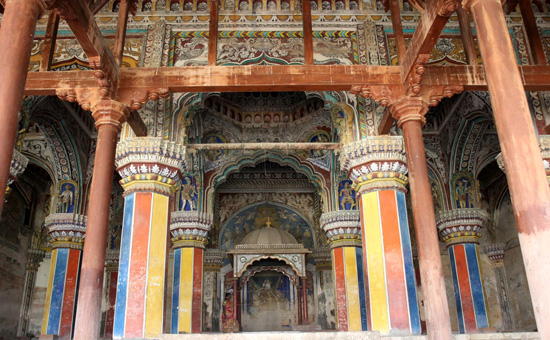 Maratha Palace, Thanjavur. 2016.
Creators,
Patrons and influencers
The Maratha-Tanjore timeline saw substantial cultural transformations in the South for e.g. introduction of Harikatha (a versatile approach to spiritual discourse), musical enrichment of composers including Oottukkadu Venkata Kavi, Tyagaraja and Muttuswami Dikshitar and the professional upliftment of several other practitioners of arts. This was thanks to the royal patronage received from Maratha rulers Shahaji I (1684–1712), Serfoji I (1712–1723), Pratapasimha (1739-63), Tulajaji (1763–1787), Serfoji II (1787-1832), Amarasimha (1793-98) and others.
Several of these monarchs were also
excellent composers and authors themselves. Shahaji II, known as Abhinav Bhoja,
composed over 500 works, including the famous dance drama Palakhi Seva
Prabandham. Tulaji I authored the musical treatise Sangeet Saramritam while
Serfoji II, acclaimed for enriching the Saraswati Mahal Library, composed the
opera, Devendra Kuravanji.
Maratha kings also patronized many music and dance composers. These include Muthuswami Dikshitar’s father R Dikshitar, Kattu Krishna Iyer (nephew of Oottukkadu Venkata Kavi), Pachimiriam Adiyappaiyar - composer of the famous Viribhoni Varnam in Bhairavi Raga and Guru of noted composers Shyama Shastri, Pallavi Gopala Iyer and Ghanam Krishna Iyer, Tanjavur Quartet (who created numerous pieces for Indian Classical music and dance) and Sonti Venkataramanayya (guru of Tyagaraja).
Noted
historian Dr Uday Kulkarni wrote, “The rajas were true patrons of the arts. The Bharatnatyam dance form of this day is not more than three centuries old and owes its origin to the Dasiyattan or Thanjavur Natyam patronised during the Maratha period. In Serfoji’s court one finds the famous four
brothers who gave form to Bharatnatyam. From here, it spread to Travancore and Mysore.”
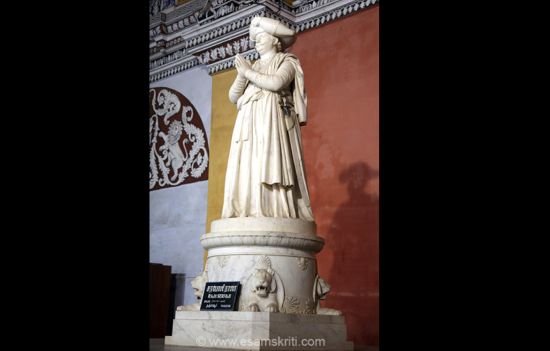 Serfoji II, Maratha Palace, Thanjavur. 2016.
Marathi
Keertan and Harikatha
When Venkoji I, the stepbrother of Chhatrapati
Shivaji Maharaj established Maratha rule in Tanjavur in 1676 CE, he brought
many Marathi devotional singers and orators (Keertankars), who propagated the
teachings of Warkari Sants like Sant Dnyaneshwar, Sant Tukaram using devotional
music as their anchor.
Their efforts were supplemented by Samarth Ramdas, Guru of Shivaji Maharaj, who established devotional congregational centres (Mathas) in the region.
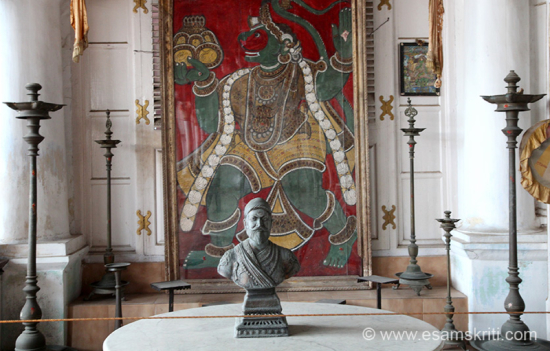 Bust of Shivaji Maharaj in Maratha Palace, Thanjavur.
Before Marathas, the South Indian
story-telling tradition were anchored on a scholarly form known as Pravachanam,
wherein a solitary orator with deep erudition would be seated on an elevated
platform and enthral listeners with various itihasas and puranas.
Maratha Keertankars
presented discourses while standing, and laced their performances with music,
dance, acting, philosophy and literature. They often had disciples follow them thereby
creating a chorus effect. This was enhanced by virtue of being accompanied by chipala,
jalara and Mridangam. The Keertankars also brought their own forms of music
like Saki, Dindi, Ovi, and Abhangs (set in various Talas and Ragas].
King Shahaji II, himself a prolific
composer of Prabandhas and musical stories, encouraged these Maratha scholars
to blend their themes with Carnatic Ragas.
Under the patronage of king Serfoji II,
and repeated exposure to Keertankars, south-Indian artists also started
blending Hindustani elements into Carnatic Ragas. Along with Marathi, the
rulers also supported Telugu, Tamil and Sanskrit because of which Harikatha became
a multilingual format and could be appreciated by scholars and lay people
alike.
This paved the way for Tanjavur Krishna
Bhagavatar, known as the Pitamaha (grandsire) of Harikatha, to standardize
performance aspects of this form by combining the scholarship of Pravachan and
the musical appeal of Keertana.
Influence
of Ragas and Musical Forms
Composers like Oottukkadu Venkata Kavi
(1700-65) and Tyagaraja (1767-1847) were drawn to the structural form of some
of the Keertans, especially those starting after 3/16 beats. Using this, they created
Carnatic compositions.
While Tyagaraja used the
structure, almost
as it was from the borrowed tradition, in songs like Marukelara,
Sarasasamadana, Bantureeti, Sanatana paramapavana etc, Venkata Kavi laced his
compositions with his trademark faster passages (madhyama kalas) in
songs like Senapate namostute and Aiyan allavo.
Since then such songs were embraced by
numerous later day composers e.g. Patnam Subramanya Iyer, Ramnad Srinivasa
Iyengar, Tirupati Narayanaswamy, Papanasam Sivan.
Scholars in Saraswati Mahal library (built by Nayak rulers but considerably developed by Serfoji II) also spoke about similarities between Tyagaraja's creations, like Chinna Nadena in Raga Kalanidhi, and tunes composed by Tulajaji. Whether the original tunes of the King were in writing must be investigated.
It is significant that Venkata Kavi, who
is probably the only South Indian composer to attempt original songs in
Marathi brought North Indian Ragas like Dwijayavanti and Sindhubhairavi to mainstream Carnatic and Tyagaraja created pieces in Yamunakalyani.
Muttuswami Dikshitar (1776-1835) employed
Dwijayavanti, Yamunakalyani and Ramakali, which he may also have picked up in
Varanasi where he received formal training in Hindustani. All three were composed
in Hamirkalyani (Kedar).
Bhaskara
Raya and Navavarana Krtis
King Serfoji persuaded the venerable Maratha thought leader Bhaskara Raya (1690-1785) to migrate to the South and gifted him a village (near Kumbhakonam) named in his honour as Bhaskara Rayapuram.
This enabled him to establish spiritual
values and initiate many South Indians into the secrets of Devi (Srividya)
Avarana Pooja. Oottukkadu Venkata Kavi is said to have been a direct or
indirect beneficiary of this great scholar, which led him to create an
astounding set of songs, known as Kamakshi Navavarana Krtis.
Each of these masterpieces highlight the
specific attributes (like chakra, yogini) of the Goddess on a given day.
Muttuswami Dikshitar, though not a student of Bhaskara Raya, definitely felt
his impact and composed Kamalamba and other Navavarana Krtis.
IMPACT
on INSTRUMENTS
Maratha impact has also been directly responsible for the introduction and growth of three Carnatic Music’s flagship instruments- Violin, Mrdangam and Chitravina (Gotuvadyam).
Violin
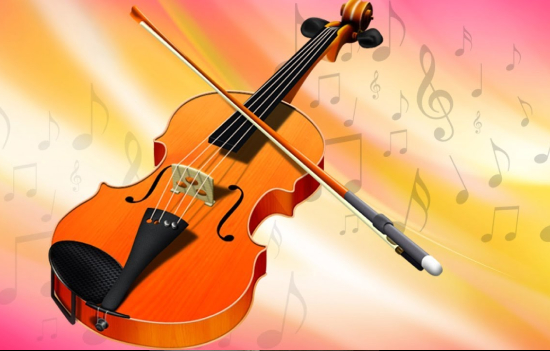
King Serfoji II, who was trained by
European missionaries, formed the Tanjavur Royal Palace Band, consisting of
both Indian and western instruments.
Vadivelu, who was one of the brothers in the famous Tanjavur Quartet and Baluswami Dikshitar, brother of Muthuswami Dikshitar realized the violin’s potential to mimic human voice and standardized its techniques, tuning and posture to enable it to play Carnatic style ragas and ornamentation.
Today, the violin is the number
one melody accompaniment in Carnatic concerts, apart from shining as a solo, duo
or trio instrument too. Remarkably, top Carnatic violinists have won critical
acclaim even among Western audiences, a tribute to both the instrument and the
remarkable adaptability of maestros of South Indian tradition. In recent times,
the violin has also shown its versatility in Hindustani music.
Mrdangam
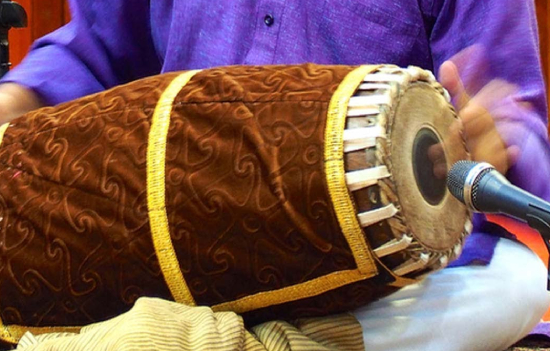
Keertan tradition brought rhythmic
complexities of Abhangs in south-India. Narayanaswami Appa, a Maratha musician
standardized the construction of the present day Mrdangam using jackfruit wood,
instead of clay.
This change helped in refining the tonal
quality of the instrument, bringing in its clear base tone and mellow voice, which
paved way for this to become the number #1 percussion instrument in Carnatic
Music
and one of the most popular drums in the world.
Gotuvadyam (Chitravina)
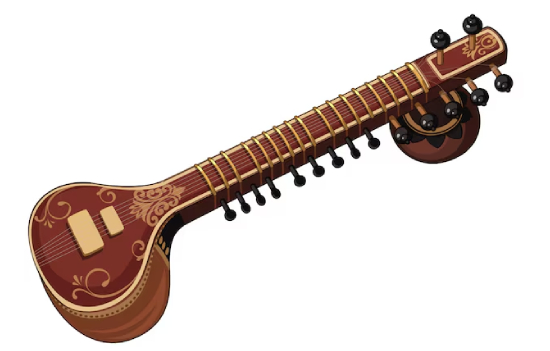
Srinivasa Rao, a Maratha who emigrated to the Tanjavur, made a pioneering effort towards the reincarnation of the Chitravina by experimenting with a slide on the Tanpura. His son Sakha Rama Rao understood its potential to produce high-class music, re-designed it and gave it a new name – Gotuvadyam (because he casually referred to the slide as gotu).
Decades later, scholars restored the more traditional name, Chitravina.
Conclusion
The enormity of the role of Maratha rulers
of Tanjavur as also artists and scholars from Western India in adding
dimensions to the sophisticated, enthralling and mega-layered system of
Carnatic music, dance, literature and other art forms can never be overstated.
Ravikiran
(www.ravikiranmusic.com) is a globally acclaimed performing prodigy from age 2,
composer, educator and initiator of Melharmony, Musopathy and Rural Empowerment
through Music & Arts and his student Bhushan Toshnival, a qualified
chartered accountant, presents both Carnatic and Hindustani recitals.
To read
all articles by Author
To read all articles on
Indian Music
Also read
1. Maratha Rulers of Thanjavur
2. Album Maratha Palace
3. Hear Sangam Talks video on
same topic 47 minutes
4. Contribution
of Tanjore Maratha Kings to Bharatanatyam