- Here is a carefully
curated selection of handcrafted Indian textiles for the winter season,
handpicked from across the country. We highlight both unique and everyday
winter textiles.
As discussed in
our earlier
articles, Indian textiles are shaped by the geography and climate of the nation.
Their diversity and adaptability make them suitable for everything from harsh
northern winters to the mild, cooling breezes of more tropical regions.
In this piece, we highlight both unique and everyday winter textiles that offer warmth and comfort across regions—north India, the North East, and beyond. Browse through the curation and choose what works best for the climate you live in.
Silks: Tussar, Kosa, Mulberry and Eri
Silks, due to their tight weave and dense structure, are well suited for winter—especially for festivals, weddings, and other occasions.
Tussar, Kosa, and
Eri silks are thicker and slightly coarse in texture, which helps protect the
body from cold winds. Silks also tend to feel better on the skin in winter,
unlike summer when more breathable fabrics like cotton and linen are preferred.
Tussar and Kosa
silk are primarily reared and woven in forested regions such as Madhya Pradesh,
Chhattisgarh, Jharkhand, Maharashtra, and Bihar. Eri silk, produced mainly in
Assam, is another important variety, with the state being a major producer.
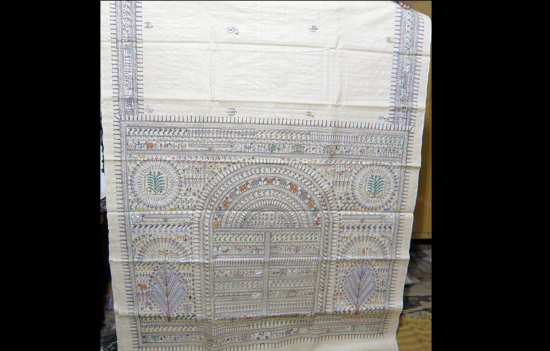 Painted Tussar saree at village Raghurajpur near Puri, Odisha. 2012.
Mulberry silk, the
most commonly used silk in India, is produced across India country and used in
sarees such as Mysore silk, Kanjivaram, and Benarasi.
While Mulberry silk is more widely known, Tussar, Kosa, and Eri are equally suitable for winter because of their thickness and warm golden or metallic tones that look especially striking during colder months. These silks are used to create a wide range of textiles—sarees, fabrics, dupattas, scarves, shawls, and stitched garments like jackets, kurtas, and shirts.
Indigenous Wool or Desi Oon
Another important part of India’s textile heritage is Desi Oon, or indigenous wool. This wool is produced by pastoral and shepherding communities using native breeds of sheep, goats, yaks, and other animals.
These communities
are spread across regions such as Kashmir, Ladakh, Himachal Pradesh,
Uttarakhand, Arunachal Pradesh, Rajasthan, Gujarat, Maharashtra, Karnataka, and
Telangana. Each region produces wool and woolen textiles suited to its local
climate. Desi wool processing is very different from industrial wool mills and
follows traditional, slow methods that honour all stakeholders in the supply
chain.
In terms of
texture, some varieties of Desi Oon are thick and coarse, making them ideal for
extremely cold conditions. Others, like yak wool, are much finer and softer.
Desi
Oon Hub, an initiative by the Centre for Pastoralism, is doing
notable work in bringing together these communities and creating a market for
their products. Products range from knitwear and shawls to jackets, scarves,
and garments.
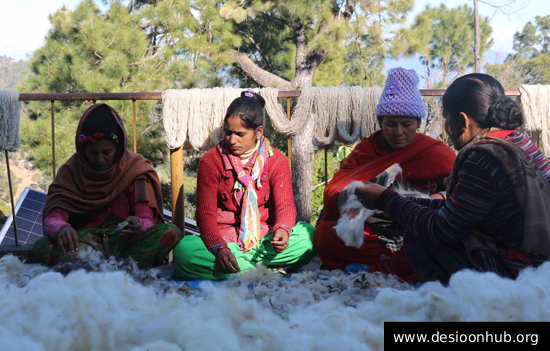
Woolen Textiles from Uttarakhand and Himachal Pradesh
Given their colder
climates, Himalayan regions like Uttarakhand and Himachal Pradesh produce a
wide variety of woolen textiles. Areas such as Kilmora in Uttarakhand and Kullu
in Himachal Pradesh are known for handwoven wool fabrics that are well suited
for winter clothing. Handcrafted knitwear from these regions is also widely
popular.
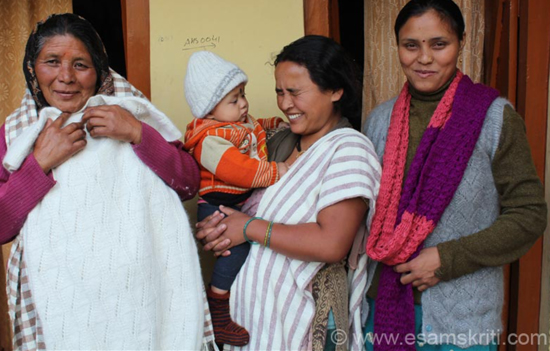 Village Darkot, Munisyari, Kumaon. Mother, daughter, DIL all knit rabbit wool. 2012.
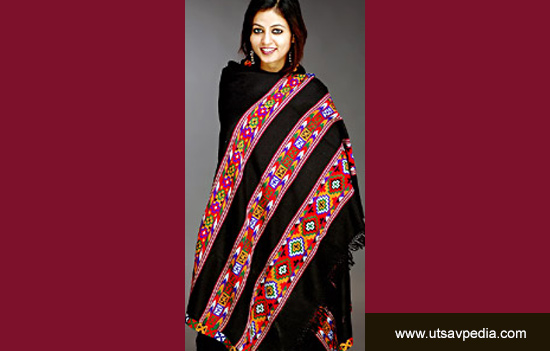 Thapada Shawl, Himachal Pradesh.
Several
non-profits, social enterprises, and cooperatives work closely with artisans
here to create high-quality products. Some of these include Kilmora, Bhuttico, and Himalayan
Blooms.
Handloom Shawls: Kutchi, Pattu, Ghongadi and Dongria
Shawls are among
the most versatile textile forms: gender-neutral, ageless, and adaptable across
uses. India has a wide range of handwoven shawls made by skilled artisans.
Here, we highlight a few lesser-known handwoven shawls.
Kutchi
shawls from Kutch, Gujarat, are woven in both wool and Tussar silk. They are known for their vibrant colours and bold extra-weft patterns.
Browse on Kutch
Culture.
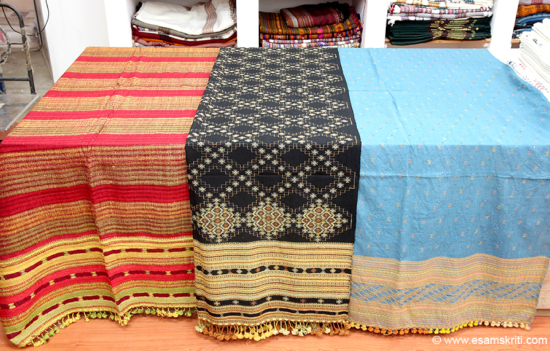 Kutchi shawls, village Bhujodi near Kutch. 2018.
Pattu from the desert regions of Rajasthan is a shawl-like textile woven by the Meghwal community. It is colourful, sturdy, and visually striking.
Browse on Craft Potli.
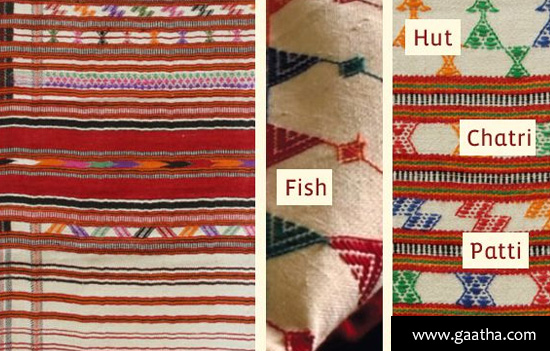 Pattu shawls, Rajasthan
In Himachal
Pradesh, another woolen wrap Pattu is commonly worn esp. by women. It
covers the body from the torso to the ankles and provides warmth during cold
winters. Browse Bhuttico.
Ghongadi is a multipurpose wrap traditionally woven and used by shepherding communities in the Deccan regions—mainly Maharashtra, Karnataka, and Telangana. Made from coarse Desi Oon, it is as a shawl, blanket, bedspread, or floor covering.
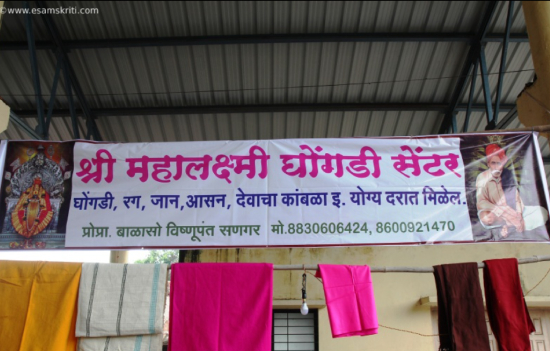 At Haldi Festival, village near Kolhapur. 2018.
Authentic
Ghongadis are difficult to find online. While some are available on Amazon,
they may not always be handwoven.
The Dongria
Kondh shawl, locally known as Kapdaganda, is woven by the Dongria Kondh
community living in the Niyamgiri hills of Odisha. Made using thick cotton and
hand-embroidered with geometric motifs inspired by the natural surroundings,
these shawls are visually distinctive. Browse on Craft Potli.
Handmade Quilted Textiles
India has a long
tradition of quilt-making. Beyond bed quilts, there are also hand-stitched
quilted jackets that are warm, padded, and comfortable. Quilted jackets from
Jaipur, Rajasthan, are particularly well known and easy to find online. One
quick Google search will give you many options to choose from.
If you’re looking for something different and unique, quilts from West Bengal (available at Sasha
Fairtrade) and Uttarakhand (from Purkal Stree
Shakti) are worth exploring.
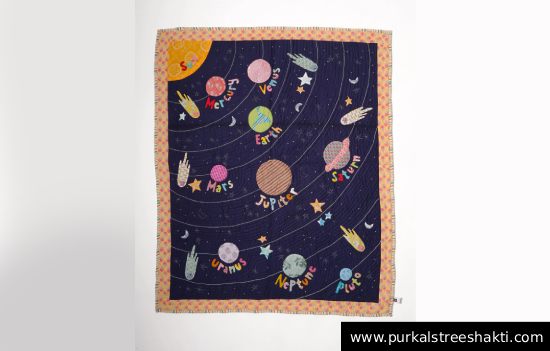 Uttarakhand Quilt. Purkal Stree Shakti.
Another remarkable
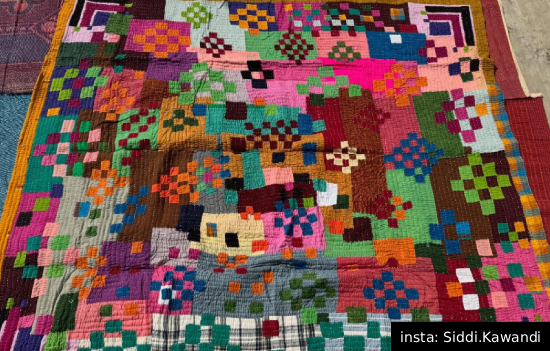
quilt tradition is Kawandi, made by the Siddi community of Karnataka. The
Siddis are of African origin and are believed to have settled in India during
the Deccan Sultanate period, though historical accounts vary. Kawandi quilts
are patch worked, vibrant, and deeply expressive, reflecting both their African
roots and local influences. Browse on Siddi Kawandi.
We hope this curation helps you find some handcrafted warmth for this winter—and many winters to come.
To read all articles
by author
To read all
articles on Indian Handlooms