- Author uses his visits for a deeper
understanding of Hirapur and Matsya Varahi Temples, Idea of Yoginis and Shakta Tantra
worship and why these two temples were made this way. Good photo feature.
The journey to Hirapur begins almost casually
from Bhubaneswar, but it did not remain casual for long. Hirapur is not far
from Bhubaneswar; it lies near the south bank of the Kuakhai river, and the old
Jagannath road to Puri once passed through this region. The ancient
Sisupalgarh, considered to be the capital city of the Chedis (King Shishupala
was the nephew of Sri Krishna and king of the Chedis) stands between Bhubaneswar
and Hirapur.
For an ordinary traveller, this may be a short
excursion. For me, the road felt like an inward movement. I was not merely
going to see a monument. I was going to enter a mandala, a sacred circle of
power that has survived neglect, secrecy, fear, and time. The Chausath Yogini
Temple of Hirapur does not announce itself with towering height or royal
splendour. It is small, almost hidden in its scale.
Yet the moment one enters its circular enclosure, one understands that
smallness is not the same as insignificance.
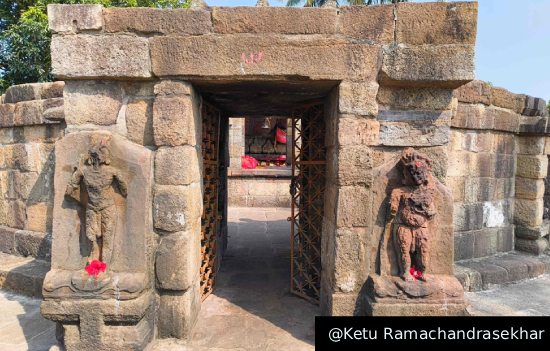 Entrance to Hirapur Yogini Temple.
The first impression of Hirapur is silence, was
a charged silence not emptiness. The circular wall, the open sky above, the
Yoginis placed in niches around the inner enclosure, and the central pavilion
together create an atmosphere unlike most temples of India. In these temples,
one does not move forward towards a single sanctum in the usual manner. One is
surrounded.
For a devotee, this changes the very grammar of
darśana. When you are passing through, its not just the eye which is looking at
the deity. The whole body becomes aware of being inside a mandala.
But before attempting to understand Hirapur, let us first approach the idea of the Yoginis.
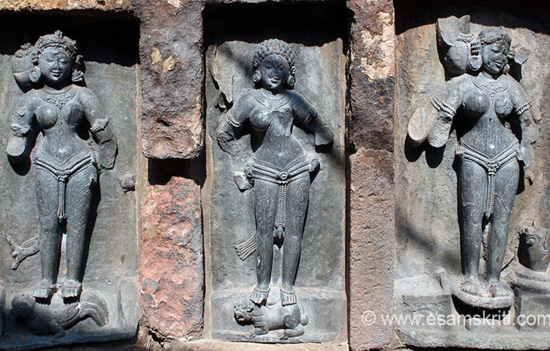 Left to right is Yogini Kamayani, Centre is Ghatabari. Right is Yogini Stutee.
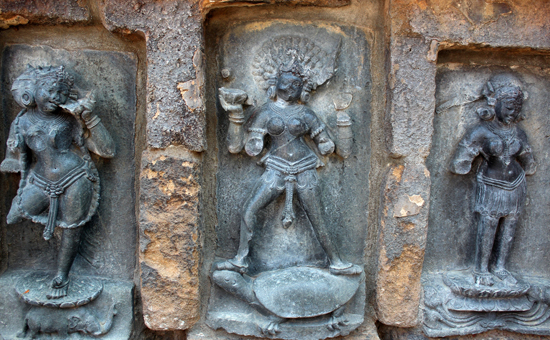 Left to right is Narmada, Yamuna. Third not sure.
The Yoginis are among the most fascinating and
least understood devatās. As normally
understood by the laity they are not merely attendant goddesses- parivāra
devatās, they belong to the deeper currents of Śākta and Tantric worship, where
divinity is experienced in fierce, protective, transformative, and often
unsettling forms. The Yoginis are connected with the living power of Devi as a
multiplicity of energies and manifestation of the single conscious principle.
They are śaktis, powers, presences, and guardians of esoteric knowledge.
Purāṇic traditions describe the sixty-four Yoginis as emerging from different parts of the body of Devi herself—her voice, sweat, navel, forehead, cheeks, lips, ears, limbs, womb, toe-nails, and even her anger. The Skanda Purāṇa is also cited as saying that Devi created the
circle of Yoginis during her battle with Mahishāsura. This shows that the
Yoginis are not external to the Goddess. They are her expansions, her
battlefield energies, her cosmic limbs, her intimate powers.
Historically, Yogini worship appears to have
drawn from many layers of Indian religious life. It carries the fragrance of
village goddess traditions, local mother-goddess worship, Śākta Tantra, Kaula
practice, and temple ritual. The Yogini cult, definitely Tantric in nature, has deep connections with rural and tribal traditions and
with the grāma-devatās, the local village deities. Tantra was lived in
landscapes, villages, boundaries, bodies, fertility, protection, fear, and
healing.
Yoginis were also surrounded by secrecy which was part of the spiritual discipline of the tradition. This also implied that the Tantric knowledge was not meant to be casually exposed. Jñānārṇava Tantra warned against transmitting sacred
and secret knowledge to the uninitiated, and that such attitudes may have
contributed to the Yogini cult remaining guarded for centuries. The secrecy
around Yogini worship was a way of protecting the sanctity and potency of practices
that demanded preparation, discipline, and adhikāra.
This inner character of Yogini worship is
reflected in the architecture of their temples. Most Hindu temples follow a
recognizable sequence: entrance, mandapa, sanctum, superstructure, and often
additional halls for dance, offerings, or assembly. Yogini
temples break this expectation.
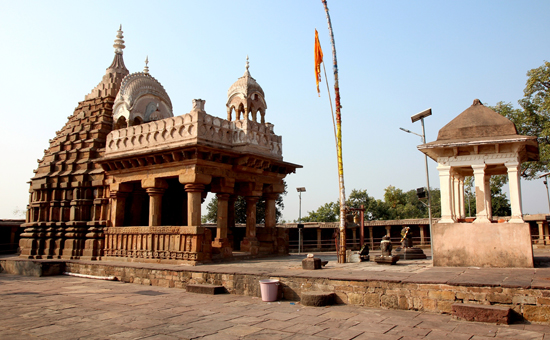 Chausath Yogini Temple near Jabalpur. Temple surrounded by a round structure.
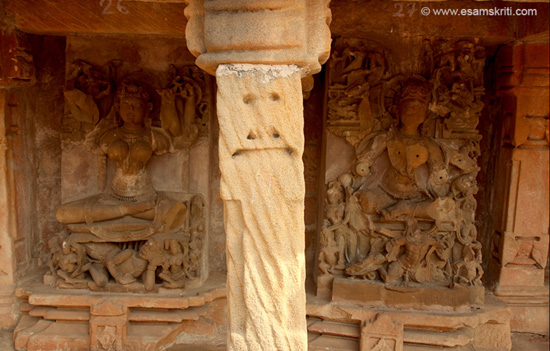 Yoginis in niches of above temple.
Their plan is usually circular and hypaethral,
meaning open to the sky. Most Chausath Yogini temples are circular and
roofless, with the exception of Khajuraho, which is rectangular. The Yogini
images are placed in niches along the inner circular wall, while the centre
usually contains a mandapa associated with Moha Bhairava or Śiva.
In Tantric worship, the chakra or a mandala is a field of energy, a ritual body, a map
of consciousness. When images of various Yoginis are placed within the circular
enclosure, they create a Yogini chakra or
Vrnda. Standing inside Hirapur, I felt this truth physically. The circle does
not have a beginning or end. It does not allow the mind to settle into a single
direction. It draws the seeker into circumambulation, awareness, repetition,
and inward turning.
The open sky is equally significant. A roofless
temple may seem incomplete to the modern eye, but at Hirapur the absence of a
roof is the presence of the cosmos. Sunlight, moonlight, wind, rain, and stars
are not excluded from the temple; they are part of its ritual architecture. The
Yoginis stand under the sky because their worship belongs to a mode of sacred
experience that is elemental and they are exposed to the vastness above. The
devotee who stands in the circle also stands beneath that same vastness.
Hirapur is one of the two known Chausath Yogini
temples in Odisha, the other being Ranipur-Jharial in Bolangir district. The
Hirapur temple is the smallest among the sixty-four Yogini shrines in India. It
measures about thirty feet in outward diameter, and its circular enclosure,
built of coarse sandstone blocks, rises to about eight feet. Its foundation is
of laterite stone, and the enclosure is open to the sky. This modest scale
gives the temple an extraordinary intimacy. Unlike grand temples that place the
devotee at a distance from the deity, Hirapur
brings the devotee close to the Yoginis. Their forms are near enough to
study, to contemplate, and to feel.
The temple came into public knowledge only in
1953, when the archaeologist and historian Kedarnath Mohapatra discovered it in
a broken condition and helped bring it back into attention. At present there
are sixty-three Yoginis: sixty in the niches of the circular enclosure and
three on the pillars of the central pavilion, while Yogini number 61 is
missing. It also mentions four Bhairavas on the pillars of the Chandi Mandapa,
nine Katyayanis on the outer wall, two Dvarapalas at the entrance, and two
fierce images in the vestibule. This arrangement gives Hirapur a layered sacred
structure. The outer wall has the nine Kātyayanis. The entrance is guarded. The
vestibule contains fierce Kāla and Vikarāla Bhairava-like figures. The inner
circle holds the Yoginis. The central mandapa completes the sacred
architecture.
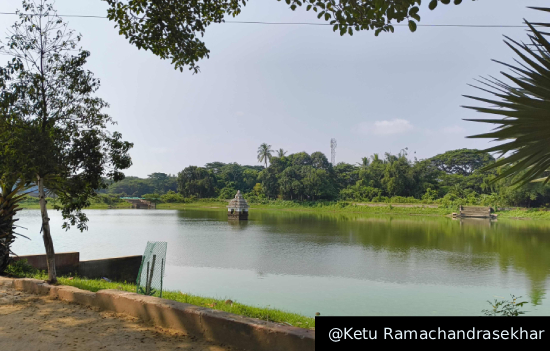 River close to temple, as is mostly the case.
The Yoginis of Hirapur are
carved in black chlorite stone, which has helped them withstand the
erosion of time better than many sandstone images elsewhere. The Yoginis of
Hirapur are mostly intact in their places but all vandalised and disfigured by
the curse of iconoclastic invaders. Only one image is missing. Their forms are
varied. Some have human faces, while others carry the features of animals or
birds. Some are two-armed, some four-armed, and Mohamaya, the presiding deity
of the shrine, is ten-armed. This represent power in its many states: graceful,
fierce, animal, cosmic, protective, wild, and deeply intelligent.
What moved me most was the way beauty and fear
coexist in these images. Modern taste often separates the beautiful from the
terrible. Indian sacred art does not always make that separation. A deity may
be beautiful because she is terrible, and terrible because she is compassionate
in a form that destroys ignorance. The Yoginis are made to awaken attention, not
comfort the casual eye. Their mounts, gestures, weapons, faces, and postures
all point to a world where the sacred is force.
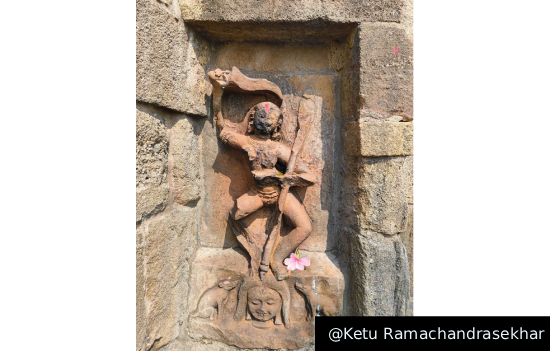
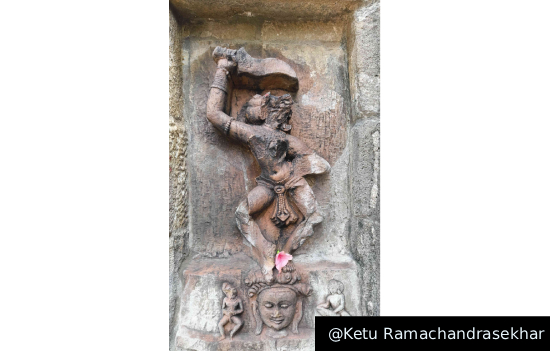
The outer images of the nine Katyayanis add
another layer to the temple. They are placed in nine niches on the outer wall
and are carved in a light yellowish sandstone. Most are two-armed female
figures standing on severed human heads. In the Tantric and Śākta context, such
imagery often points to victory over ego, limitation, and egoistic obstruction.
The severed head is a sign of transcendence over the lower self.
The Dvarapalas and vestibule figures intensify
this atmosphere. The entrance guardians and the fierce male images in the
vestibule, including Kala Bhairava and Vikarala Bhairava, with skull-cups,
matted hair, emaciated bodies, and terrifying gestures.
Historians place the construction of the
Hirapur temple around the 9th century CE, possibly during a transitional period in Odisha’s political history. Legend has it build by Queen Hiradevi, hence the name Hirapur.
From Hirapur, my thoughts naturally moved
towards another remarkable Śākta shrine of Odisha: the Barahi Deula at Chaurasi, dedicated to Matsya
Varahi. She is fierce, protective, paternal, and deeply Tantric.
The Barahi Deula, situated in the Prachi Valley
region of Odisha, is generally dated to the 10th century and associated with
the Somavamsi period.
The Varahi Tantra speaks of five forms of Varahi:
Svapna Varahi, Canda Varahi, Mahi Varahi, Krucchra Varahi, and Matsya Varahi.
The image enshrined at Chaurasi corresponds closely to the Matsya Varahi form.
Her icon is unforgettable. She has the face of a boar and the body of a divine woman
and is seated in lalitāsana on a pedestal. In her right hand she holds a fish;
in her left, a kapāla or skull-cup. Her right foot rests upon her buffalo
vāhana. She is pot-bellied, and her great belly suggests that she holds the
universe within her womb. She is the Mother who contains existence.
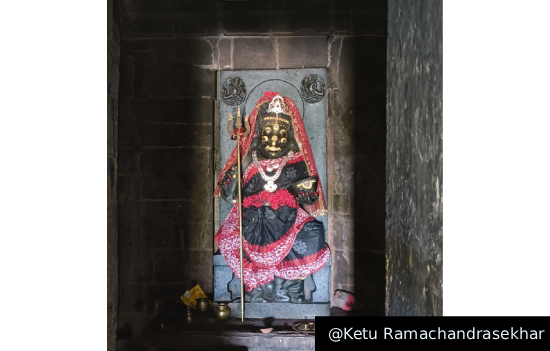
Matsya Varahi is a masterpiece of Odishan
iconography. Her fish attribute introduces another layer of meaning, linking
her with waters, fertility, nourishment, and the fluid depths of consciousness.
The skull-cup reminds us of the acceptance of impermanence and death. The
buffalo beneath her foot evokes subjugated inertia- tamas. Her belly speaks of
cosmic maternity.
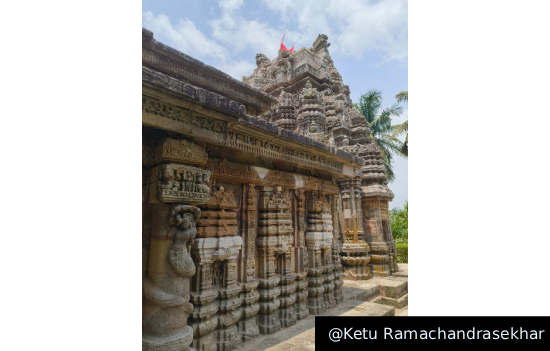
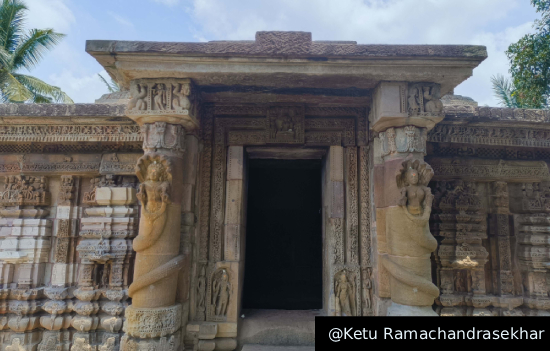
Architecturally, the Barahi temple is also
distinctive. It belongs to the Khakhara or Gaurichara
type of Odishan temple architecture, rather than the more common rekha form. The elongated vaulted roof is especially associated with goddess temples, very similar to Shalakara vimana of the Dravidian temples and creates a different visual rhythm from the soaring verticality of many Odisha temples. The temple’s sculptural programme is rich, with decorative motifs, figural carvings, and narrative reliefs.
While Hirapur presents śakti as multiplicity:
sixty-four Yoginis, each distinct, each carrying a different vibration of the
Goddess. Matsya Varahi presents śakti as
concentration: one deity, dense with meaning, seated in command of the
cosmic field.
As I reflected on both shrines, I felt that these temples also remind us that Indian art history cannot be separated from practice. A temple plan is an embodiment of vision, ritual, metaphysics, and lived devotion. To visit them only as “heritage” is to miss half their life. To visit them only as “religion” is to miss their artistic genius. The fullness appears when we allow both approaches to meet.
To read all
articles by author
Also read/see
1.
Album
Chausath Yogini Temple, Odisha
2.
Album Chausath
Yogini Temple near Jabapur
3.
Album Chausath
Yogini Temple, Mitawali now Shiv Mandir
4.
64 Yoginis by Dr Suruchi
5.
Album Temples of
Bhubhaneshwar
6.
A
conversation on Yogini Mothers and Yakshini Mothers
Author Dr. Ketu Ramachandrasekhar is the Director- Knowledge Products, at Siddhanta Knowledge Foundation lending his expertise to the development and deployment of IKS across Academia. He is also the Co-Founder of Bharat ke Wow an initiative committed to the promotion and preservation of Indian Art, History, and Culture. His academic journey, deeply rooted in Indian Epistemology, culminated in a Doctorate, earning him the prestigious Prince of Wales Medal for scholarly excellence at the University of Madras. Beyond academia, he has been on the stage as an actor in Sanskrit dramas produced by Samskrita Ranga and has authored several books on Indian Culture and Heritage. Recognized as an INFOSYS Fellow under BORI’s Academic Development Programme, Dr. Ramachandrasekhar’s contributions extend into interdisciplinary domains such as Neuro-Aesthetics and Indian Rhetorics. Passionate about ancient wisdom, he conducts workshops and classes on Tantragama. He attributes all his achievements to the guidance and blessings of his Guru, Vidya Vachaspati Brahmashri Goda Venkateshwara Shastri, whose teachings continue to shape his intellectual and spiritual pursuits.