- What is Life and Breath? What is Prana? Are Breath and Prana the same? For each of the five popular types know How to do, Benefits and when not to do. Regular, mindful practice under
guidance can lead to profound physical vitality, emotional stability, and
mental clarity.
As the breath moves, so does the
mind. When the breath is steady, the mind becomes still.
Yoga
is much more than a physical movement. It is the practice of working with Prana, the subtle life force that
sustains our body, mind, and consciousness.
Through Pranayama,
we learn not just how to breathe, but also how to direct, regulate, and expand our vital energy.
What Is Prana?
Prana is the vital life energy that flows
through all living beings. It is responsible for movement, vitality, clarity of
mind, digestion, circulation, and emotional balance.
Are Breath and Prana the same?
Prana, in yogic philosophy, is the subtle life force or vital
energy that animates the body and mind. It flows through energy channels
(nadis) and supports physical vitality, mental clarity, and emotional balance.
The
Prana
flows through subtle channels called the Nadis,
and its movement is regulated by energy centers known as Chakras. When prana flows freely, we
experience good health and balance. When blocked or disturbed, it can lead to
fatigue, restlessness, illness, or emotional imbalance.
Our Breath is the physical process of inhalation and exhalation and is understood
as the movement of air in and out of lungs. It is the measurable and visible
part of the respiratory system. Our breath is the gross expression of prana. Think of it as
the doorway to prana. While we cannot directly control prana, we can
influence its flow through conscious breathing practices (pranayama). In
essence, breath is physical; prana is subtle and the breath is the bridge
between the two.
How do we define Pranayama?
Pranayama is a yogic practice of consciously
regulating the breath to influence prana.
It consists of two words, Prana, meaning life force & Ayama, meaning expansion or regulation or suspension of
breath.
Pranayama can be practiced with or after asanas, before meditation or as a
standalone practice, depending on the benefits you are seeking.
What are the benefits of
Pranayama?
Pranayama has many benefits at the
physical, emotional and mental level. Here are a few:
1. It helps regulate the flow of prana (life force) in the body, improving vitality.
2. It calms our nervous system, reduces stress and anxiety, and improves emotional balance by shifting the body into a relaxed but alert state.
3. It enhances lung capacity, improves oxygenation, and supports respiratory health.
4. Pranayama aids digestion, boosts immunity and metabolism, and balances the endocrine system.
5. On a mental and subtle level, it sharpens focus, increases self-awareness, and prepares the mind for meditation, creating harmony between body, breath, and mind.
Let us understand the 5 most popular Pranayama’s and the right technique to practice them.
1. Kapal Bhati Pranayama (Skull Shining Breath)
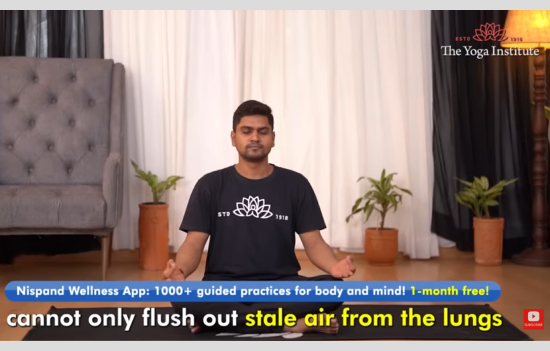
Kapal Bhati is a cleansing pranayama that focuses on
forceful exhalation and passive inhalation from the abdomen. By stimulating our
abdominal organs and digestive fire, Kapal Bhati helps improve metabolism and
elimination.
How to Practice
a. Sit comfortably with an erect spine
b. Take a deep inhalation and exhale
forcefully by contracting the abdominal muscles. Let the inhalation (abdomen
expansion) happen naturally
c. Start with 20-30 counts, gradually
increase to 50 and 100 (do not overdo).
Benefits
1. Improves digestion and metabolism
2. Detoxifies lungs
3. Strengthens abdominal muscles
4. Energizes the body
5. Makes the brain sharp and active -
Increases mental alertness.
When Not to Practice
a. During pregnancy or menstruation
b. If you have hernia, recent surgery, or
severe back pain
c. During fever or acute illness
d. Patients with heart conditions or high
blood pressure need to practice this under guidance and should not over do
f. Post meals as it interferes with
digestion
g. Those living in extreme hot climate,
should moderate this pranayama as it generates heat in the body.
To see Video 3.18 minutes
2. Bhastrika Pranayama (Bellows Breath)
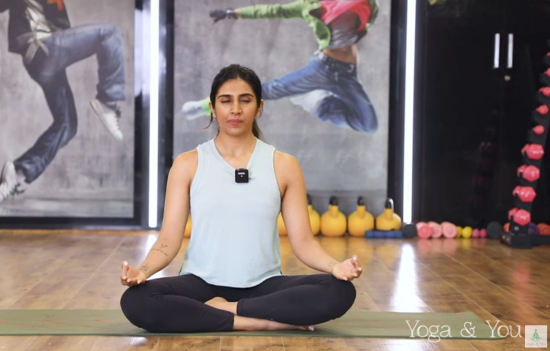
Bhastrika involves forceful inhalation and
exhalation, activating prana strongly throughout the body. Bhastrika involves
chest and abdomen while the former (Kapal Bhati involves mainly the abdomen).
Bhastrika increases oxygen intake and pranic circulation, revitalizing the body
and mind.
How to Practice
a. Sit in a stable posture, cross-legged
with a straight spine
b. Inhale deeply, raise your hands in the
air, then make a tight fist and pull the fist down as you exhale forcefully
c. Inhale and exhale forcefully with equal
intensity
d. Practice in two or three rounds of 10 -15
breaths per round
e. Rest between rounds if you find it
intensive.
Benefits
1. Boosts oxygen supply to the brain
2. Boosts immunity
3. Clears respiratory channels
4. Good for chest congestion
5. Helps overcome lethargy and depression.
When Not to Practice
a. If you have high blood pressure or heart
disease
b. During pregnancy
c. If suffering from vertigo or epilepsy
d. During fever or acute illness
e. Post meals as it interferes with
digestion
f. Those living in extreme hot climate
should moderate this pranayama as it generates heat in the body.
To see Video 9.24 minutes
3. Anulom Vilom Pranayama, (Nadi Shodhan) or alternate nostril breathing.
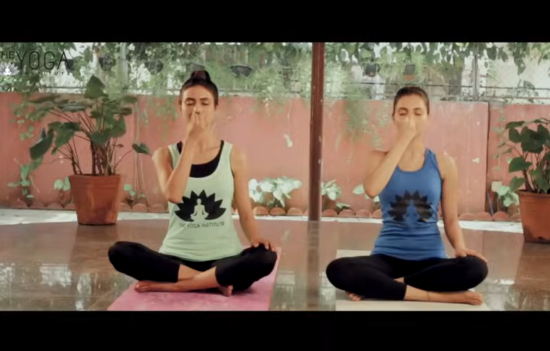 Credits The Yoga Institute
This pranayama balances our nervous system and harmonizes the left
and right energy channels, the Ida and Pingala.
What are Ida and Pingala?
Ida and Pingala are two of the main energy channels (nadis) through which prana flows in our body.
The Ida Nadi
flows along the left side of the spine and is associated with the moon, cooling energy, and the parasympathetic nervous system. It governs calmness, intuition, receptivity, and
mental clarity.
The Pingala Nadi flows along the right side of the spine and is associated with the sun, warming energy, and the sympathetic nervous system. It governs activity, focus, vitality, and physical
energy.
This pranayama balances Ida and Pingala, allowing prana to flow smoothly through
the central channel, Sushumna, leading to balance, inner harmony, and
heightened awareness.
How to Practice
a. Sit comfortably in a cross-legged
position with a straight spine and relaxed shoulders.
b. Bring the right hand into Vishnu Mudra (fold
the index and middle fingers toward the palm, keep the thumb, ring finger, and
little finger extended).
c. Gently close the right nostril (with
right thumb) and inhale slowly through the left nostril & close the left
nostril (ring finger of right hand)), retain the breath, and exhale through the
right nostril. Then, Inhale through the right nostril, retain briefly, and release
the breath through the left nostril. Starting from the left nostril and
finishing at left completes one round
d. Continue for 5/7/11 rounds or for 5 -7
minutes with smooth, steady breaths, keeping the face relaxed and the awareness
on the flow of breath.
Benefits
1. Calms the nervous system
2. Reduces stress and anxiety
3. Balances Sun and Moon energy and makes
us more grounded
4. Supports heart and lung health
5. Helps in High blood pressure conditions
6. Helps in Hormonal imbalance.
When Not to Practice
a. Practice gently during illness or nasal
congestion
b. Do not practice retention in switching if
uncomfortable, or if you have High BP
To see Video 1.47 minutes
4. Bhramari Pranayama (Humming Bee
Breath)
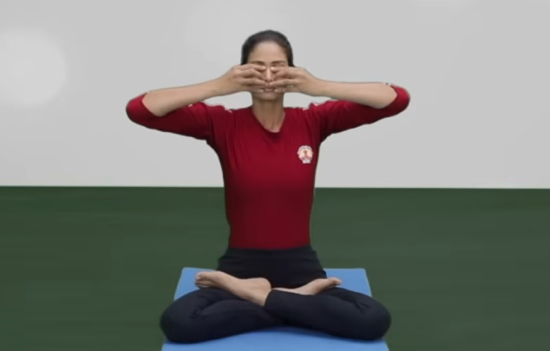 Credits Morarji Desai National Insitute of Yoga.
Bhramari pranayama helps to soothe the mind and nervous
system. The vibration created during Bhramari has a soothing effect on the
brain and vagus nerve, making it one of the most effective and calming breath
work.
How to Practice
a. Sit comfortably with the spine upright
and the body relaxed. Close the eyes and bring awareness to the breath.
b. Form Shanmukhi Mudra by gently placing the thumbs
on the ear cartilage to partially close the ears, the index and middle fingers
lightly over the closed eyelids, the ring fingers on the sides of the nose, and
the little fingers above the upper lip.
c. Take a slow, deep inhalation through the
nose. As you exhale, create a soft, steady humming sound, like a gentle buzz of a bee,
feeling the vibration around the tip of the nose. Keep the breath smooth and unforced.
d. Practice for 5, 7, 11 rounds, allowing
the vibrations to calm the mind and create a sense of inner stillness and
awareness.
Benefits
1. Reduces anxiety, anger, and restlessness
2. Improves sleep quality
3. Relieves headaches and migraines
4. Calms an overactive mind
5. Supports emotional balance.
When Not to Practice
a. Avoid during ear infections and if you
have a throat irritation.
To see Video 1 minute
5. Ujjayi Pranayama (Victorious Breath)
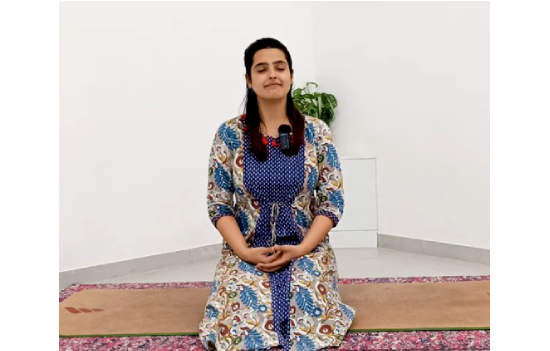 Credits Hatha Yoga Institute.
Ujjayi pranayama calms the nervous system,
improves concentration, and deepens the mind- body connection. Ujjayi breath
takes practice and takes time to learn, so be patient with yourself if you do
not get it right in the first go.
How to Practice
a. Close your eyes and observe your natural
breath for a few seconds
b. Inhale with a gentle Throat Constriction: Slightly contract the back of the throat (as if you are softly whispering “ha”), keeping the mouth closed. This creates a subtle ocean-like sound. (Inhale through the nose
c. Exhale through the nose with the same
gentle throat contraction, maintaining the soft, rhythmic sound. (like fogging a
mirror but with mouth closed)
d. Keep the inhalation and exhalation equal
in length, smooth and unforced
e. Maintain awareness on the sound and
sensation of the breath moving through the throat
f. Practice for 5-7 rounds initially,
gradually increasing to a few minutes as comfortable.
Benefits
1. Builds internal heat
2. Enhances focus and meditation
3. Regulates blood pressure
4. Calms the nervous system
5. Balances Thyroid
6. Helps to overcome anxious thoughts.
When Not to Practice
a. Avoid forceful constriction as it
induces cough
b. Do not practice if feeling short of
breath or strained
c. Practice gently in hot weather.
To
see Video 1 minute
Pranayama is a powerful practice
that should be approached with
awareness and under the guidance of a Yoga teacher.
The
goal is not to control the breath, but to bring awareness and a sense of calm and balance. A regular, mindful practice under guidance can lead to
profound physical vitality, emotional stability, and mental clarity.
Remember, our breath is with us 24x7, from
when we are born to when we die. While the whole world breathes, sadly most do
so in an unaware state. Only a few understand the potency and power of
Pranayama to take advantage of this powerful practice. Pranayama has the power
to be your secret weapon for a healthy mind-body-soul connection.
Author Yogacharya Nibha Vyas - From two decades of being in high-stressed corporate jobs, to a Yoga teacher & practitioner who loves to unlearn, learn, and teach. She is based in the National Capital Region.
To read all
articles by author
In case of any error in photo credits, do write back.
Also read
1. Essence of
Pranayama by Dr Shrikrishna
2. Pranayama and
Memory
3. Introduction to
the 8 limbs of Yoga
4. Exploring Health
Benefits of Pranayama
5. What is Pranayama, its types and techniques