- Briefly, who is a Bodhisattva in Thervada and
Mahayana Buddhism. Bodhisattva is the unbreakable union of prajna (transcendent wisdom) and karuṇa (boundless compassion). Intent is to heal the world, not run
away from it. Piece has a link to a detailed article on how to become a
Bodhisattva.
Imagine standing at the threshold of ultimate freedom—the end of all personal suffering—and choosing to turn back. In the rich tapestry of Indian spiritual thought, this radical act of altruism is the defining hallmark of the Bodhisattva.
Derived from the Sanskrit words bodhi (enlightenment) and sattva (being), a Bodhisattva is a
spiritual seeker who has attained the right to Nirvana but takes a solemn,
universe-shaking vow: to postpone their own liberation until every single
living creature is freed from the cycle of suffering - The Philosophy of
Collective Salvation
To understand the Bodhisattva is to understand
a fundamental shift in spiritual philosophy.
While early Theravāda traditions viewed the Bodhisattva primarily as the historical Buddha in his past lives preparing for greatness, the Mahāyāna tradition democratized the concept. It proposed a profound thought: enlightenment shouldn't just be a personal finish line; it must be a collective rescue mission.
The core thought driving the Bodhisattva is
the unbreakable union of prajna
(transcendent wisdom) and karuṇa
(boundless compassion). Wisdom reveals that all beings are interconnected,
while compassion dictates that one cannot be truly free while others still
suffer.
Walking the Path
A Bodhisattva does not simply wait; they act.
They navigate the messy reality of human existence armed with the Six
Perfections (Paramitas). Instead of
retreating from the world, they engage with it through radical generosity,
ethical conduct, untiring patience, joyful effort, meditation, and
wisdom.
Across Asia, this ideal took on forms like Avalokiteśvara, the thousand-armed
embodiment of mercy who reaches out to the suffering, or Mañjuśrī, the wielder of the sword of wisdom. Yet, the Bodhisattva
is not confined to mythology.
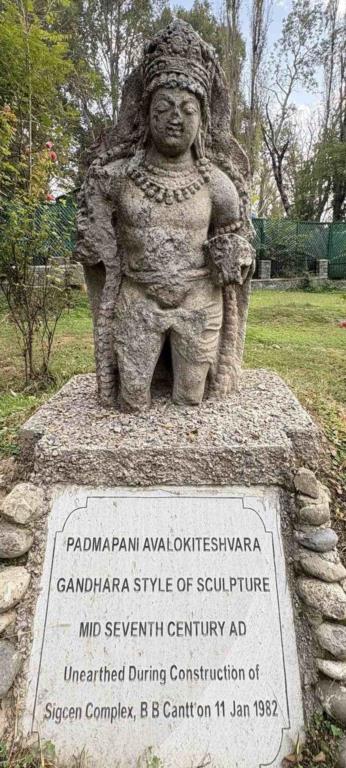 Padmapani Avalokitesvara. Gandhara
School. Mid-7th century. By Namrata Wakhloo.
Padmapani Avalokitesvara. Gandhara
School. Mid-7th century. By Namrata Wakhloo.
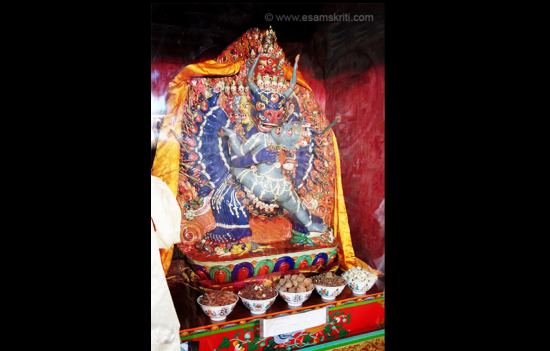 Image of
Vajrabhairava. The most wroughtful form of Manjusri in Thiksey Monastery, Leh. 2016.
Image of
Vajrabhairava. The most wroughtful form of Manjusri in Thiksey Monastery, Leh. 2016.
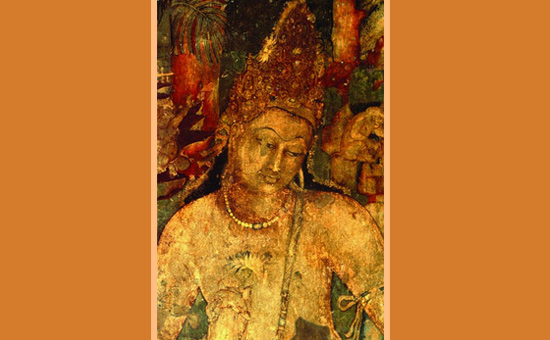 A wall painting of Bodhisattva Padmapani in Ajanta Cave 1. Pic by Benoy K Behl.
A Timeless Ethos
In India, the Bodhisattva ideal echoes far
beyond Buddhist monasteries. It is deeply intertwined with the broader cultural
value of seva (selfless service). It
provides the spiritual blueprint for reformers, saints, and leaders who
prioritize the welfare of society over personal gain.
Ultimately, the Bodhisattva is more than a
historical archetype. It is a timeless, urgent reminder that the highest peak
of human achievement isn't found in escaping the world, but in choosing to heal it.
Author
- Vijay Dubey is Assistant Director,
Sanchi University of Buddhist-Indic Studies, Sanchi, Madhya Pradesh.
To read paper ‘The Bodhisattva Ideal is A Journey towards Universal Enlightenment’ by Dr. Santosh Priyadarshi Click on Link
Abstract of paper
This paper explores the profound concept of the
Bodhisattva within Buddhist tradition, detailing the arduous yet compassionate
path undertaken for the liberation of all sentient beings. It delves into the
etymological roots of the term, the foundational stages of determination
(Abhinīhāra) and prophecy (Vyākaraṇa), and the rigorous cultivation of the Ten
Perfections (Pāramitās).
Furthermore, the paper examines the progressive spiritual development through the Ten Stages of Purification (Bhūmis), highlighting the Bodhisattva's unwavering commitment to universal enlightenment over individual salvation. Drawing upon traditional Buddhist texts, this study aims to present a clear and comprehensive understanding of the Bodhisattva ideal in simple English.
Also read
1. Evolution
of Buddhism in India
2. Samkhya
and Buddhism
3. Buddha
and his Message by Swami Vivekananda
4. Introduction
to Buddhism
5. Bodhisattva – Ideals, Practices and Characteristics
6. What is a Bodhisattva
7. Bodhisattva of
Compassion