- Excerpts from late P Stobdan Sir article on how Tawang was liberated in 1951 and why is Tawang, in the Indian state of Arunachal Pradesh, important for China.
I
visited Taiwan in 2013 and Bumla Border ie close to the border with Tibet.
This
piece is a tribute to former Ambassador and scholar from Ladakh, the late P
Stobdan. Learnt a lot from his articles. This piece has extracts from his article
on How Tawang was liberated in 1951 published in the Tribune Chandigarh in 2025 and Here
All credits to Stobdan Sir. I have only compiled.
P Stobdan Sir wrote, “Tawang remained a colony of Tibet for over 250 years until the Qing Dynasty collapsed in 1911-12.
Immediately, Frederick Marshman Bailey, was the first to reach Tawang to survey the area during1911-12. He found the ethnic Monpas and Sherdukpens “very distinct from the Tibetans and resembled more with the inhabitants of Bhutan and Sikkim.”
He further added, “Tawang monastery belonged to the Monpas, but so inextricably are State and religion intermingled that till the Tibetan monastic officials are withdrawn, Tibetan influence and intrigue must persist in the surrounding country.”
Tawang’s politico-religious history indicates that it was originally a strong bastion of the Tantric sect founded by 8th-century Indian
saint Padmasambhava of Nalanda University.
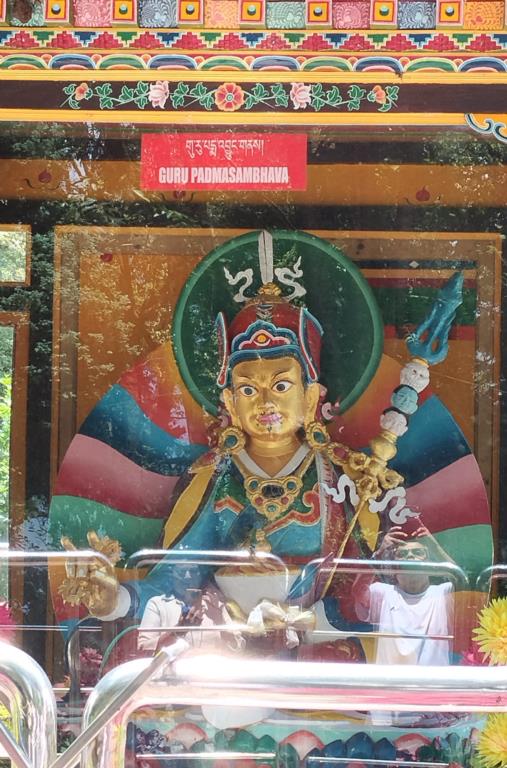 Guru Padmasambhava. Namgyal Institute of Tibetology, Gangtok, Sikkim 2026 by Dr Subhasis.
The areas south of the Sela Pass particularly remained a stronghold of Padmasambhava’s Nyingmapa and associated Karmapa and Kagyu religious traditions founded by a 10th-century Bengali saint Naropa.
The
indigenous sects lost their political and religious hold when the forces of the
Tibetan Ganden Phodrang government under the 5th Dalai Lama, backed by the Qing
Empire, militarily conquered Monyul in the 17th century.
The story goes that Merek Lama Lodre Gyatso sought to establish the Tibetan Gelug theocratic order vis-à-vis the Kagu order which had gained popularity in the neighbouring Drukpa nation (Bhutan) since 1616.
Several
such incidents prompted the government to create a separate Frontier Tract and
it brought Tawang under the direct control of the Assam Governor in 1937. The
delimitation of the Indo-Tibetan frontier was carried out in accordance with
the 1914 Convention and the McMahon Line was depicted in map publications.
In 1946, the Frontier Tract was reorganised to create the ‘Sela Sub Agency’ to be placed under the North-East Frontier Agency (NEFA). An Assam Rifles post was set up at Dirang Dzong. The political officer post, hitherto held in abeyance, was stationed in Tawang.
It was only after China declared to ‘liberate’ Tibet in 1949 that India in December 1950 tasked the Assam Rifles (under Major R Khating) to evict the Tibetan army from south of the Sela Pass; the move led to the liberation of Tawang in early 1951.” End of Quote
Why is Tawang in Arunachal imp for China – “Tawang and Yangtze are key to Tibetan Buddhism, which the Communist Party of China (CPC) is trying to co-opt as part of Sinicization of Tibet. Tawang is the birthplace of sixth Dalai Lama Tsangyang Gyatso, who was reincarnation of the fifth Dalai Lama Ngawang Lobsang Gyatso or Great Fifth, the first Dalai Lama to become the spiritual and temporal head of Tibet.” Hindustan Times
By
P Stobdan Sir India’s Forgotten Land at Mount Kailash To read all articles by P Stoban Sir in the TRIBUNE
Some
pictures
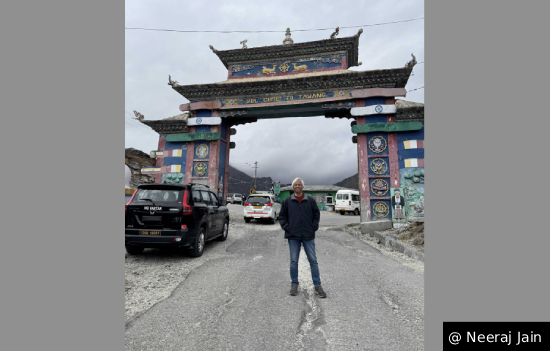 Sela Pass
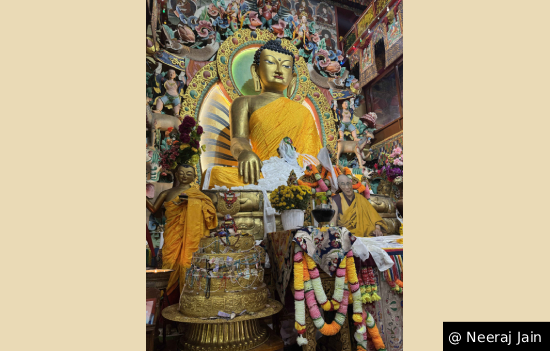 Buddha inside Tawang Monastery.
Also read
1.
A
Memorable trip to Tawang
2.
Album
Tawang Monastery
3.
Album
Bumla Border
4.
Album
Sela Pass