- Why
FCRA was introduced in 1976? How has the law evolved since then? Who are key
donor countries and what are amounts received since the 1990s? Key Provisions
of FCRA2 and Impact.
FCRA
in the news again. The Church in Kerala expressed
concerns over FCRA2 before the 2026 state Assembly polls. First my earlier
articles.
2009
Analysis of
Foreign Funding 2002 to 2007, 2010 Do foreign
contributions to India impact national Security, 2011 Why better
scrutiny is needed FCRA report 2008 09, 2012 What happened to
the Rs 94k crores that Indian NGOs received over the last 17 years, 2014 Foreign Funding of
Indian NGOs,
2019 Time
to review law for foreign funding of Indian NGOs and 2015 Conversions
Missing the wood for the trees
Why
do organizations remit billions of dollars into India every year is a question
that has baffled me (U.S., Germany and U.K.) were the biggest donors earlier.
Are there no poor people in their country? Has the Government of India invited
them to set up shop in India and aid in its developmental work?
FCRA
remittances come mainly from the West. Remittances to Islamic organizations
might come through hawala, inflated salaries to Indians working in the Middle
East. Domestic funding for some might come from collecting Halal
Certifications Fees.
Why was FCRA introduced and when?
FCRA
was introduced in 1975 i.e. during the Emergency where key goal was to prevent
foreign powers from interfering in India via local proxies. A 1984 amendment
compelled all welfare/cultural NGOs to register before receiving funds. FCRA
2010 introduced by UPA2 repealed the 1976 Act, replaced permanent registration
with a five year renewal cycle, expanded the ban to include organizations of a
political nature. FCRA 2020 Widened Prohibitions, No sub-granting, Banking and
Expenses (all inward remittances into State Bank of India New Delhi Main Branch,
administrative expenses cap cut from 50 to 20%.)
Key Numbers about number of NGOs-Amounts received and CSR Spends
Table 1 Registered FCRA
NGOs 3
|
Financial
Year
|
Number
|
|
2013-14
|
41,844
|
|
2017-18
|
22,980
|
|
2024-25
|
14,500
|
Note that 8975 lost registration in 2015 for not filing returns from 2009-2010 onwards. TOI 2014 – India witnessing
an NGO boom, there is 1 for every 600 people and Indian NGOs
received Rs 94,520 crs from 1993-1994 to 2009-10.
Table 2 Amount received
by NGOs per year 3
|
Financial
Year
|
Rs Crores
|
|
1994-95
|
2,169
|
|
1999-2000
|
4,535
|
|
2004-05
|
7,877
|
|
2009-10
|
10,334
|
|
2014-15
|
15,926
|
|
2019-20
|
16,306
|
|
2024-25
|
15,000
|
Note
ISRO Budget in 2024-25 was app Rs 13,000 crs. Pre-2013-2014, intra-India fund
flows were also included.
As per PRS Legislative Research, “As per the Ministry of Home Affairs, 13,520 organisations received Rs 55,741 crore of foreign contribution between 2019 and 2022-3.” 2 My 2010 Rediff article has
data on donors and donees n by State
Remittances
cannot be justified on the ground that India Inc. was not spending enough on
CSR.
Table 3 Comparison of Remittance vs. CSR spends – Rs crores 3
|
Financial
Year
|
Remittances
|
CSR
|
|
2012-13
|
12,614
|
3,367
|
|
2018-19
|
19,764
|
17,019
|
|
2022-23
|
22,085
|
27,141
|
No donation comes free – there are hidden agendas like ideological subversion of a nation, even though accept that some good work is happening. However, with rise in CSR spending enough domestic resources are available. To that add freebies given by Central and State governments. India is after all a $ 2 trillion economy and growing.
Yet
some western organizations try to circumvent control.
According
to an article in Indiafacts.org, “An organisation called Women Power Connect was formed in 2004 and trained specifically for the purpose of lobbying and advocacy towards the following causes: 33% reservation for women in Parliament, adoption of domestic violence bill and ADVOCATING for gender-just budgeting. It was funded by International Foundation for Electoral Systems (IFES), which in turn was funded for this project by USAID, an agency of the US Federal Government.” To know
how some try to escape MHA net my 2019 art
What is suggestion for managing receipt of funds by Indian NGOs?
Only
NRIs/Persons of Indian Origin/Individuals be permitted to donate to an NGO in
India. This excludes those organisations that operate like global MNCs and are
self-appointed guardians of development worldwide.
Organisations
that receive foreign funding under FCRA should not be allowed to fund or file
Public Interest Litigations in Indian Courts.
Extracts from earlier articles –
1.
2019 - The top three
donor countries are consistently the United States, United Kingdom and Germany.
Remittances from these three countries in 2011-12 were: Rs 3,838 cr, Rs 1,219
cr and Rs 1,096 cr, respectively.
The
top donors were Compassion International, US, Rs 183 cr; Church of Jesus Christ
of Latter Day Saints, US, Rs 130 cr; and the Kinder Not Hilfe e. V (KNH),
Germany, Rs 51 cr.
The
top associations that reported receiving foreign contributions in 2011-12 were:
World Vision of India, Chennai-Rs 233 cr; Believers Church India,
Pathanamthitta, Kerala-Rs 190 cr; and Rural Development Trust, Ananthapur-Rs
144 cr.
Aravindan
Neelakandan wrote in Swarajya that Gospel for Asia saw the 2004 tsunami as “one of the greatest opportunities God has given us to share his love with people”. Foreign contributions to Tamil Nadu were Rs 775 cr in 2002-03, which leapfrogged post the tsunami to Rs 2,118 cr in 2006-07.
2014 article includes Trends
in foreign contributions 1993-94 to 2011-12, largest donors and recipients of
foreign remittances and About Donors.
Key Provisions of FCRA 26
1. “Activity-Specific Approvals: Shifted from blanket state-wide registers. Associations must declare precise districts and select from 105 scheduled purposes (Form FC-6F).” 3
2. “Funds are banned from being used for religious conversions (though worship and traditional study remain permitted.” 3
3. “If an FCRA certificate is cancelled, surrendered, or expires, all assets provisionally vest in a government **Designated Authority** (2026 Bill).” 3
4. “NGOs
must utilise 75 per cent of the allotted funds before receiving the next
instalment.” 9
HT
- Six organisations
whose foreign funding licence was suspended by govt include Oxfam,
Missionaries of Charity, Centre for Policy Research. March 2023
AdventPR, “With the introduction of FCRA 2.0, the Ministry of Home Affairs has digitized nearly every stage of the compliance lifecycle. Registration, renewal, annual return filing, document verification, and communication with authorities can now be managed through a single integrated digital portal.” 4
Details of FCRA 26
1. Per PRS Legislative Research, “In case of assets that are a place of worship, the Authority must ensure that its religious character is maintained. The Act or the Bill does not provide for an appeal mechanism for cases when the central government denies renewal of an FCRA certificate.” 2
Section 16k of the proposed amendment states, “Any person aggrieved by an order of the Designated authority passed under this Chapter may prefer an appeal, within ninety days to the Court of the District Judge within the local limits of whose jurisdiction the vesting, management or disposal was made.” According to legal sources the Section 16k appeal mechanism applies when the FCRA certificate is cancelled or the application is rejected. There is no appeal mechanism for when an application to renew an organisation's certificate is denied.
“The certificate may be cancelled if: (i) the holder of the certificate has made an incorrect or false statement, (ii) any terms and conditions of the certificate or the Act are violated, (iii) the government feels that the cancellation would be in public interest, or (iv) the holder of the certificate has not engaged in any reasonable activity for the benefit of society in its chosen field for two consecutive years, or has become defunct.” 2
“Actions taken after assets are vested: The Designated Authority must use the assets permanently vested in it for public purposes. It may transfer such assets to ministries, departments, authorities or agencies of the central or state government. It may also dispose assets through sale or other processes. Proceeds from disposal along with unutilised foreign contribution will be credited to the Consolidated Fund of India.” 2
“Under the Act, criminal liability for offences committed by a company is borne by its directors and other individuals responsible for its conduct. This Bill defines “key functionaries” who will be held responsible. These key functionaries include: (i) the directors of a company, (ii) a partner in a firm, (iii) a trustee of a trust, (iv) the Karta of a Hindu undivided family, (v) an office bearer, member of the governing body, managing committee or any other controlling authority of a society, trust, trade union or association of individuals, and (vi) any other person responsible for the management of an organisation.” 2
Criminal
liability for any act of omission hurts many.
“The example above also shows that an organisation cannot exit the FCRA framework without its assets created through foreign funds being vested in the Designated Authority. Both surrender and non-renewal of certificate would lead to loss of assets. Even if an entity does not receive FCRA funding currently, in order to retain its assets, it would have to continue to renew its certificate in perpetuity.” 2
“Therefore, any organisation with assets created out of foreign funds would have to continue to receive foreign funds if it desires to retain the assets. This provision may be contrary to the objective of the Act, which is to regulate funding from foreign sources.” 2
Joseph
wrote in The Wire, “The rules explicitly rule out religious work involving “proselytisation,” artistic work with “political or ideological content.” Read FP – Church role in
Kudankulam merits probe and NGO Oxfam India led a malafide campaign against
the Assam tea industry. 9
There is a big
difference between India and the West. Indic faiths do not seek to convert and
say ours is the best unlike others.
The
Government of India is well within its rights to prevent conversions, regulate
donations coming into India and introducing safeguards to protect national
security.
Now
some pictures.
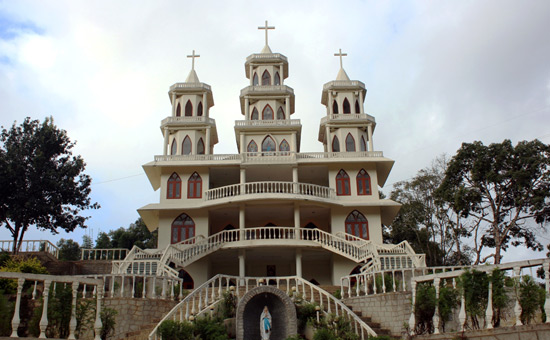 Yachuli is St Don Bosco
School. Is between Ziro and Itanagar. Pic 2013
Yachuli is St Don Bosco
School. Is between Ziro and Itanagar. Pic 2013
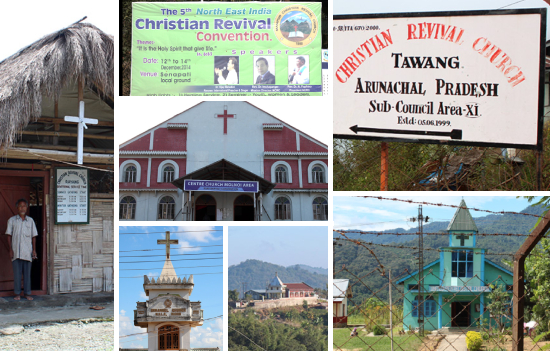
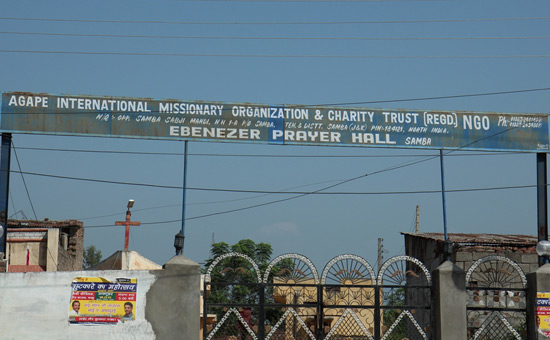 Prayer Hall Samba, near Jammu 2014.
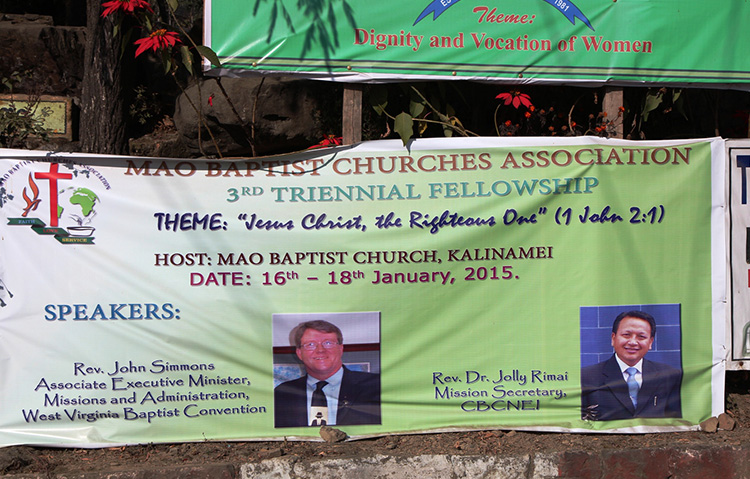 2014. Drive from Imphal to Kohima saw.
Errors
if any are inadvertent and without malafide intent. It is not my intent to
malign or defame any individual, party or organization.
Surendranath C
substantially contributed to this article. 3
Also read and References
1.
How Governments
created Christian States North East India
2. PRS India on FCRA
2
Brief
3.
Presentation of Surendranath C
3.
PRS Act as introduced
in Parliament
4.
Advent PR on FCRA2
5.
Key Changes FCRA2,
Impact on NGOs
6.
Lawstreet on FCRA2
7.
Wire False comparison
of FCRA with Western Transparency laws
8.
UdayIndia on FCRA2
9.
Daily Pioneer on FCRA2
10.
HT - Six organisations
whose foreign funding licence was suspended by govt
11. FP – Church role merits probe
12. TOI 2014 – India witnessing
an NGO boom, there is 1 for every 600 people