- Sixteen simple and doable ideas that the BJP government can do to put the Indian economy on a stronger footing.
Crisis due to US-Iran War now. Before that crisis due to U.S. Tariffs in 2025 and Russia Ukraine war that started in 2022. Covid crisis seems long ago. Every crisis results in a cry for Reforms. Rationalization of GST rates was said to be a reform due to U.S. Tariffs.
The
Gulf War has exposed the vulnerabilities of the Indian economy. If something
adverse happened in China, the Indian economy growth engine might fall substantially.
The problem is that we are reacting rather than being pro-active. This article has ideas for the BJP. Author does not claim this is an exhaustive list.
Bhakts
might find fault with my criticism so sharing earlier article links. In 2019 wrote
51 Reasons why I
will remember Modi government. And in 2024 75 reasons why I
will remember Modi govt Amit Shah, has under the PM’s leadership, done great work like amendment of Article 370, winning West Bengal elections and tightening FCRA rules for which he shall be remembered for years.
Resolving the challenges facing India is not for the faint-hearted. That is why the people of India elected Modi, through a democratic process, as Prime Minister. This government excels in messaging and showcasing India. What is required now are tough decisions and out of the box thinking. This article gets into actionable and immediate reforms because India does not have luxury of time of looking into structural issues now.
1. Transparency in Petrol/Diesel Pricing
In the absence of a transparent pricing policy for petroleum it is difficult to correlate an increase in international oil prices with the end consumer price. At $ 100 a barrel, OMC are making substantial losses!
Actually, the loss to Oil Marketing Companies (OMC) is not as high because it is decided on the Import Parity Pricing (IPP). My
2006 article
What is IPP? It is the price an OMC pays if refined fuel (e.g. petrol, diesel) were imported from the international market. IPP includes International Product Price + Freight + Insurance + Port Charges +
Customs Duty + Other Landing Costs.
Given India’s strengths, it is possible that cost of operations of Indian OMCs are lower than the price at which OMC would buy refined fuel from abroad. So, if notional loss for OMC is based on IPP, the loss figure is over-stated to the extent of difference in costs abroad vs. India. OMC earn a refinining margin too.
Further, about 80% of India’s crude requirements are imported. It is not 100% clear if domestic producer ONGC gets IPP price for oil sold to OMC or is there a cap like for natural gas. Source (older fields were priced at lower
rates)
As per ONGC Press Release 26/4/26 Crude Oil Price-Nominated Net Realization in Q4Fy26 was $78.32 (Q4Fy25 $73.72) and Fy26 $ 68.40 (Fy25 $ 76.90)
The
matter is complex. Can the government
come out with a white paper on pricing of petroleum products (crude to petrol
pump price) clearly indicating amounts paid to the central and state
governments under individual heads. Read When
revenues pinch the purse my 2004 article
In power since 2014, the BJP government could have appointed Petroleum and Natural Gas Regulator who could lay down a framework for pricing of petroleum products and review prices periodically. OMCs should have the freedom to price their products subject to a regulated ceiling. Pricing of petrol and diesel should be linked to international crude prices with no cross subsidisation. The subsidy on kerosene and LPG should be from the Central Budget. My 2006 article
2. Milking the Petroleum Sector by both Central and State
governments.
According to this April 2025 report, “With the Indian Basket
crude oil on April 4 dropping to $69.94/bbl, the Modi govt Monday announced an hike in basic excise duty on petrol and diesel by Rs 2/litre.”
A look at history shows that “Modi government has hiked the excise duty whenever international oil prices fell. 1. Raised
excise duty on petrol and diesel on 9 occasions between Nov 2014 and Jan 2016
for windfall gain from plummeting global oil prices. 2.
In those 15 months, duty on petrol rate was hiked Rs 11.77 per litre and diesel
by 13.47 a litre mopping-up Rs 2,42,000 crore in 2016-17 from Rs 99,000 crore
in 2014-15. 3. It had cut excise duty by
Rs 2
in October 2017. 4. In 2016, by Rs 1.50/lit.
5. In July 2019, raised excise duty by Rs 2
per litre. 6. Excise duty up by Rs 3/lt in
March 2020. 7. Between March – May 2020, excise duty was up by Rs 13/lt on petrol, 16/lit on diesel. 8. In 2021, govt rolled back the Rs 13 and Rs 16
per litre excise duty hike when international oil prices soared. 9. Just before general elections, it had cut petrol and diesel prices by Rs 2 a litre each.” PrameyaNews
If the UPA
government created problems for OMC by not raising prices and issuing Oil Bonds
instead, the BJP government like others before uses the oil sector to fund
subsidy and mop up revenues to ensure macro-economic stability. Revenue from petroleum products helps state governments too.
To
be fair, in March 2026 the Modi government reduced
excise duty by Rs 10 per litre on both petrol and diesel.
3. Creation of Petroleum Price Stabilization Fund
Arvind
Subramanian and others wrote in Business
Standard on 26/5/ ‘Not a BoP but a price adjustment problem’, “When oil prices dramatically declined post-2014 and 2016, the BJP government passed only a part of the decline and mopped up the difference as a fiscal bonanza. However, Ukraine war in 2022 pushed up global crude prices, taxes remained unchanged and the increase was passed on to consumers through higher retail prices.”
Did the BJP
government make a public disclosure that it was not transferring the full
benefit of a reduction in crude prices to consumers?
A
financially astute manager would have created a Price Stabilization Fund so when crude prices fall, an amount is transferred to a Fund which could be used to absorb future price shocks like the current one. I wrote
about the need for creating a Price
Stabilization Fund
when the BJP returned to power in 2024.
Counter argument - The government needed funds to pay for subsidy, keep fiscal deficit % within range and ensure macro-economic stability.
4. Over 95% of the chemical products produced globally need
chemicals derived from crude oil according to Petrochemicals Europe (MINT 28/5/26). Thus, “The Department for Promotion of Industry and Internal Trade (DPIIT), has asked the petrochemical industry, to “urgently respond” on the scope to indigenise the production of over 200 highly import-dependent petrochemical
items, Most petrochemicals listed by the DPIIT are intermediate products that are used in packaging, construction, automotive, agricultural, textile and paints. Items like PVC, polyethylene (LDPE, LLDPE), polypropylene, polystyrene, ABS are the backbone of packaging films, pipes, containers and consumer goods.” Express
Were we waiting for this crisis? If a detailed Risk Management Analysis were done earlier, risks flagged, production capacity could have increased?
I wonder if policy makers and public get complacent with the positive feel good messaging that happens continuously. My request to the people is – compare India with the best in the world not with Congress led governments and Pakistan.
5. In response to current crisis, one of the many moves was a Coal
Gasification Plan.
According
to an Adani Group
presentation benefits of coal gasification are, “Production of Methanol. China has increased Methanol blending in fuels. China produces more than 90% of its ammonia through coal gasification. It reduce dependence on imported energy sources, chemicals and feedstock for a variety of products.” I am not a domain expert, so please download presentation to know more.
Note this government has been in power for 12 years. Why was not this plan put in mission mode earlier?
According
to the Adani PPT GOI stated that its first coal gasification based fertilizer
plant would start at Talcher by 2023-24. Talcher plant shall also reduce dependence on imported Natural Gas for production of urea. According to a search the plant is expected to
be officially commissioned by December 2027.
6. Has RBI Dividend become a Cash Cow?
According
to an article by economist Ajit Ranade in the
Tribune Chandigarh,
Table 1 RBI Surplus Transfer
to Central Government
|
Year
|
Rs
crs
|
|
FY25-26
|
2,86,588
|
|
FY24-25
|
2,68,590
|
|
FY23-24
|
2,10,874
|
|
FY22-23
|
87,417
|
|
FY21-22
|
30,307
|
|
FY20-21
|
99,122
|
|
FY19-20
|
57,128
|
|
FY18-19
|
1,76,051
|
Data
after FY21-22 sourced from
The difference between FY 22-23 and 25-26 is nearly Rs 2 lakhs crores. Is the dividend funding subsidy and ensuring macro-economic stability.
7. Lack of Disinvestment by Centre and State governments.
I can understand the strategic reason for the Central government (CG) not disinvesting Bharat Petroleum and IDBI Bank (commercial reason) but there seem to be no other companies on the horizon. This is not the time to discuss strategic disinvestment or government strategy. ACTION
While announcing the Union Budget for fiscal fear 2021-22, Finance Minister Sitharaman said, “Other than IDBI Bank, we propose to take up the privatisation of two public sector banks and one general insurance company in the year 2021-22.” Source Has anything moved?
The
CG has not changed the law by which it could reduce shareholding in
nationalised banks to less than 50% whilst retaining management control.
Disinvestment proceeds can reduce debt or fund long-term asset creation.
Has the Niti Aayog come out with a state wise list of state PSUs that need to be sold? A Paper would atleast start a public debate whilst knowing that the final authority lies with the States. Read RBI
Report on State govt Finances
8. PM Kisan scheme was introduced in 2019 before Lok Sabha
Polls?
Rs
6,000/ was given to each farmer. According to a PIB release dated
24/3/2026, “The Government of India has disbursed over ₹ 4.27 lakh Cr. in 22 instalments since inception.”
While appreciating the good intent of PM Kisan scheme questions arise –
When Agriculture is a State Subject why is the Centre giving out a dole to farmers? After all States
have the power to tax agricultural income.
Even if the Centre gives farmers Rs 12,000/ per annum, the farmer lobby would still complain! The problem is structural and rarely spoken about.
The Centre failed to make a case, publish a Study Paper and debate why agriculture should move from the State to the Concurrent list. Surely, States would oppose but a paper
starts a healthy debate.
Has the government
collated the total subsidy to farmers given by Central and State government and
attempted to restructure the same? With BJP being in power in so many
states, this is the right time. Publish a White Paper, encourage a public
debate by all sides. Focus on long term solutions not freebies.
If Arvind Kejriwal
started the Freebie culture, Modi Sarkar cemented it with 6k.
9. Noted agri-economist respected Ashok Gulati on Reforms in Indian Express
He wrote, “The last import tender showed that the minimum price of urea’s landed cost on the west coast would be $935/tonne. But it is being sold at less than $70/tonne to farmers. A large amount that is being diverted away from agriculture to other industrial uses in India and smuggled out to neighbouring countries. The fertiliser subsidy bill, budgeted at Rs 1.71 lakh crore for FY27, is almost certain to exceed Rs 2.25 lakh crore. Move towards a direct benefit transfer system on a per-acre basis, integrated with the PM-Kisan scheme.”
The last time urea price was increased was in
2018. We are in 2026 and no signs of a price increase. The least the government could have done was to increase urea price by inflation rate just like it regularly increases Minimum Support Price.
If Modi Sarkar, widely considered to the strongest government in
recent times, cannot effect a price increase in urea who will?
It beats me when learned economists talk of agri reforms but miss referring to the most fundamental reform – moving agriculture to the Concurrent List.
We forget that Agriculture is a State subject,
a legacy of the Government of India Act 1935, but relentlessly expect the
Centre to reduce farmer distress. Read Which government
is responsible for Farm Distress
The Supreme Court had a chance to clarify the position when a
petition was filed against the Farm Laws in 2020 but their order is
awaited.
10. The food subsidy bill for FY27 is budgeted at Rs 2.28 lakh
crore.
Mr Gulati wrote, “Yet, if the government claims that extreme poverty has fallen to 5.3 per cent, according to World Bank standards, or around 11 per cent according to NITI Aayog’s Multidimensional Poverty Index, why should free foodgrain continue to be distributed to more than 800 million people? Rationalising the coverage under the scheme or increasing issue prices for those above the poverty line could potentially save another Rs 50,000 crore annually.”
I
wrote on NFSA in 2023 Introduced in
2013, the Act mandates that 67% of the population (75% in rural areas
and 50% in urban areas) must receive highly subsidized food grains?
Allocation
of food grains is skewed in favour of wheat and rice. The government has not
included millets. Tacitly, the government has encouraged a wheat-rice economy.
NDA2 inherited NFSA. However, it kept the rates per kg unchanged since 2014 i.e. rice Rs 3, wheat Rs 2 and coarse grains Rs 1/. If prices were increased regularly the subsidy bill would have been lower. Subsequently, it provided food grains free meaning stopped charging.
In 2015, the Shanta
Kumar Committee recommended bringing down the population coverage from 60 per cent to 40 per cent to “comfortably cover BPL families and some even above that.”
Shri Ashok Gulati
is right in asking why free food grains should be given to 80 cr people?
11. Food Corporation of India reforms
In 2015, the Shanta
Kumar Committee gave a report on FCI reforms. To read six key recommendations the link takes you to my Financial
Express article
I
do not know how much of the Shanta Kumar Committee report is implemented.
12. Trade Deficit USA
For
most of 2025, U.S. President Trump spoke of the trade deficit with India. Trade
deficit works when the exporting country exports goods.
Most learned, inside and outside the government of India failed to point out that the U.S. is essentially an agricultural and services economy. So, trade deficit is an incorrect parameter to evaluate difference in value of merchandise exports/imports.
Point
1 Look at the Trade
Deficit numbers after removing APPLE Exports to USA and the deficit
goes down. Two, India has to import parts from across the world to assemble Apple
phones for which it is paying in foreign exchange. Thus, net gain to India is
little. If not from India, USA would have imported these phones from China and
run a higher deficit with them.
This
paper by Global Trade Research Institute (16-5-25) explains it well, “Each $1000 iPhone carries the imprint of at least a dozen countries. Apple, through its software, design, and brand, claims the lion’s share of the value—about $450 per device. U.S. component makers such as Qualcomm and Broadcom add another $80. Taiwan earns $150 for chip manufacturing, South Korea adds $90 for OLED screens and memory chips, and Japan contributes $85, mainly via camera systems. Other countries like Germany, Vietnam, and Malaysia account for a modest $45 through smaller parts.”
Further in FY 25 remittances from India to USA towards Financial/Education/Services/Arms
was $ 80-85 billion. Adjusted for this, USA has a surplus with India.
For reasons
unknown, neither the government nor learned economists explained the above loud
and clear.
I am not an economist. May be, my assumptions were incorrect!
13. Education Minister
Two
issues that have not shown the respected minister in good light.
One, leakage of the NEET-UGC examination paper. Earlier leakage took place in 2024 in the state of Bihar.
Two, the University Grants Commission
(Promotion of Equity in Higher Education Institutions) Regulations, 2026
(Regulations) was notified on January 13 has created resentment within the
General Category (GC) part of the Hindu community. This regulation
was stayed by the Supreme Court of India.
Does this country
deserve a better education minister?
14. Inability to communicate the need for Change for e.g. farm
laws.
The
BJP is very good at communicating during elections but failed during the Farm
Laws and UGC Regulations 2026.
If the BJP wishes to effect change, effective communication is key. My 2019 article has ideas for the
BJP
15. Countering increasing concretization, buildings and roads.
To encourage planting of trees, the government should make it mandatory for Developers building gated communities across India to plant 1 tree, within the Society, for every 1 flat sold.
Most
are unaware that concretization of roads makes the region hotter. I do not know
how many urban bodies are creating urban forests!
No
effort was made to make Indians aware on how production of Beef is bad for the environment Without focussing on facts, the government allowed it to become either a Hindu Muslim issue or right to eat issue. This needs clear logical reasoning. Read a very good article in THE HINDU
16. Need new Information and Broadcasting Minister
Shri
Ashwani Vaishnaw is serving as Minister
for Railways, Information & Broadcasting, Electronics & Information
Technology, Government of Bharat. Mr AV
is doing a good job.
Is it humanly possible for a human being to effectively devote time to the I&B ministry, whose importance is increasing, whilst being responsible for two big ministries like railways and IT?
This government needs new blood, fresh thinking and must consider job rotation amongst ministers.
Other Ideas
17. The Government of India must invite ideas from citizens –
1.
To increase government revenue without resorting to tax terrorism.
2.
To plug leakages in revenues.
3.
Reduce expenses by the use of technology.
18.
People of India must to learn to accept price
increases when caused by factors that are beyond the control of the government,
buy smarter and be willing to pay for services.
Just like life goes up and down, so do prices. Remember, Sachin Tendulkar did not score a six off every ball – at times got out for a duck. For Ideas
to beat Inflation
19.
GOI must create a Public Trust that allows
Indians/India Inc to contribute to nation building for e.g. weapons and ISRO.
Set
up Bharat Suraksha Trust (BST) and Bharat Pragati Trust (BPT).
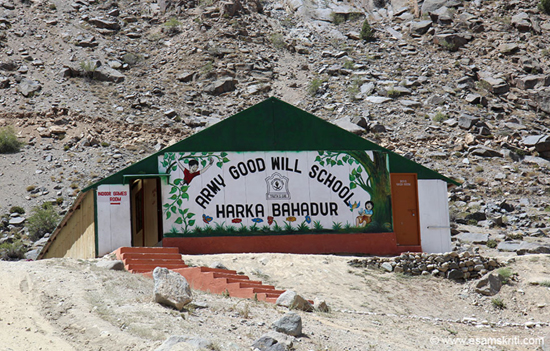 Excellent school run by Indian Army near Kargil. 2016.
BPT contributions to be used for strategic technology missions that, if successful, make Indians proud for e.g. the Chandrayaan-2 mission.
To
know how this trust would work read Ideas
for 2026 Budget and How to get
Innovative with CSR
20. If BJP frees temples from government control, it would unleash
a wave of activity that would result in higher growth and employment.
As if current subsidies were not enough think of the impact of the 8th Pay Commission on Central and State government finances whose implementation might happen before the 2029 polls!
For Krishna’s sake, Indians need to brag less and work harder.
All
need to understand that providing jobs for a population of 140 crs is not possible.
India needs job creators more than job seekers.
The author is a Chartered Accountant not an economist. He believes there is always a better way of doing things. Errors if any are without malafide intent.
Also read
1.
Indian Express – India needs to reform, relook at Subsidies
2.
Agenda for new Indian government – 2024
3.
Ideas to Clear the
FCI Mess 2019
4.
Which government
is responsible for Farm Distress
5.
Ideas
for India to realize potential
6.
Ideas
to beat Inflation
7. Modi cabinet looking jaded