- Know about the life-sustaining role of the
Aravallis. It includes Biodiversity
Significance, Faunal Diversity, Livelihoods and Community Linkages, Geological
Significance, Cultural and Tourism importance, Social, Economic and Cultural
Lifeline and Water harvesting.
To read article in Hindi by same author
The Aravalli Mountain Range is considered the
oldest mountain system in India, whose origin dates back to the Precambrian
era, during the early stages of geological structural evolution and remote
processes. This mountain range has played a crucial role in maintaining
climatic balance, controlling desertification, conserving biodiversity, and
supporting the development of human civilization in north-western India.
At present, the Aravalli range is facing a
severe crisis due to rapid urbanization, mining activities, illegal
encroachments, and environmental neglect. Therefore, an in-depth study and
analysis of its geological structure, historical significance, ecological role,
current challenges, and conservation needs has become essential.
The Aravalli is among the oldest mountain
ranges of India, actually one of the oldest in the world. Its geographical
extent is approximately 800 kilometers, stretching from Palanpur in Gujarat
through Rajasthan and Haryana up to Delhi. It provides vital evidence for
understanding the geological evolution of the Indian subcontinent.
The word Aravalli is derived from the Sanskrit words “Ar” (rock) and “Valli” (chain), meaning “a
chain of rocks.”
It is a residual mountain range with an
average elevation of 300 to 900 meters. Guru Shikhar (Mount Abu), at about
1,722 meters, is its highest peak.
The Aravalli acts as a natural barrier between
the Thar Desert in the west and the fertile plains in the east, which is one of
its most important geographical features.
Geological and Historical Importance
Geologically and historically, the Aravalli
range is of immense importance. It is a witness to the early development of the
Indian Plate. Remains of the Harappan Civilization have been found in the
Aravalli region. It served as a natural defensive shield for Rajput states such
as Mewar, Marwar, and Amer. The range also facilitated trade routes and
cultural interactions, adding to its historical significance.
The Aravalli symbolizes India’s geological heritage, environmental balance, and cultural identity. If its degradation continues, north-western India will face severe challenges such as desertification, water scarcity, and climatic imbalance.
Therefore, Aravallis must be viewed not merely
as a chain of hills but as a lifeline, and strong policy-based and social
efforts are required for its conservation.
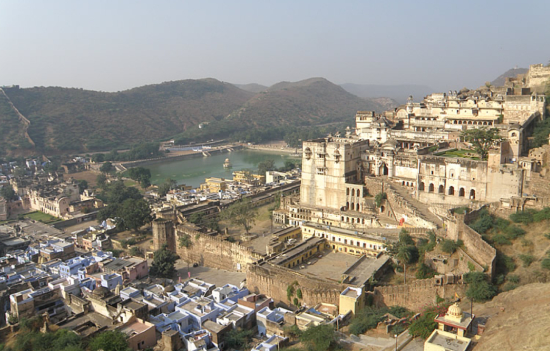 Bundi Fort, near Kota. 2009.
Biodiversity Significance
Along with being the oldest mountain range in
India, the Aravalli is also an extremely important ecological region from a
biodiversity perspective. It functions as a transitional zone between the Thar
Desert and the Gangetic plains, where arid, semi-arid, and humid ecosystems
coexist. The diversity of flora, mammals, birds, reptiles, and microorganisms
makes the Aravalli a biological shield of north-western India. However, due to
increasing human interference, its biodiversity is under serious threat, making
conservation even more critical.
Biodiversity represents the biological wealth
of a region, including plants, animals, microorganisms, and their ecological
relationships. The Aravalli is one of the few regions where ancient geological
formations coexist with rich biodiversity. It plays
a key role in regulating climate, soil, and water resources of north-western
India, enabling the survival of diverse plant and animal species.
The Aravalli is considered a transitional
bio-geographical zone where desert, semi-arid, and tropical deciduous forest
species coexist. Predominantly, dry and tropical deciduous forests exist,
including thorn forests, grasslands, and shrublands. Major tree species include
Khejri, Dhak, Palash, Arjun, Neem, Peepal, Banyan, Salar, Ardu, Ber, Khair,
etc.
Also, Medicinal and economically important
plants such as Giloy, Ashwagandha, Guggul, and Safed Musli are found there.
These plants are adapted to survive in drought and low-rainfall conditions,
making them ecologically unique.
Faunal Diversity
The region provides natural habitats for
several wild mammals such as leopard, tiger, wolf, jackal, nilgai, wild boar,
hyena, and fox. The Aravalli is especially an important corridor for leopards.
From an avian biodiversity perspective, it offers excellent habitats for birds
such as peacock, eagle, hawk, owl, parrot, great Indian bustard, sandgrouse,
and partridge. Both resident and migratory birds, including flamingos and
various species of cranes migrating from Tibet, the Himalayas, and Siberia,
depend on this region.
Reptiles and amphibians include Indian python,
cobra, krait, various lizards, monitor lizard, etc. The rocky terrain is
particularly suitable for reptiles. Insects and microorganisms such as bees,
butterflies, termites, soil bacteria, and fungi play a vital role in
maintaining ecological balance, pollination, and soil fertility.
Livelihoods and Community Linkages
The biodiversity of this region is closely
linked to the livelihoods of local communities. Forest products (wood, gum,
medicinal plants), traditional medical systems, livestock rearing, agriculture,
and cultural and religious beliefs are deeply connected with the Aravalli
ecosystem. Tribal communities exemplify coexistence with nature.
However, biodiversity faces serious challenges
due to illegal mining, urbanization, industrialization and waste disposal,
deforestation, drying of water sources, climate change, and habitat
fragmentation. The Delhi-NCR region is particularly affected.
 View from Devigarh Hotel i.e. near Udaipur.
2007.
View from Devigarh Hotel i.e. near Udaipur.
2007.
Conservation and Management
Conservation strategies include declaring
eco-sensitive zones, protecting wildlife corridors, community-based forest
management, biodiversity registers, use of GIS and remote sensing technologies,
environmental education, and public awareness campaigns. Future strategies must
focus on sustainable urban planning, ecology-based development models,
scientific reforestation, strict policy implementation, and active
participation of local communities.
The biodiversity of the Aravalli is not
limited to wildlife alone; it is an integral part of our environmental security
system. If not conserved, problems such as desertification, water scarcity, and
climatic imbalance may intensify. Therefore, biodiversity conservation of the
Aravalli is essential for both present and future generations.
Geological Significance
Geologically, the Aravalli range is
unparalleled. It forms part of the oldest rock formations in India and the
world, dating back approximately 2.5 to 3.2 billion years. The rock formations,
mineral resources, faults, folds, and metamorphic processes of the Aravalli
provide detailed insights into the evolution of the Indian crust.
Unlike the Himalayas, which are young fold
mountains, the Aravalli is a highly eroded residual range. Its rocks are
billions of years old and preserve evidence of early geological transformations
of the Earth. The Aravalli and Delhi Super groups exhibit advanced folding and
high-grade metamorphism, making the region a
natural geological laboratory.
The region is rich
in mineral resources such as copper, zinc, lead (Zawar), marble
(Makrana), phosphate, mica, and limestone, reflecting its geological
excellence. The Aravalli also provides evidence of the stability of the Indian
craton and the formation of the Gondwana supercontinent.
Hydro-geologically, the fractured and faulted
rock structures aid groundwater recharge, aquifer formation, and serve as the
source regions of rivers such as Luni and Banas, making the Aravalli vital for water security. Its scientific and educational importance lies in the study of Earth’s early history, metamorphism, folding processes, mineral exploration, and geo-hazard analysis.
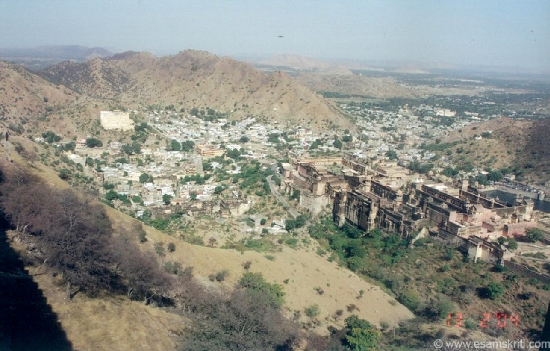 View from Jaigarh Fort near Jaipur. 2007.
Cultural and Tourism Importance
Culturally and from a tourism perspective, the
Aravalli is the lifeline of Indian civilization and heritage. It has provided
natural defense to Rajput kingdoms, guided the development of religious and
spiritual centers, and preserved folk culture, tribal traditions, and
traditional lifestyles.
Historically, forts, palaces, temples, and
cultural centers such as Chittorgarh, Kumbhalgarh, Ranakpur, Amer, Udaipur,
Jaipur, Alwar, Ajmer, and Mount Abu developed in this region. Many UNESCO World
Heritage Sites are located here.
The Aravalli is also home to diverse tribal communities such as Bhil, Meena, Raika, Garasia, Kalbelia, Rebari, and Gadia Lohar, whose folklore, dance, music, festivals, and crafts enrich India’s cultural diversity.
Tourism forms—heritage tourism, religious tourism, eco-tourism, and adventure tourism—provide livelihoods to local communities through hospitality, handicrafts, local markets, folk artists, and women self-help groups. However, unregulated tourism, heritage degradation, environmental pressure, and cultural commercialization pose serious challenges.
Sustainable tourism strategies include heritage conservation plans, eco-tourism models, community
participation, capacity-based tourism, and digital and smart tourism
management. With sensitive conservation, the Aravalli region can become a
global model of sustainable tourism.
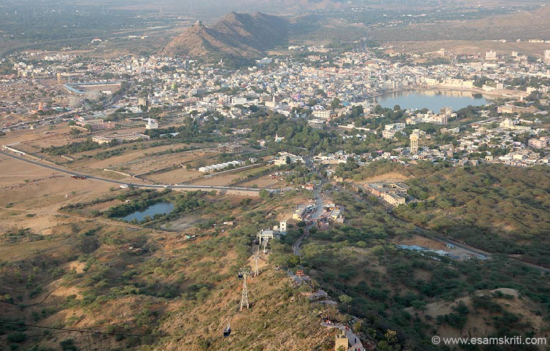 Pushkar 2017
Social, Economic and Cultural Lifeline
For regional communities, the Aravalli is not
just a mountain range but a social, economic, and cultural lifeline. Human
settlements historically developed near water sources here, leading to
agriculture- and livestock-based societies. Community life and collective
social structures evolved around these natural resources.
The flora and fauna of the Aravalli are central to livelihoods, health, culture, and social organization. Medicinal plants such as Giloy, Ashwagandha, Guggul, and Shatavari are used in traditional healthcare. The region’s biodiversity supports food security, water security, and cultural identity.
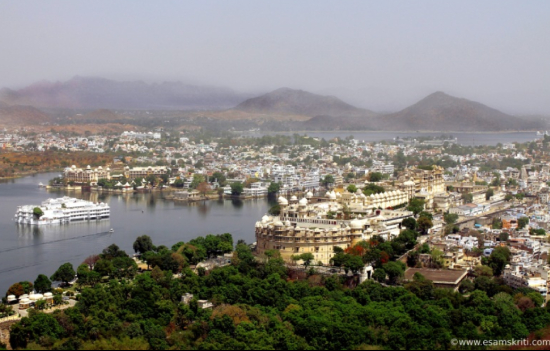 Pichola Lake, Udaipur. 2017.
Water Harvesting and Management in Rajasthan
The Aravalli plays a multidimensional role in
water harvesting, water management, and sustaining life in Rajasthan. In this
arid and semi-arid state, it functions as a natural water-harvesting system.
Its geological structure, catchment areas, vegetation cover, and traditional
water structures ensure rainwater storage, groundwater recharge, surface water
availability, and long-term water security.
Rivers, ponds, johads, stepwells (baoris), and
nadis originating in the Aravalli form the backbone of agriculture, livestock
rearing, drinking water supply, and cultural life. Traditional practices such
as johads, baoris, tanks, and community-managed water systems have proven
highly effective, as seen in the Johad movement of Alwar district.
Community awareness, revival of traditional
knowledge, cultural reverence for water, regulated usage, and policy support
such as mandatory rainwater harvesting and watershed development programs are
crucial. Integrating traditional wisdom with modern technology, GIS, and remote
sensing can ensure sustainable water availability, strengthen rural economies,
and enhance climate resilience.
Recent Supreme Court Decision on Aravalli
A recent and significant Supreme Court verdict
concerning the future of the Aravalli range has drawn national attention. The
decision focuses on ecological conservation, mining regulation, and the legal
definition of the Aravalli. The issue has been under judicial consideration for
decades, primarily under the M.C. Mehta environmental case.
In November 2025, the Supreme Court accepted the Ministry of Environment’s recommendation for a “uniform definition” of the Aravalli, defining it based on elevation and clustering of hills. Experts warned that nearly 90% of the Aravallis might be excluded by this definition. On 29 December 2025, the Supreme Court stayed this order and constituted a high-level expert committee for scientific review.
The Court reiterated restrictions on new
mining leases until a sustainable mining management plan is prepared, with
complete prohibition in core conservation zones. The decision has significant
environmental, social, and political implications, particularly for Rajasthan,
Haryana, Delhi, and Gujarat.
While some view the decision as an attempt to
balance conservation and development, others fear it may open doors for mining
and construction in ecologically sensitive low-height hills. The debate
highlights the core question: whether an elevation-based definition can truly
protect the ecological integrity of the Aravalli.
The Supreme Court’s intervention signals that future Aravalli conservation policies are likely to become more stringent, scientific, and environmentally sensitive.
Author Dr. Reepunjaya Singh was Senior Professor (Retd.) Urban Development and In-charge of Disaster Management at Harish Chandra Mathur
Rajasthan State Institute of Public Administration, Jaipur, and former Honorary
Member of the Rajasthan Staff Selection Board.
Article represents personal views of the author and do not reflect the official position or policy of www.esamskriti.com All pictures by esamskriti. Article should not be republished without written permission of esamskriti.com
To
read SC order of November 2025 click on PDF
To
hear Arnab Goswami
interview with former CJI Gavai 19 minutes
Also read
1.
Why activists and
government are clashing over Aravali height
2.
Debunking the
Aravali fakery
3.
For a Map of
Aravalis by State and Major Events in AL Protection 1995-2025
4.
Zinc mining in the
Zawar region of Rajasthan – Udaipur district
5.
Dadam hill lays
bare how illegal mining ravaged the Aravalis
6.
The Aravalli
debate is ultimately not just about metres, maps or mining leases
7.
Why the Aravallis
matter for the climate, air, and water of north India plains
8.
PIB Press Release
on Aravallis
9.
How the BJP can
affect change
10. Media Reports on
Aravallis controversy - Pictures of Aravallis in Rajasthan
11.
Aravallis
development must be decided based on cost-benefit analysis not noise