- This photo feature briefly covers importance and history of each of Shivaji’s 12 forts that were declared as UNESCO World Heritage sites in 2025. I hope encroachments in all forts are removed.
In
July 2025, UNESCO declared 12 forts of Chhatrapati Shivaji Maharaj as UNESCO
World Heritage Sites. Eleven forts are in Maharashtra and one in Tamil Nadu.
Their names are Salher, Shivneri, Lohgad, Khanderi,
Raigad, Rajgarh, Pratapgarh, Suvarnadurg, Panhala, Vijaydurg, and Sindhudurg in
Maharashtra, and Gingee in Tamil Nadu. To visit UNESCO site
Format
is fort, its picture, write-up and album link where I visited. Matter based on
information from local guides told and an Indian
Express article. All credits to them.
1. Raigad Fort
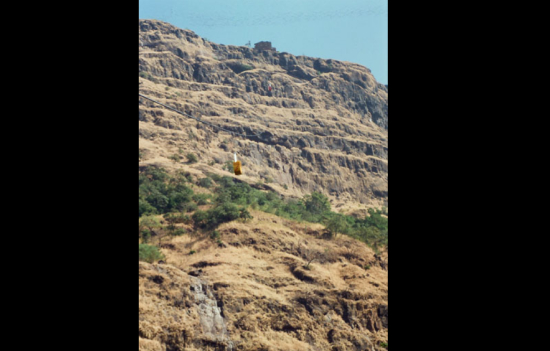 One can take a ropeway to reach fort top or climb.
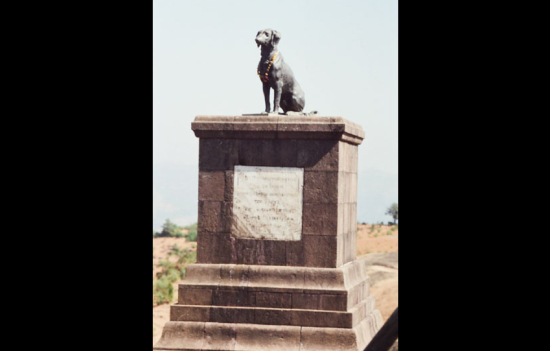 Samadahi of Shivaji Maharaj dog.
Raigad
was the capital of the Maratha Empire. It was here that Shivaji was crowned
Chhatrapati in 1674. Mughals got fort control in 1689, Marathas regained
control around 1727 and eventually British took control in 1818.
To
see album of Fort and Shivraj Abhishek
Celebration Day
2. Shivneri Fort
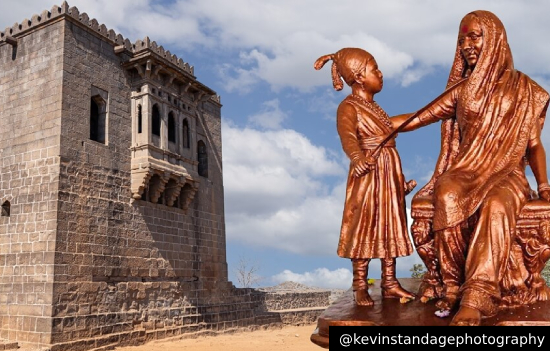 Shivaji Maharaj was born at Shivneri Fort
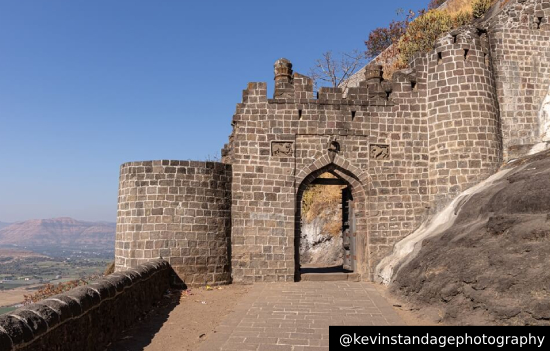 Ganesh Gate.
The
history of the fort goes back to the 6th century when it was built
as a strategic military outpost. The Ganga-Jamuna springs in the fort flow to
this day.
Read
about Shivaji mother Jijabai who
contributed to making him
3. Lohagad Fort
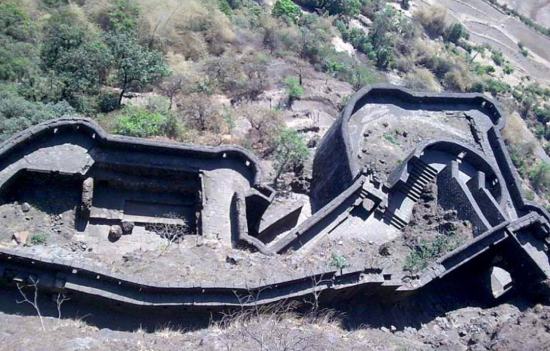 Pic by Amit Gurav
Used
metal for the first time in fort wall hence the name Loha. It was originally built by the Lohtamia dynasty in the 10th
century (Indian Express)
Lohagarh
was occupied by many dynasties: Satavahanas, Chalukyas, Rashtrakutas, Yadavas,
Bahamanis, Nizamshahis, Mughals and Marathas. Lohagarh was captured by Shivaji
in 1648 A.D. By the Treaty of Purandar he surrendered it to the Mughals in 1665
and recaptured in 1670.
To see album
4. Salher Fort
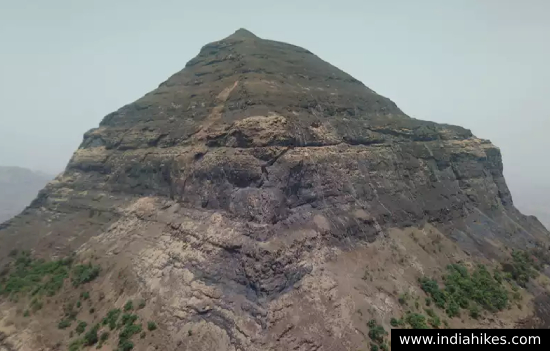
It
is near Nasik and the highest fort in Maharashtra at 5,141 feet.
Noted historian Dr Uday Kulkarni wrote, “From the Mughal army twenty-two of their commanders
including Ikhlas Khan and Bahlol Khan were captured. Only one Maratha chief
named Suryaji Kakde was killed. The battle of Salher was one of the few pitched
battles fought at the time and the triumph resonated in the land for a long
time afterwards. In Delhi, the news of the
defeat plunged Aurangzeb into despair. For three days he did not emerge for the
pubic audience.” Read about the Battle of Salher
5. Rajgad Fort
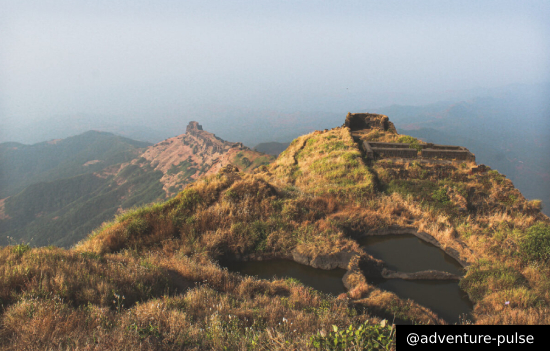
According
to this Indian Express article, “The “King of Forts” was captured by the young Shivaji Maharaj in 1647, and served as his capital for 26 years before Raigad. This was where Rajaram I, the son of Shivaji Maharaj, was born, and where his first wife, Saibai, passed away.”
“The fort houses many architectural marvels like the Padmavati Machi, which was the residence of Shivaji Maharaj, and had the Padmavati Temple. To the west stood the three-layered stronghold of Sanjivani
Machi, a stunning example of military engineering that was intended to repel enemy invasions.” 1
6. Pratapgad Fort
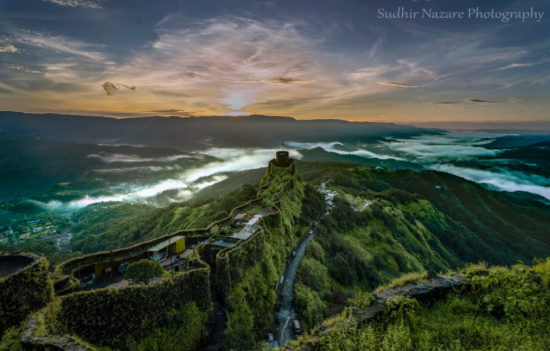 From this point the Marathas kept a watch on the approaching enemy.
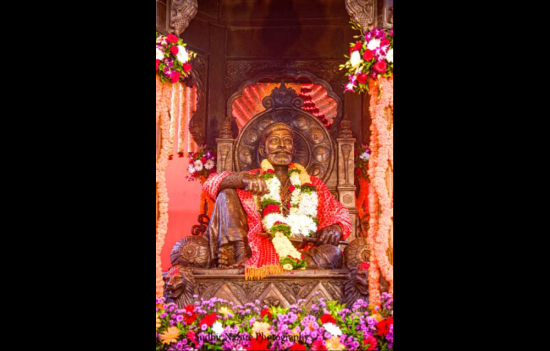 Bhavani Devi. Pranams.
It was built by Shivaji in 1656. This fort is famous because
close to it took place the Shivaji-Afzal Khan encounter.
The fort is 24 kms from Mahabaleshwar. “The minister Morepant Pingle, on the command of Shivaji Maharaj to control the rebellious satraps of the surrounding Javali basin, built Pratapgad in 1656.” The fort has a Tulja Bhavani Mandir.
A statue of Chhatrapati Shivaji Maharaj, is on top of the fort, was
installed in by then Prime Minister Nehru in the 1950s.
If the Marathas lost
gates one and two they would exit through a small underground tunnel from Pratapgadh
into the valley. Album shows how done.
To see album .
To see another album
7. Suvarnadurg Fort
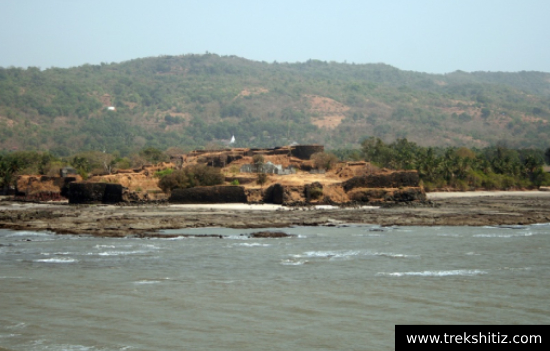
According to Indian
Express article, “Initially built by the Adil Shahi dynasty, Suvarnadurg was captured and rebuilt by Shivaji in 1660. It was a fortress and housed a shipbuilding yard.” 1
8. Panhala Fort
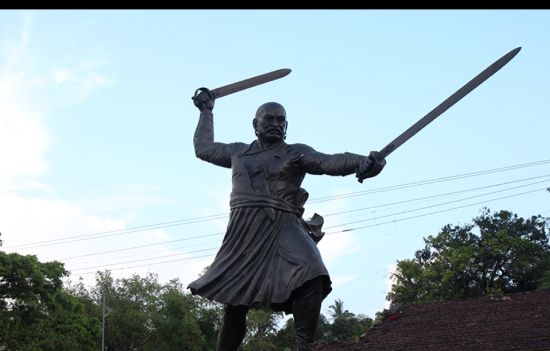 Bajiprabhu Deshpande greets you on reaching the fort.
According
to Indian Express, “Panhala Fort near Kolhapur was designed to be a self-sustaining settlement. Originally built in the 12th century CE by the Shilaharas, a feudatory dynasty of the Rashtrakutas who ultimately founded their independent kingdom, the fort was occupied by the Yadavas of the Deccan, the Bahmani sultanate, the Adil Shahi kingdom of Bijapur, and finally Marathas.”
“Panhala is among the largest of the Maratha forts, with a perimeter of 14 kilometres. It was a formidable military fortress with robust walls, hidden passages, bastions, secret supplies of water, and underground granaries to cope with a prolonged siege.”
Panhala is famous for the Battle of Pawankind in 1760. While breaking siege of Panhalgad soldiers killed Shiva Kashid, a dummy of Shivaji. To reach Vishalgad was difficult so Raje decided to fight back in Ghodkind. Bajiprabhu told Shivaji go to Vishalgarh Fort. Till enemy soldiers reached Ghodkind, Prabhu brothers with 200-300 soldiers detained them with great effort. He took his last breath only after hearing gun-fires, a sign of Shivaji’s safe reach to Vishalgad fort.
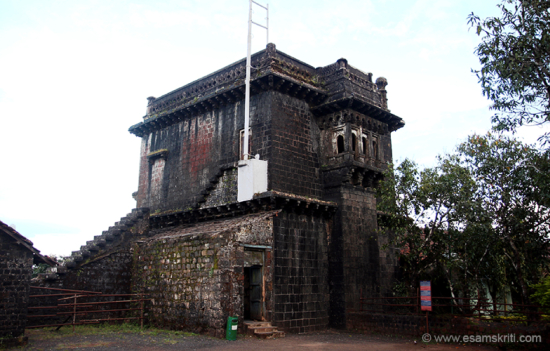 Sajja Kothi.
Sajja Kothi. Maksood
Akka built this in the year 1008. It rises to 72 feet. Terrace on top is called ‘Sajja’ from where get a view of whole of Panhalgad and other areas. When Shivajiraje was besieged in 1660 by Jouhar, he set out from this building on the night of 12/7/1660.
To see album
9. Vijaydurg Fort
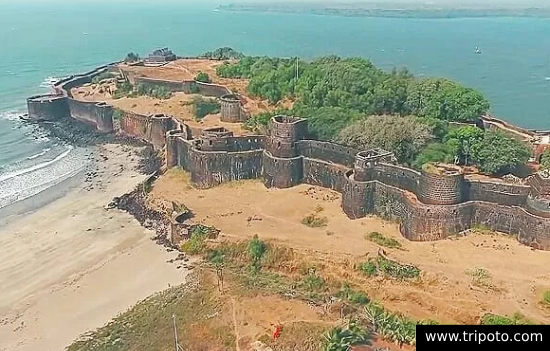
According to Indian Express article, “One of the oldest of the Maratha forts, the “Fort of Victory” on the Arabian Sea coast in present-day Sindhudurg district was originally built by the Shilahar dynasty in the late 12th century. It was then known as Gheria. The fort was captured by Chhatrapati Shivaji Maharaj in 1653, who renamed it after the Hindu solar year, which was then extant, “Vijay”. Vijaydurg would later be the site of fierce naval battles with the British East India Company, which would finally conquer it in 1756 after several failed attempts.” 1
“A striking feature of Vijaydurg is a hidden undersea tunnel, 200 metres long, connecting the fort with the
mainland. At a short distance from the fort, up the Waghotan river, is the Rameshwar dockyard, which was used by the Maratha navy to build and repair its warships.” 1
10. Sindhudurg Fort
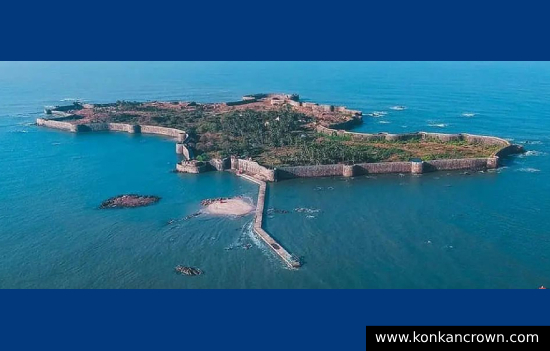
Indian
Express article says, “It was constructed in 1664-67 by Hiroji Indulkar, the chief military engineer of Chhatrapati Shivaji Maharaj, to provide a secure base for maritime operations against the Portuguese, the British, and the local Siddis.”1
11. Khanderi Fort
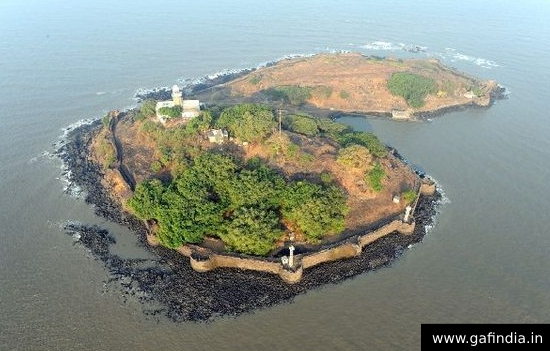
It is a small fort off the Alibaug coast, near Mumbai, that was
fortified by Shivaji According to Indian
Express article, “In time, Khanderi would become a key maritime outpost, reflecting Shivaji’s strategy to challenge foreign naval dominance and protect Maratha interests along the Konkan coast.” 1
12. Gingee Fort
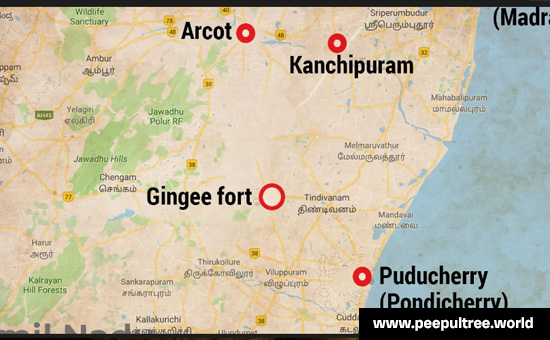 Map shows you location of Gingee Fort, how down south it is.
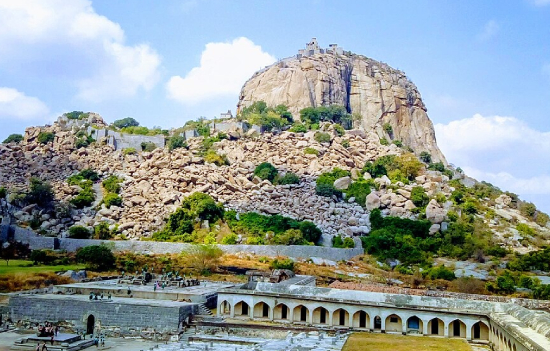
Saurabh Lohegaonkar wrote, “So Nasir Khan instead of resisting the Marathas, opened negotiations and handed over the impregnable fort of Gingee in May 1677. The fall of Gingee sent shockwaves through the region and many major and small chieftains switched their allegiance from Adil Shahi to the Marathas.” Read Shivaji Campaign
in Karnataka and Tamil Nadu
“The Gingee Fort which was considered of prime importance in the larger scheme of strategic depth and its defenses was strengthened by demolishing some parts of earlier fortifications and completely rebuilding it. Andre Freire jealously notes about the reconstructed Gingee fort. ‘He constructed new ramparts around Gingee, dug ditches, erected towers, created basins, and executed all these works with a perfection which European art would not have denied.’ (R. Satyanatha Aiyar-History of the Nayakas of Madura-283-84).”
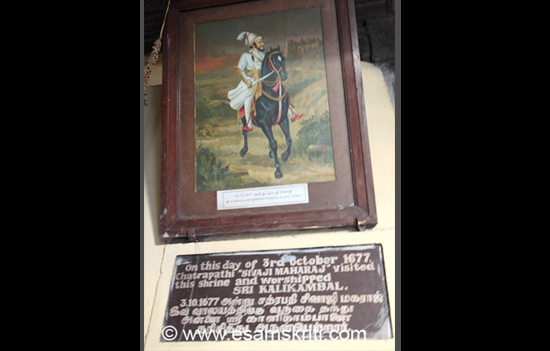 Shivaji Maharaj entered this Chennai temple in October 1677.
Hope the Maharashtra government clears forts of encroachments and maintains them well, so more Indians visit them and rediscover their history.
References
and Also read
1. Indian Express
report on 12 forts
2.
Stay options at
each Fort location
3.
Detailed information
about each fort
To read all
articles on Maratha History
How
the Marathas contributed to the decline of the Mughal Empire