- Six
Mudras that bring mudra practice into
everyday life. It includes when to do, how to do and time to do. It recommends
Mudra type based on your State of Mind. Practical advice.
In
part
one we looked at mudras and how something as simple as the position of our
hands can hold a deeper meaning in yoga. We explored the connection between the
fingers, the elements and the subtle energies within us.
Perhaps
the more interesting question is how we bring this understanding into our everyday lives.
We don't always have the time or the space for a long yoga practice. Some days we may manage our asanas and pranayama, while on other days, we may only a few quiet minutes between work, family and everything else that fills our day. This is where mudras are particularly beautiful.
Mudras
are simple. They require little space and no equipment. You can practice them
sitting on a yoga mat/chair, during meditation or when have a few moments to
yourself.
Rather
than thinking of them as something we need to practice perfectly, we can begin
to see them as tools we can turn to depending on whether we are scattered,
running low on energy or emotions we may be experiencing.
Here
are six mudras that you can explore and make part of your own practice.
1. Vayu Mudra - when the mind feels restless
There are days when the body may be sitting quietly, but the mind doesn't know how to do the same. We move from one thought to another, worry about what hasn't happened yet, replay what has already happened and somehow find ourselves mentally exhausted without having physically done very much.
In
yoga, Vayu relates to the air element and its quality of movement. Vayu
Mudra is traditionally associated with balancing this quality and is often
included when there is a sense of restlessness or excessive mental movement.
How to practice Vayu Mudra
1.
Fold your index finger towards the base of your thumb and gently place the
thumb over the folded finger. Keep the remaining three fingers extended but
relaxed.
2.
Rest your hands comfortably on your thighs or knees and allow your shoulders to
soften.
3.
Begin with 5 minutes
and, if it feels comfortable, gradually move towards 10 minutes.
4.
Keep the breath slow and natural and simply observe
what is happening within you.
You don't need to stop the thoughts. Each time you notice the mind wandering, gently bring your attention back to the breath. Sometimes the mind doesn't need another instruction. It simply needs a little space to settle.
2. Gyan Mudra - when you feel
scattered
Our
mind has become accustomed to constant stimulation of messages, emails,
notifications, conversations, news and the endless list of things waiting to be
done. Gyan Mudra is one of the most familiar mudras in yoga. The word gyan
means knowledge and traditionally this mudra is associated with awareness,
concentration and meditation.
To practice Gyan Mudra
1.
Bring the tip of the index finger to the tip of the thumb, creating a gentle
circle.
2.
Keep the other three fingers relaxed and extended and rest your hands on your
knees or thighs.
3.
Practice for 5-15 minutes,
either on its own or along with pranayama or meditation.
4.
It can also be a lovely practice towards the end of the day, when you want to
move away from the constant activity and creating some quiet time before sleep.
5.
Notice your breath and allow your attention to settle.
Sometimes focus is not about trying harder. It is about giving ourselves the
opportunity to slow down to notice where our attention is going.
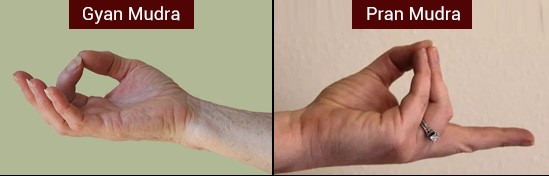
Note: Both Gyan and Vayu Mudra involve the index finger but in
different ways which is an important distinction.
Gyan
Mudra: The tip of the index finger touches the tip of the thumb. The other
three fingers remain extended.
Vayu
Mudra: The index finger is folded down towards the base of the thumb, and the
thumb gently rests over the index finger. The other three fingers remain
extended.
3. Prana Mudra - when the energy feels
low
There
are days when we wake up feeling tired and there are days when tiredness
catches up with us in the middle of everything we have to do. Not every kind of tiredness needs another cup of coffee or
another push to keep going. Sometimes we simply need to pause.
Prana is described in yoga as the life
force, and Prana Mudra is traditionally associated with vitality and pranic
energy.
To practice Prana Mudra
1.
Bring the tips of the thumb,
ring finger and little finger together.
2.
Keep the index and middle fingers relaxed and extended and practice the same
position with both hands.
3.
Start with 5-10 minutes,
with relaxed and natural breathing.
4.
You could include it in your morning practice or use it during the day when you
feel your energy beginning to dip.
As you sit, notice how you actually feel rather than trying to create a particular experience. Sometimes we keep pushing simply because we haven't stopped long enough to realize that we need a pause.
4. Apana Mudra - when you feel heavy
or need to let go
We
accumulate a lot as we move through life. Physical tension, thoughts, emotions,
responsibilities and experiences that we continue carrying for long even after
they are relevant.
In
yogic philosophy, Apana is associated with the downward-moving energy of
elimination and release. Apana Mudra is traditionally connected with this
principle.
To practice the Apana Mudra
1.
Bring the tips of the thumb,
middle finger and ring finger together. Allow the index finger and
little finger to remain relaxed and extended, and rest your hands comfortably
on your thighs or knees.
2.
Try it for 5-10 minutes,
allowing the breath to remain natural.
As you sit, notice your belly, your jaw, your shoulders and the places where you may be holding unnecessary tension. You don't need to consciously decide what you are going to release. Simply create some space and allow the body and the breath to settle. There are times when our practice is not about adding something new but about making space for what we no longer need to hold.
5. Prithvi Mudra - when you need to
feel grounded
There is a difference between being busy and feeling scattered. We can move through an entire day completing one task after another and still feel as though we haven't really arrived anywhere.
Prithvi means earth, and in the traditional
yogic understanding, the earth element is associated with qualities such as
stability, steadiness and grounding.
To practice Prithvi Mudra
1.
Bring the tip of the ring
finger to the tip of the thumb and keep the other three fingers relaxed
and extended. Rest your hands comfortably on your thighs or knees.
2.
Begin with 5 minutes
and gradually move towards 10-15
minutes if it feels comfortable.
3.
You can practice it during meditation or when you feel the need to slow down
and reconnect with yourself. Notice your body. Notice your breath. Notice the
support beneath you. We spend so much time thinking what comes next that the most important thing we can do is simply be where we
are.
6. Varuna Mudra - when you need to
soften
We
spend a lot of our lives holding things together. Our work, our families, our
responsibilities, our plans and our expectations. Somewhere along the way, we
may become so used to holding everything together that we forget what it feels
like to soften.
Varuna
Mudra is traditionally associated with the water element and is formed by
bringing the little finger and thumb together.
To practice Varuna Mudra
1.
Bring the tip of the little
finger to the tip of the thumb and allow the remaining three fingers to
stay relaxed.
2.
Rest your hands on your thighs and let your breathing remain easy and natural.
3.
Stay for 5-10 minutes
and simply notice how you feel. There is nothing to achieve. Water reminds us
of the ability to flow.
Not everything in life needs to be controlled, resolved or
pushed through. Sometimes we need to allow
ourselves to soften and find a more ease in the way we move through life.
How long should you practice a mudra?
There isn't one fixed duration that applies to every mudra or every person. Different yoga traditions and teachers recommend different lengths of practice, so if you are beginning, keep it simple. Start with 5 minutes. If it feels comfortable, gradually
move towards 10-15 minutes.
You
can practice one mudra on its own or make it part of your existing pranayama,
meditation or yoga practice. Remember, gentle is enough. There is no need to press the fingers tightly
together or hold the position with effort. Your hands should feel comfortable,
your shoulders relaxed and your breath natural.
The
purpose is not to perfect the shape of your hands. It is to use this simple
gesture as an opportunity to pause, become aware and connect with yourself.
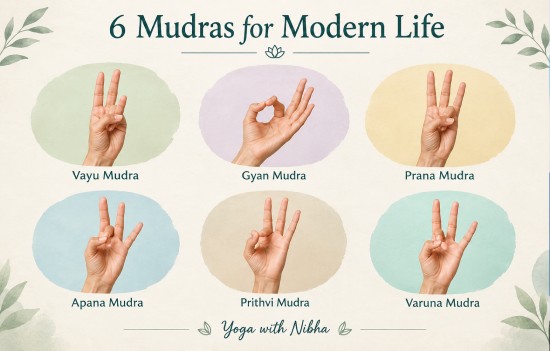 Pic of Six
Mudras
Pic of Six
Mudras
Which one do you need today?
1.
If the mind is restless and you need to slow
down, explore Vayu Mudra.
2.
If you feel scattered and need to gather
your attention, the Gyan Mudra may be a good place to start.
3.
If you feel low and need a quiet pause in
the middle of a busy day, try Prana Mudra.
4.
If you feel heavy explore Apana Mudra.
5.
If you feel ungrounded and need to come back
to yourself, Prithvi Mudra offers that pause.
6.
If you are holding on too tightly and need
to soften, Varuna Mudra may be the one you choose.
You don't need to practice all six. Choose the one that feels relevant to you today. Sit comfortably, make the mudra gently, close your eyes if that feels right, and spend a few quiet minutes with your breath.
Perhaps
that is what is most fascinating about the mudras. They ask very little of us,
but they can create a small pause in a day that is
otherwise full. No equipment. No special place. No complicated movement.
Just
your hands, your breath and a few minutes of your time. And sometimes, that is
enough to remind us to slow down, notice what is happening within and come back
to ourselves.
Note: The descriptions of the elements and traditional associations in this article are based on yogic traditions. Mudras can be included as part of a yoga, breathing or meditation practice, but should not be considered as a sole treatment for anxiety, sleep disorders, digestive disorders or other medical conditions.
Author
Nibha - From two decades of being in
high-stressed corporate jobs, to a Yoga teacher & practitioner who loves to
unlearn, learn, and teach. She is based in the National Capital Region.
To read all articles by author
Also read
1. Hasta Mudras
2. Introduction to Mudra Therapy
3. Dhyana Mudra
4. Shambhavi Mudra
5. Garuda Mudra
6. Bronchial Mudras
7. Ushas Mudra