- This thought provoking piece includes background to the making of the Colonial Constitution, is the Constitution a Holy Book and Shortcomings in the Colonial Constitution that the Executive or guardians of the CC are clinging onto. Change is the only thing i.e. permanent.
About
three weeks ago, I attended the screening of a documentary, Untrapped (The Silkyara Tunnel Rescue), produced by Sahana Rao and directed Jyoti Kapur Das. At the Jagran Film Festival, I got chatting with a young man from Pathankot, Punjab who looked to be in his mid to late 20’s. We had a stimulating conversation that triggered this article.
Aarav
spoke of drug problem, agricultural distress, urban decay, poor quality of life,
education, healthcare and tacitly attributed them to the failure of the Central
government. If I had not met him outside the theatre, might have mistaken Aarav
to be a lot more than a Production Operations in Charge of a media company.
I
said that the problems he referred to mostly fall within the domain of the
state and local governments. Further, a key problem was that the people of
India did not know which government (Centre, State, Local) was responsible for
what. Worse, few know of the concept of Centre, State and Concurrent Lists. He
asked whose responsibility was it to enlighten the public?
One of the
fundamental problems facing India today is that the Colonial Constitution (CC)
has not changed inspite of a changing environment. I blame the Executive and
Judiciary more than the CC makers who are not alive.
Background to the making of the Colonial Constitution
The Drafting Committee consisted mostly of
lawyers. Perhaps, concept of Cross Functional Teams did not occur to CC makers
or did not exist then. However, the Constituent
Assembly that helped frame the CC was a diverse
grouping.
The framers were Alladi Krishnaswami Ayyar, N Gopalaswami Ayyangar; B.R. Ambedkar, K.M Munshi, Mohammed Saadulla, B.L. Mitter
and D.P. Khaitan. Source When Khaitan died T T
Krishnamachari was nominated. N Madhava Rau replaced B L Mitter who resigned
due to ill health. The
Constitution Framers
Perhaps, a reason why lawyers dominated the CC
making process was because many freedom fighters were lawyers. Since
Independent India chose to follow a Westminster system
(parliamentary system adopted from the British) so having lawyers trained in
western jurisprudence helped. Democracy as understood today, existed in the
West so guiding light was Constitutions of Christian
countries.
In his book The Colonial Constitution Dr Arghya Sengupta, Research Director at Vidhi Centre for Legal Policy wrote, “A significant portion of the Government of Act 1935 made it, unchanged, to the final version of the Constitution adopted by the Assembly in November 1948. The cognitive dissonance was astounding.” 1 Pg. 27. Senior Advocate Arvind
Datar wrote, “It is interesting to note that Article 26 is derived from Article 44 of the Irish Constitution, 1937. This Article 44, in turn, was based on Article 114 of the Constitution of Poland, 1921.”
Around 1947-48, India was grappling with
many issues like Partition so there was less time for a fresh constitution. Perhaps,
our aging leaders wished continuity.
Pratap Bhanu Mehta and Others wrote in the MINT, “The CC was profoundly shaped by the system of English Common Law. It borrowed Directive Principles of State Policy from the Irish Constitution, and was influenced by the American debates over due process-made to serve distinctly Indian political challenges.”
The Constitution made India a Rights based society!
The CC made Bharat a ‘Rights based society’ when Dharma dominates Indian thought. Dr Sengupta wrote, “Channelling Krishna in the Mahabharata, Gandhi believed that everyone’s duty is act; rights are merely the fruits of that action.” 1
Pg 123 Read What are
Fundamental DUTIES under the Indian Constitution
The Constitution is a Holy Book-Cannot be
changed!
Indians fail to realize that one of the
reasons why Sanatana Dharma survived centuries is because it had multiple holy
books and accepted Change. This was unlike Middle East founded religions.
V Srinivas, author of Awakening
the Nation-Rediscovering the spirit of India with Swami Vivekananda wrote, “SHRUTI (core) represent Eternal Values of our civilization (to be held on to at all times). SMRITI represent Ideas, rituals and conduct varying spatially and temporally (to be evolved over time).
To consider any Constitution making
endeavour as a sacred or holy mission is to mix up the categories of the
secular and the idea of Holy. All major religions have their holy texts. By
definition, holy books are revealed by the Supreme Godhead for mukti
purposes. Read Comparing Indic vs. Abrahamic Faiths – A Primer
Change is the essence of life. Just as
nations evolve, so must the Constitution!
How quick framing of the CC helped?
India adopted its Constitution in 1950 and India’s general elections were held in 1951. Conversely, neighbour Pakistan’s constitution came into being six years later, in March 1956. Source This resulted in
political instability.
 People of India.
The Constitution was amended but rarely to reflect actual responsibilities
The Constitution was
adopted in 1950. Till May 2024 it was amended 106 times. Few amendments changed
centre-state responsibilities barring moving Education to the Concurrent List
around 1976 and the 74th Amendment Act urban
bodies.
Now coming to the
specifics –
1. Agriculture –was made a state subject by the Government of India Act 1935
(passed by British Parliament), later confirmed by Constitution Assembly.
Excerpt from Scroll, May 22, 2017 report, “An Expert Committee on Financial Provisions was constituted under the directions of Dr Rajendra Prasad, the President of the Constituent Assembly that was tasked with drafting the document. One of the tasks before this Committee was to examine whether the power to tax agricultural income should lie with the Centre or the states.
In its report, the Expert Committee observed that it was “obvious” that the taxation agricultural income by the states, while all other income was taxed by the Centre, stood in the way of a “theoretically sound system of income-tax in the country” and it would therefore have liked to do away with the segregation. However, it decided nonetheless to give states the exclusive power to tax agricultural income and retain the revenue accruing thereof as that had the “political merit of keeping together in one place both benefit and responsibility.
In hindsight, leaving the Union government with absolutely no power to tax agricultural income – was a mistake on the part of the Assembly.”
It was assumed by the Constitution
makers that agriculture was the responsibility of the states hence they were
given the right to tax agricultural income. Today, the Centre provides
fertiliser subsidy, buys at M.S.P., PM Kisan Rs 6k etc.
Is the state of Indian Agriculture in
2026 and 1935 similar?
2. 74th Amendment Act 1992 gave
Constitutional Status to Urban Local Bodies
States want more power from the Centre
but are unwilling to delegate to local bodies. Read Mint editorial Empowering Mayors to lead cities Excerpts, “A 2024 CAG review found that typical municipalities only controlled four functions.” A Niti Aayog report calls for stronger municipal finances and devolution of responsibilities to local governments. Read Report
3. Shift back Education back to State List - The state of Tamil Nadu is at the
forefront of wanting Education to return to the State List compelling doing
away with the Supreme Court mandated NEET. Read
Why TN opposes NEET
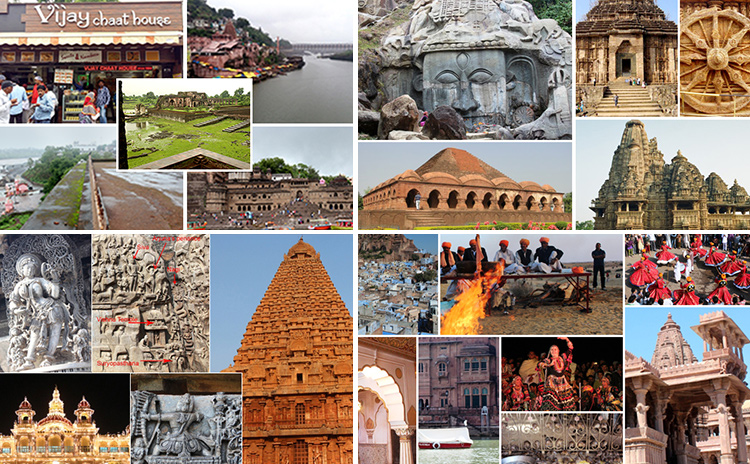 Collage of Indian Heritage.
4. The Constitution Makers did not define –
a. Who is a Minority? Sikhs were declared a Minority around 1992 and Jains in
2014. However, both are Hindus under the Income-Tax Act. The Sikhs ruled Punjab since 1966 but
are a minority for Articles 29 and 30. Matter pending in the Supreme Court for
years.
b.
How can there be Equality under
Article 14 when Muslim women are denied equal Inheritance Rights and
Hindus denied right to manage their temples? Read Comparing inheritance laws for Hindu and Muslim women
When the Supreme Court upheld the
constitutional validity of the Right to Education
Act in 2012 and later ruled in May 2014 that the Act does not apply to
minority educational institutions (search) did it not know that the law was
applicable to only Hindu educational institutions. Equality before Law!
c. How can a citizen be a Scheduled Tribe and Christian?
d. The CC makers and the Executive did
not deem it appropriate to declare a closing date Caste Based Reservations in 1950.
The learned CC makers forgot what Gandhi said, “In October 1931 Gandhiji was invited to address the Royal Institute of International Affairs, London where he made two observations. One ‘that today India is more illiterate than it was fifty or hundred years ago. Two that ‘the British administrators instead of looking after education and other matters which had existed began to root them out.”
Source Did the CC makers analyse
why Gandhi said what he said?
The Executive and Judiciary chose to
ignore the monumental work of Gandhian Dharampalji who, with the help of
British reports, stated that Sudras were the maximum number of scholars in
pre-British India.
e. Basic Features of the Constitution according to the
Kesavanada 1973 verdict –“Nevertheless the sovereign, democratic and secular character of the polity, rule of law, independence of the judiciary, fundamental rights of citizens etc. are some of the essential features of the Constitution that have appeared time and again in the apex court's pronouncements.” The learned CC did not state the basic structure of the
Constitution.
f. Definition of word Secular?
g. Does Independence of the Judiciary mean you are
accountable only to yourself and Judges appoint Judges?
h. Neither Constitution Makers nor the Apex Court has defined what ‘Independence
of Judiciary Means’. Read TOI report
i. Did the CC Makers envisage the Judiciary to be in confrontation mode
with the Executive or work
together with it to improve quality of judicial delivery?
j. Our Preamble refers to Justice, Liberty,
Equality and Fraternity which are hardly understood. Three of the four terms
were inspired by the French Revolution. Try suggesting a desi preamble, WE, THE
PEOPLE OF INDIA, shall STRIVE to live by and follow - Dharma, Divinity, Samman,
Sahayak, Daya, Swatantra Soch, Ekagrata, Deshbhakti and Anushashan! To read more
h. Education - education
esp. primary is the responsibility of the state governments. Higher education
and formulating policies are within the domain of the Centre. What is the role
of Central and State governments in EDUCATION
i. Healthcare –Public health and allied subjects, such as sanitation, hospitals and dispensaries, are the exclusive responsibilities of state governments whereas the prevention of the spread of infectious or contagious diseases from one state to another falls under the Concurrent List of the Constitution, making it the shared responsibility of the Centre and the states. State's responsibilities are shared with Municipal bodies and Panchayats to a certain extent.
But, health infrastructure is the primary responsibility of the state
governments.
j. The Supreme Court has appointed itself as the guardian of the Colonial
Constitution. Read Decolonization of the Supreme Court It is the protector, interpreter of the
CC and seeks to expand its role without laying a framework by which it would be
directly accountable to the people of India. Making the CJI part of the panel to appoint the Chief
Election Commissioner is an e.g. of expanding role.
If the Constitution Makers envisaged
such an important role for the Higher Judiciary, surely they (mostly lawyers)
would have laid down a framework to hold the judiciary accountable!
Words to Reflect upon
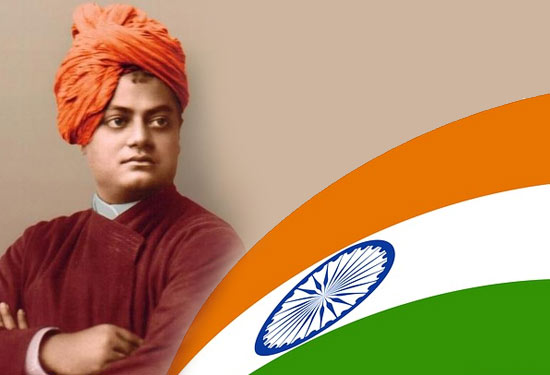
Maharshi Aurobindo said in 1908, “It has been said that democracy is based on the rights of man; it has been replied that it should rather take its stand on the duties of man; but both rights and duties are European ideas. Dharma is
the Indian conception in which rights and duties lose the artificial antagonism created by a view of the world, which makes selfishness the root of action, and regain their deep and eternal unity. Dharma is the basis of democracy which Asia must recognize, for in this lies the distinction between the soul of Asia and the soul of Europe.” India’s Rebirth
Swami
Vivekananda said, “To me the very essence of education is concentration of mind, not the collecting of facts. If I had to do my education over again, and had any voice in the matter, I would not study facts at all. I would develop the power of concentration and detachment, and then with a perfect instrument I could collect facts at will.” Does this reflect in our education system.
V Sreenivas wrote in the Bhavan’s Journal (31/3/2021 issue), “Although democracy has gained ascendency in modern times, the principles of rule of law (an important part of democracy) was extolled by our sages since antiquity. Dharma shastras made it clear that the king exists for the welfare of the people and not the other way around. In other words, the ruler was not sovereign but the law was.” 9
Summary
India’s population in 1950, when CC adopted, was Rs 3.5 crs. In 2026, it is over 140 crs. The 1930-50’s born generation is on its last phase. Challenges faced (food, health, education) and Aspirations of those born post 2000 are different!
The government and judiciary continue to think
and operate in the old ways, though change is being attempted and partially
successful. The political class is clinging onto to a Colonial Constitution as
if it were a Holy Book when the nation is crying for change. One of the reasons
for current frustration and protests.
Viksit Bharat 2047 might be a dream until we keep pace with the present.
The intent of this article is to provoke
thought and not cast aspersions on the Executive, Legislature or Judiciary.
CHANGE is the only thing in Life that is
PERMANENT.
References
1. The Colonial Constitution Dr Arghya
Sengupta.
2. The Framing of India’s Constitution (Volume 3) Editor B. Shiva Rao.
To read all
articles on site on the Indian Constitution
To read all
articles on the Supreme Court of India
Also read
1.
Is India's Colonial Constitution a result of the Drafting Committee being dominated by Lawyers
2.
Who amended the
Indian Constitution 106 times
3.
Why India needs a
Masterclass in responsibility & accountability of each arm of the
Government
4.
What is the role
of Central and State governments in EDUCATION
5.
What are
Fundamental DUTIES under the Indian Constitution
6.
Proposed Preamble
7.
EQUALITY BEFORE
LAW is a Myth in India
8. Have we failed the
Constitution or has the Constitution failed us
9. How Democracy
evolved in India
10. What is India
11. What are Dharma
Sastras
12. Another view Has
our Constitution failed us
13. We blame the
Centre for low but India is run by the States