- This
piece covers why UCC in brief, contents and comments on Uttarakhand Uniform
Civil Code and Laws the Centre must repeal for an all India UCC. Up to 1935,
Muslims of North West Frontier Province followed Hindu Law.
DRAFT
FOR REVIEW
The
BJP stated that before 2029 elections it planned to introduce State level
Uniform Civil Code (UCC) in states that it ruled. The Hindu Code Bills reformed
laws for Hindus, Buddhists, Jain and Sikhs. Perhaps due to conditions then and
in their wisdom Constitution Makers left other laws uncodified. Unlike others, the
state of Goa has a UCC. Marriage and
Divorce Law in Goa UCC
Muslims
governed by Muslim
Personal Law (Shariat) Application Act, 1937. It is a two page Act i.e. not non-codified.
The Act defies Article 14- Equality before Law. To read click on
link India needs a law that governs
personal civil matters.
At
the outset say that I am a Chartered Accountant, not a Constitutional Law
expert. Intent of article is to provoke thought. I am happy to stand corrected.
Why UCC in brief?
A UCC does not interfere with the essential
religious practices and is concerned with secular activities of a religion. It
brings uniformity in laws that govern Indian citizens. Those who believe that
UCC is against secularism should define the word secular because our Colonial
Constitution does not! UCC does not change the ideology or rituals that govern
a religion. Indians are free to live as per the teachings of the Holy Gita,
Holy Koran, The Bible etc.
Personal
laws create artificial distinctions and prevent national unity. Seventy-five
plus is time for wounds of partition to heal.
Mischief
mongers could read what author and senior journalist Sandhya Jain wrote in Dailypioneer,
Indian nationhood rests on the universal philosophy of Vasudhaiva Kutumbakam (world is
family) and Sarve Bhavantu Sukhinah,
Sarve Santu Niramayah (may all be healthy and happy). The Hindu meaning is that which is applicable or can be adopted voluntarily by all (e.g. Yoga, mutual coexistence etc.). The monotheist concept is that which should be imposed upon all (religion, culture, thinking, et al).” Do not look at Bharat through eyes of Middle East founded religions.
A UCC does not
interfere with customary practices associated with how marriages are
solemnised. However, registration of marriage and divorce should be compulsory,
men and women should have equal inheritance rights. Marriage age at 21 for men
and 18 for women is reasonable.
In
three separate judgements, SC has reiterated
the need for UCC. Gauri Kulkarni wrote about this in Legal Services
India
What is Shariyat?
According to Advocate Rajesh Gehani, “Shariyat or Shariah means Law governing Muslims. The provisions are often vague and
undefined. Also, it lacks uniformity across numerous Islamic sects. Primarily
the interpretation of Shariah is based upon the “hukums” and “fatwas” issued by the Maulvis of different sects from time to time.” Muslim law is not codified so can be interpreted
differently.
Now what does a law being codified mean? - “The things are arranged in a particular or stated manner according to law is known as codification.” Read Editorial New Indian Express 2016
Political
commentator S Gurumurthy wrote in The New Indian Express, “Ambedkar challenged them to deny that up to 1935, the North-West Frontier Province followed not the Sharia Law, but the Hindu Law, and up to 1937 in the rest of India, the United Provinces, the Central Provinces and Bombay, Muslims were largely governed by the Hindu Law in matters of succession. Despite the Shariat Act 1937, the
Muslims of Cooch Behar were governed only by the Hindu law till, believe it, as
recently as July 1, 1980.”
“There are much-nuanced differences in the principle and practices of Shia or four schools of Sunni jurisprudence (Hanafi, Maliki, Shafi and Hanbali) and their sub-sects like Wahabi, Ahl-e-Hadith, Deoband and Barelvi and also the cultural pattern of each of these categories do not match with what is stated as Islamic by AIMPLB.” Editorial New Indian Express 2016 Laws must be
codified.
AIMLB
is a Sunni Muslim dominated private body. The Shias have an All India Muslim
Shia Law Board that was founded in 2005. Aditi Narayani wrote in ThePrint, “Considering that most Muslim bodies are run by Ashrafs, it is not surprising that the major opposition to the UCC is coming from them and non-indigenous Muslims.” Read Yoginer Sikand
2009 article on AIMLB
What about laws governing Indian Christian women?
Dr Sebastian Paul, a lawyer practicing in the High Court of Kerala wrote, “Indian Christians are governed by the Indian Succession Act of 1925 in matters of intestate and testamentary succession. Section 3 of the Indian Succession Act gives power to a State Government to exempt any race, sect or tribe from the operation of the Act. Native Christians in the Province of Coorg is one such exempted category. There is no codified Christian law based on the Bible or any other religious book. Canon is a Church decree or law which has no role in deciding the inheritance of ancestral or paternal property by Christian women. There is no law in force which disqualifies a Christian daughter to inherit her parents on the ground that she was paid streedhana
at the time of her marriage.” Inheritance Law for Christian Women in India’
I had two questions – what laws that the Central government to pass for India to have a UCC. And what does the current UCC cover. Took Q 2 first.
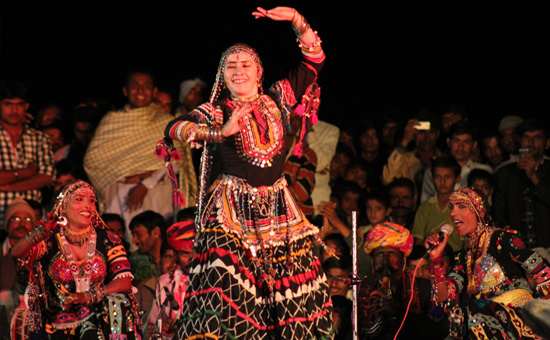 Kalbelia Dance by Hungarian Muslim. Jaisalmer Desert Festival 2013.
1. Contents of Uttarakhand UCC passed in 2024
To
read PDF click on PDF. The Act shall
not apply to Scheduled Tribes. If ST become Xtan, are they still ST or exempt. We
now explore contents of Bare Act.
Marriage and Divorce
is Part 1
1.
Conditions for Solemnising Contracting Marriage.
2.
Registration of Marriage and Divorce.
3.
Restitution of Conjugal Rights.
4.
Nullity of Marriage and Divorce.
5.
Incidental Proceedings (alimony and custody of children).
6.
Jurisdiction and Procedure
7.
Supplemental Provisions.
Succession Act – Part 2.
8.
Intestate Succession.
9.
Testamentary Succession (Wills and Execution/Construction of Wills).
10.
Protection of Estate of Deceased.
11.
Representative Title to Estate of Deceased on Succession.
12.
Probate and Administration of Assets of Deceased.
13.
Succession Certificates.
Live-in Relationship-Part 3 & 7
Schedules. Nos 2 is List of Heirs for Succession.
From
the above it appears that contents of Succession is General.
“The Code does not seek to eliminate ceremonial diversity or customary ways of solemnising marriages. On the contrary, it retains ritual diversity, but sets a uniform legal minimum. These provisions show that the Code
is a framework for governance, and not just a family-law statute.” Search
2. My comments on Uttarakhand UCC
Chapter 1
1.
Para 4 i) A man or woman must not have a spouse living at the time of marriage.
It means that one can marry only Once.
2.
Para 4 iiii) Man completed 21 years and girl 18 years at the time of
marriage-no child marriage.
3. Para 5 – all forms of marriage allowed including Special Marriage Act. Covers Hindus, Buddhists, Sikhs, Muslims, Christians.
4.
Para 6 Compulsory Registration of Marriage-many did not get marriage registered
where atleast one party to the marriage is a resident of the state.
Ch
3 routine marriage issues.
Chapter 4
1. Para 25 - One of the grounds for Divorce is para 1 (iv) ‘without the consent of a spouse or against the wishes of the party converted to religion of the petitioner’ for e.g. if a Christian girl marries a Muslim boy and without her consent or against her wishes is asked to convert to Islam.
2. Para 25 (3)
Another ground for divorce is if the husband had more than one wife from
marriages contracted before the commencement of this code. Implies no polygamy.
3. Para 29
Dissolution of marriage only under provisions of this part. Means dissolution of marriage only under
provisions of this Act.
Ch
5 Incidental Proceedings includes alimony and custody of children.
Ch
6 Jurisdiction and Prudence.
Ch
7 Supplemental Provisions.
Succession Act – Part 2.
8.
Intestate Succession.
This
gives the General Rules of Succession for a person dying interstate (means
without a legally valid Will) shall devolve according to the provisions of this
chapter in the following order of preference. This includes who are Class 1
heirs.
Is this contrary to Muslim Personal Law currently in force?
9.
Testamentary Succession (Wills and Execution/Construction of Wills).
10.
Protection of Estate of Deceased.
11.
Representative Title to Estate of Deceased on Succession.
12.
Probate and Administration of Assets of Deceased.
13.
Succession Certificates.
14.
Miscellaneous.
Part
3 Live in Relationship is universal.
“The Uttarakhand code bans bigamy, polygamy, triple talaq,
nikah halala, and iddat, and mandates marriage and live-in relationship
registration AND provides equal Inheritance Rights for Women.” UCC explained for
Law Students Vmlu.in
Nikah halala is if a couple desires to remarry
either after the triple talaq or after the regular talaq, the woman will be required to marry a third person,
consumate the marriage, get divorced and again remarry the original husband. Source
3. Points made in numerous published articles –
1. “While the Hindu Marriage Act permits either spouse to claim maintenance, under other personal laws and the Special Marriage Act, only women can claim maintenance.” 1
2. “A UCC must protect wives and children with a minimum fixed share that cannot be willed.” Express 1
3. “A UCC must codify this principle and guarantee second wives clear rights to maintenance and economic protection.” Express 1
4. “A UCC shifts marriage and family law from theological grounds to a secular, Rights-Based Approach, ensuring issues like Community of Property, marital property division and post-divorce maintenance are determined by economic capacity and duration of marriage rather than religious affiliation.” DrishtiIAS 2
5. “A UCC can promote tax harmonisation by removing religion-based differences in wealth management. Standardising property ownership rights and testamentary succession rules can eliminate unequal inheritance practices and strengthen women’s Financial Autonomy.” DrishtiIAS 2
6. “A UCC can by treating marriage, divorce and inheritance as secular civil contracts governed by the Right to Equality rather than theological mandates.” DrishtiIAS 2
7. “A UCC can decouple personal rights from religion, promoting pluralistic integration by ensuring citizens are governed by common constitutional principles.” “India already follows uniform legal frameworks in areas such as crime (BNS), evidence (Bharatiya Sakshya Adhiniyam, 2023) and contracts (Indian Contract Act, 1872). DrishtiIAS 2
8.
Current Status on who is governed by what law –
a. Hindus, Buddhists, Jains, Sikhs – governed by the Hindu Marriage Act 1955, Hindu Succession Act 1956, Hindu Minority and Guardianship Act 1956 and Hindu Adoptions and Maintenance Act 1956. 3
b.
Christians-Indian Christian Marriage Act, 1872 & Indian Divorce Act 1869. 3
c.
Parsis - Parsi Marriage and Divorce Act 1936. 3
d. Muslims – Sharia Act 1937. 3
e.
Secular Enabling Acts-Special Marriage Act 1954, Indian Succession Act 1926.

4. Laws to be changed for UCC - Personal laws fall under the
Concurrent List
“Marriage and divorce; infants and minors; adoption; wills, intestacy and succession.” This means that the Parliament and States can enact laws on civil codes. When Centre enacts a law it overrules state laws.
For
a true UCC, the Centre needs to repeal the following laws. The laws are Hindu
Code Bill Laws, The Shariah Act 1937, Indian Succession Act of 1925, The
Special Marriages Act 1954, Christian Marriage Act 1872, Indian Divorce Act
1869 and Parsi Marriage and Divorce Act 1936 and enact UCC. It should cover Marriage and Registration, Divorce and
Separation, Maintenance and Alimony, Inheritance Rights, Adoption and
Guardianship.
Non-BJP rule
states can introduce UCC if they wish to help resident women.
Also read
1. Indian Express – Towards a Gender
just UCC
2.
Drishti IAS
3.
CLPR.org
4.
Marriage and Divorce
Law in Goa UCC
5.
UCC in India – An overview
6.
What every Hindu
Girl marrying a Muslim should know, Marriage Laws in India
7.
FAQ UCC
8.
Inheritance Law
for Hindu Women
9.
UCC – Time to revisit the same
10.
Frontline on
Uttarakhand UCC
11.
UCC UK state FAQ
12.
Vision IAS March
2026