- The festival combines temple worship, music,
dance and family traditions. The final 3 days Durgashtami, Mahanavami and
Vijayadashami are associated with the worship of Goddess Saraswati. Know about
the sacred temples visited during festival including Mookambika in Karnataka. On
Vijayadashami is Vidyarambham,
the initiation of children into the world of letters.
My last article was Who
is a Teacher in Bharatiya samskriti
Every year, Navaratri brings a special
spiritual atmosphere to Kerala. The nine nights of devotion celebrate the divine feminine power of Goddess Durga, Lakshmi
and Saraswati.
In Kerala, the festival has a distinctive place in the cultural life of Malayalis, combining temple worship, music, dance, family traditions and reverence for education. The final three days—Durgashtami, Mahanavami and Vijayadashami are particularly important, as they are associated with the worship of Goddess Saraswati, the divine embodiment of knowledge, wisdom and the arts.
One of the most beautiful traditions of
Navaratri in Kerala is Poojavaippu,
the ceremonial placing of books, musical instruments and work-related tools
before the Goddess. On Mahanavami, these objects are worshipped as symbols of
knowledge, skill and livelihood. On Vijayadashami, they are taken out after the
prayers, marking a return to learning and work with renewed enthusiasm. This
tradition reflects a deeply rooted cultural belief that education is sacred and
that every form of honest work deserves respect.
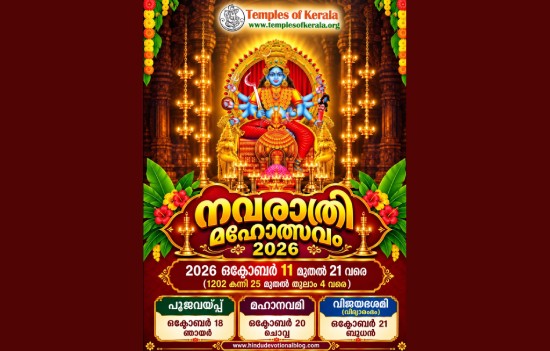
Several important temples across Kerala become
centres of devotion during Navaratri. The Chottanikkara Bhagavathy Temple in Ernakulam
district is renowned for its worship of the Divine Mother.
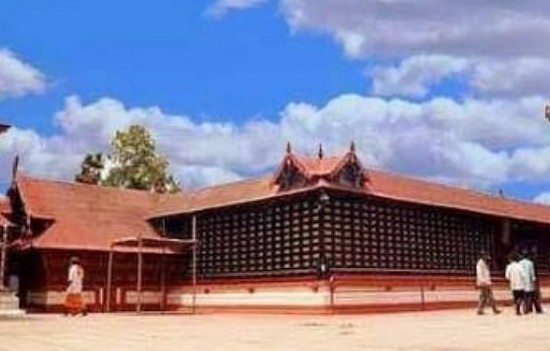 Chottanikkara
Bhagavathy Temple.
Chottanikkara
Bhagavathy Temple.
The Attukal Bhagavathy Temple in Thiruvananthapuram is another major
centre of Devi worship.
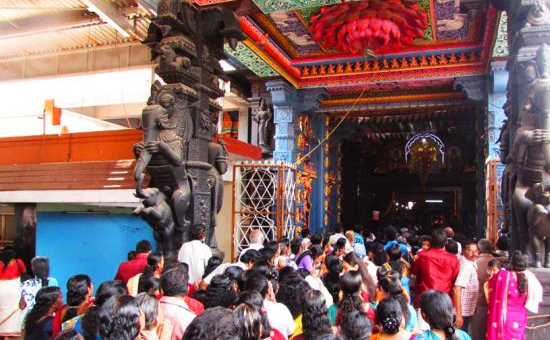 Attukal Bhagavathy
Temple.
Attukal Bhagavathy
Temple.
The Saraswati Temple at Panachikkadu in Kottayam, popularly
known as Dakshina Mookambika, holds a special place in the hearts of students
and families. The Thunchan
Parambu Temple at Tirur in Malappuram, associated with Thunchath
Ezhuthachan, the revered Malayalam poet and scholar, is also an important
centre for the observance of Vidyarambham. The Guruvayur Temple and other
traditional temples across the state reflect the close relationship between
faith, art and cultural heritage in Kerala.
The Navaratri celebrations in
Thiruvananthapuram have a distinctive historical character. The traditional
procession associated with the former Travancore royal family brings the
Goddess Saraswati and other deities to the capital for the festival. Goddess
Saraswati is worshipped at the Navaratri Mandapam, while Velayudha Perumal and
Munnuttinanka are associated with the Aryasala and Chenthitta temples
respectively.
The Navaratri
music festival at the Mandapam is an important part of this tradition,
bringing together devotion and classical music. These celebrations demonstrate
how Kerala has preserved its historical customs while continuing to give them
meaning in contemporary life.
The
Mookambika Temple at Kollur in Karnataka has a special place in the religious and cultural imagination of
Malayalis.
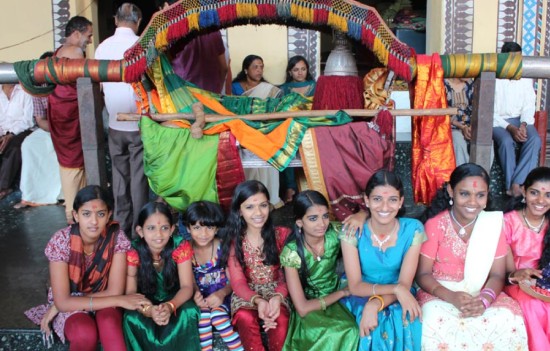 Inside Mookambika Temple near Udupi. 2011.
Although the temple is located in Karnataka, it is deeply connected with Kerala's tradition of worshipping Saraswati as the Goddess of learning. Devotees from Kerala travel to Kollur seeking blessings for their children, education, artistic pursuits and new beginnings. The shrine is particularly significant during Navaratri, when devotees worship the Divine Mother in her forms associated with power, prosperity and wisdom.
For many Malayali families, a pilgrimage to Mookambika is not merely a
religious journey; it is also an expression of their hopes for the educational
and spiritual future of the younger generation.
Among Kerala's Saraswati temples, Panachikkadu Dakshina
Mookambika Temple deserves special mention. Situated in Kottayam
district, it is widely known for its association with learning and
Vidyarambham. Unlike temples where Saraswati worship is primarily concentrated
during Navaratri, Panachikkadu is known for its regular worship of the Goddess
throughout the year. During the festival, families arrive with young children
to seek blessings before beginning their educational journey. The natural
surroundings and distinctive shrine traditions add to the spiritual character
of this sacred place. Panachikkadu reminds us that the pursuit of knowledge is
not limited to a particular season; it is a lifelong journey.
The most touching part of Navaratri in Kerala
is Vidyarambham,
the initiation of children into the world of letters on Vijayadashami.
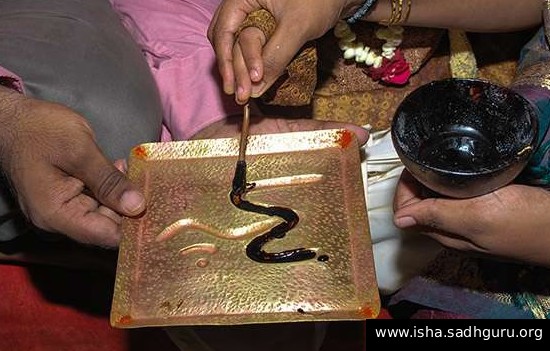 Vidyarambham.
A child sits before a teacher, priest or respected elder, who gently guides the child's finger to write the first letters, often on rice spread on a plate. The sacred syllable “Hari Sree” is traditionally associated with this ceremony in Kerala.
Parents watch with joy and hope as their
children take their first symbolic step towards education. Vidyarambham is
observed at Panachikkadu, Thunchan Parambu, Mookambika and numerous other
temples and cultural centres. It is also conducted in homes and educational
institutions. Beyond its religious meaning, the ceremony celebrates the universal
value of literacy, curiosity and the freedom to learn.
The spirit of Navaratri is beautifully
expressed in traditional Sanskrit prayers. One well-known invocation to Goddess
Saraswati is:
Saraswati
Namastubhyam
Varade
Kamarupini
Vidyarambham
arishyami
Siddhir
Bhavatu Me Sada.
Meaning: O Goddess
Saraswati, I bow to you, the giver of blessings and fulfiller of noble
aspirations. As I begin my education, may I always attain success.
Another widely recited prayer celebrates the
Goddess as the embodiment of wisdom and purity:
Ya
Kundendu Tusharahara Dhavala
Ya
Shubhra Vastravrita
Ya
Veena Varadanda Manditakara
Ya
Shveta Padmasana.
Meaning: We
meditate upon Goddess Saraswati, radiant and pure like the moon, snow and a
garland of white flowers, dressed in white, holding the veena and seated upon a
white lotus.
A further prayer invokes the Goddess as the
source of all auspicious beginnings:
Sarva
Mangala Mangalye
Shive
Sarvartha Sadhike
Sharanye
Tryambake Gauri
Narayani
Namostute.
Meaning: O Divine
Mother, the most auspicious among all that is auspicious, the fulfiller of
noble purposes and the refuge of all, we bow to you.
These prayers express the central message of
Navaratri: the pursuit of wisdom, the triumph of good over evil and the
importance of inner strength. The festival encourages people to overcome
ignorance, cultivate discipline and develop respect for learning and the arts.
Navaratri in Kerala is therefore much more
than a series of temple rituals. It is a celebration that connects generations through
faith, literature, music, education and shared cultural memories.
From the historic traditions of
Thiruvananthapuram to the sacred atmosphere of Chottanikkara, Attukal and
Panachikkadu, and from the classrooms of Kerala to the revered shrine at Kollur
Mookambika, the festival carries a common message: knowledge is a blessing,
education is a sacred responsibility, and every child deserves the opportunity
to learn.
As the first letters are written on
Vijayadashami, Kerala renews its enduring commitment to wisdom, culture and the
light of knowledge.
V Rajesh Mohan Rao - The author is a higher secondary school teacher teaching commerce
subjects and Member of Konkani language working committee Kerala and President
of Dharmadam Chandrakala Mohan Rao Cultural Forum which serves the community.
To read all articles
by author
To
read articles on Kerala Culture by Bhawani Cheertath
How
Durga Puja is celebrated across India