- Photo feature tells you about the origins of Surkanda Devi Temple, how to reach and travel tips.
Text and Images by Ankur
Gupta
In the dev-bhoomi of Uttarakhand, where every peak seems to hold a deity and every river a story, the temple of Surkanda Devi stands a little higher than the rest—quite literally. Perched at an altitude of approximately 9,975 feet (about 3,000 meters) on the Surkut Mountain, this shrine offers a spiritual experience that is as much about the silence of the clouds as it is about the ringing of bells.
Located near the hill stations of Dhanaulti and Kanatal, Surkanda Devi
is one of the 51 Shaktipeeths,
the holiest shrines of the Mother Goddess.
But unlike the crowded temples of the plains, Surkanda demands a
pilgrimage of sweat and breath. Whether you take the steep 2.5-kilometer trek
from Kaddukhal or the newly installed ropeway, the journey upward is a shedding
of the worldly weight, preparing you for the divine encounter at the summit.
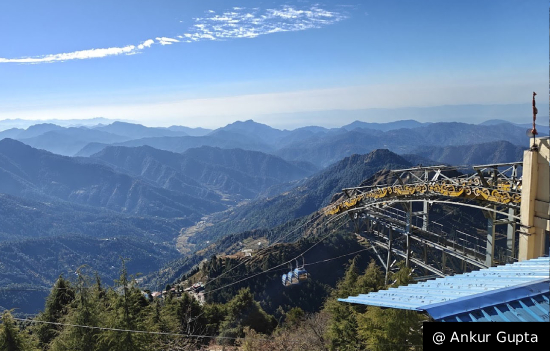 Ropeway that brought us to hilltop.
The Story of the Fallen
Head
The primary story of the temple is etched into its very name. As per the boards erected by the temple committee, the name "Surkanda" is a derivation of "Sirkanda" (where the head fell).
When Lord Shiva, consumed by grief, wandered the cosmos carrying the burnt body of Sati, Lord Vishnu used his Sudarshan Chakra to cut the body to save the world from Shiva’s wrath. It is believed that Sati’s head fell on this very peak. Over time, Sirkanda evolved into Surkanda. Standing in the courtyard, looking out at the endless ripple of Himalayan peaks, one can almost sense the cosmic gravity of the site—a place chosen by the divine for its absolute isolation and proximity to the heavens.
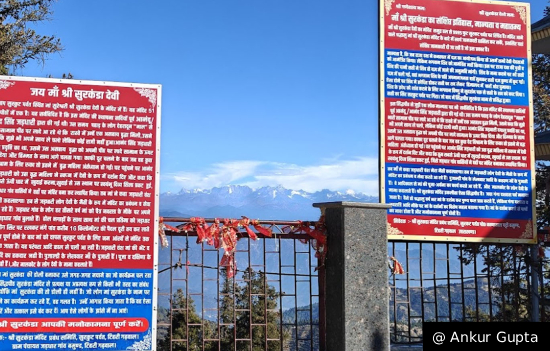 Snow clad peaks between temple board.
The Mystery of the Ringal
Basket
While the Puranic legend is well known, the temple boards reveal a
fascinating local history that adds a layer of rustic authenticity to the
shrine.
Centuries ago, a local villager named Anand Singh Rawat
(Jaddhari) from the nearby village of
Jadipani came to these dense forests to collect Ringal (a type of hill bamboo used for making baskets). While gathering the wood, he stumbled upon a stone murty hidden in the undergrowth. When he tried to lift his bundle of bamboo along with the idol, it became impossibly heavy—far heavier than physical laws could explain.
Confused and tired, he rested, and it was then that the Goddess appeared
in his vision. She instructed him to establish her shrine on the highest point
of the Surkut mountain. Following the divine command, he carried the idol to
the summit, where the load miraculously became light again. This local story
bridges the gap between the distant Puranic gods and the simple, devout life of
the Garhwali people.
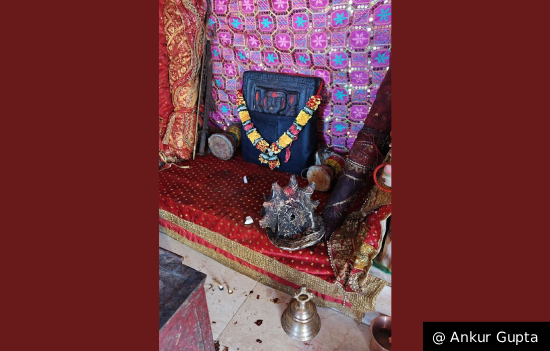 Pranams
The 360-Degree Miracle
Once you reach the top, the reward is instantaneous. Surkanda Devi
offers a rare 360-degree
panoramic view of the Garhwal Himalayas. On a clear day, the snow-capped giants—Nanda Devi, Kedarnath, Chaukhamba, and Trishul—stand arrayed in the north like a glittering white fortress. To the south, the view dips down into the Doon valley and towards Rishikesh.
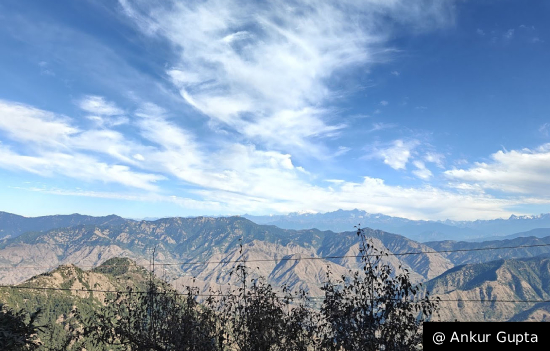 View from hill top.
The temple architecture is simple, brightly painted in red and white,
vibrant against the deep blue sky. The courtyard is often filled with the
red chunaris of devotees and the scent of incense battling the
crisp mountain wind. The major festival here is Ganga Dussehra (usually in May/June), where the quiet peak
transforms into a bustling fair of faith.
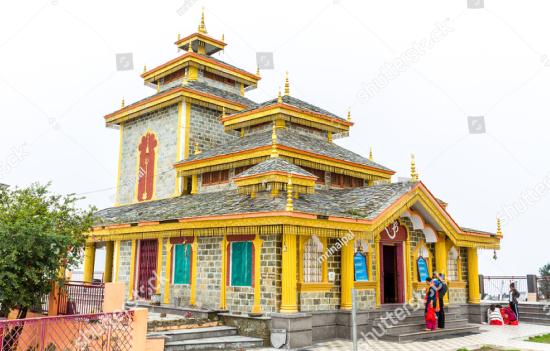 Surkanda Devi Mandir.
Visiting Surkanda Devi is not just about bowing before a murty; it is
about standing on top of the world, breathing in the thin, pure air, and
realizing that in these hills, the boundary between the earth and the sky is
very thin indeed.
Travel Guide: Planning
Your Visit
Getting There: The base point is Kaddukhal, which is about a 1-hour
drive (approx 24 km) from Mussoorie or a 6-hour drive from Delhi via Dehradun.
The Climb: You can trek the 2.5 km steep paved path (takes about 45-60 mins) or take the Ropeway (approx ₹500 return ticket) which takes just 5 minutes. Ponies are also available.
Best Time to Visit: Summer (April-June) provides the clearest views of the snow peaks.
Winters (Dec-Feb) see heavy snowfall, making the trek difficult but magically
beautiful.
Pro Tip: Carry a windcheater even
in summer; the wind at 10,000 feet can be biting cold.
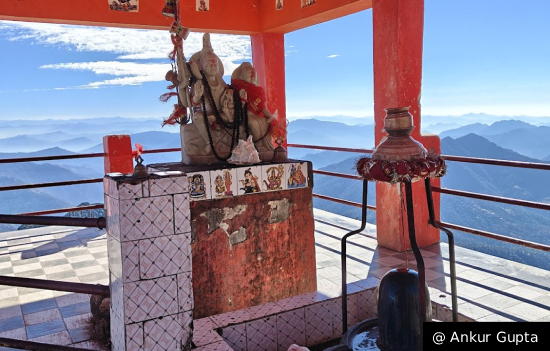 Shiva Shakti Pranams.
To read all articles by author
Also read
1. Kanatal
near Mussoorie is lovely
2. Spiritual
Experience of climbing Tirumala Hills
3. Album
Tripura Sundari Mandir
4. Shakti
Peethas of India
5. Dhari
Devi Shakti Sthal
6. Worship
of God as Mother in Indian Tradition