- Inspired by Swami Vivekananda’s words, this FAQ gives reasons why India is called Punya Bhumi.
Why is India called Punya Bhumi is a question that got me inquisitive. I share answers in this article.
Swami Vivekananda spoke, “If there is any land on this earth that can lay claim to be the blessed Punya Bhumi, to be the land to which souls on this earth must come to account for their Karma, the land to which every soul that is wending its way Godward must come to attain its last home, the land where humanity has attained its highest gentleness, towards generosity, towards purity, towards calmness, above all the land of introspection and of spirituality, it is India.” Lectures Colombo to Almora 3-4. 1
Swamiji added, “But we live. The same laws are here, laws adjusted and thought out through thousands and thousands of years; customs, the outcome of the acumen of ages and experience of centuries, that seem to be eternal.”CtoA 5.2 1
V Srinivas,
author of Awakening the
Nation-Rediscovering the spirit of India with Swami Vivekananda wrote, “All races contribute great ideas to humanity. But all races, except one have advanced their ideas by conquering other races. It is India alone that has shared her ideas without conquering others.” 1
“But India has endured through thousands of years-each misfortune, each experience making her stronger and more constant? 1
“India’s mission is to accumulate into itself all the spiritual energy of the race and share it with the world at the right time.” 1
India
is a Civilizational state that stands for Spirituality and Diversity in Unity.
Answers to these questions explains what makes India Punya Bhumi.
1.
India exported its culture but not through the
sword, earlier and today
Living examples of such export are Cambodia, Vietnam, Japan and Tibet. Proof is Indian symbols of cultural influence for e.g. Angkor Watt and Ramayana performances. Local people continue to treat India with love and respect to this date. During 1998 Kailash Yatra, the guesthouse caretaker took extra care of me since he said I had come from ‘Holy Land’. Indian Culture does not impose itself on
others, it assimilates.
 6 Days of India Heritage in Cambodia
 Hindu Deities worshipped in Japan. Pic by Benoy K Behl.
 Yatra to Mount Bromeo, named by Lord Brahma.
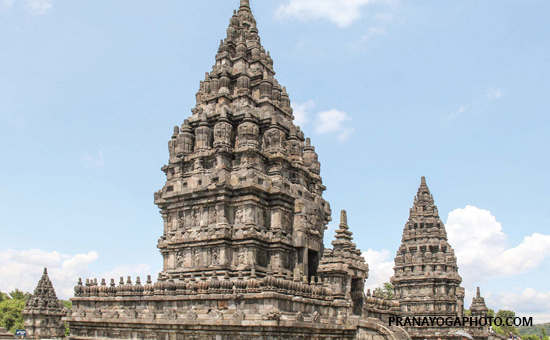 Exploring Temples of Java. U see Prambanan Shiv Temple, Java.
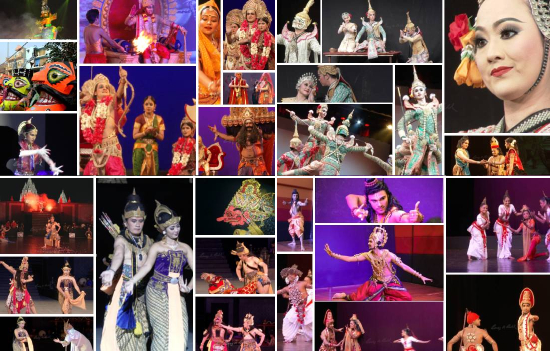 Ramayana performances in Southeast Asia. Pic by Benoy K Behl.
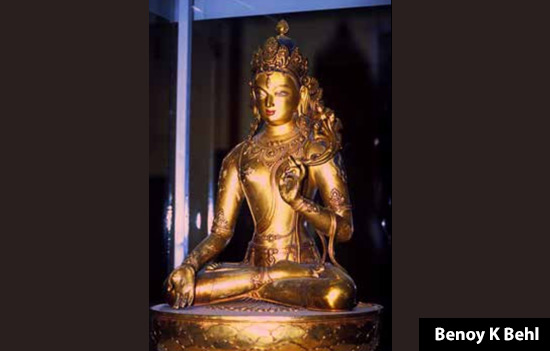 White Tara, 17th century, Zanabazaar Museum, Ulaanbaatar, Mongolia. Pic by Benoy K Behl.
Read Six Days of India
Heritage in Cambodia,
Hindu Deities
worshipped in Japan,
Yatra to Mount Bromeo named after Lord Brahma, Exploring Temples
of Java
People
of these countries do not have animosity towards Indians as Indians have
towards foreign invaders. The cultural and spiritual bond exists to this day. I
met Thai ladies at Pushkar in 2018 and Japanese at Rajgir in 2012.
Starting
the 19th century India exported Spirituality, Yoga and Meditation to
the West. This knowledge is used without copyright or payment of royalty.
 Yoga in the West.
Read Ramakrishna
Mission in the West became a Magnet for Intellectuals and Artists and Yoga and
Meditation in the West
In
the 21st century, India shares the fruits of its efforts esp. in
technology for e.g. UPI, to countries of the Global South and seeks resolution
of conflict through dialogue instead of war. Even today, India’s defence preparedness is to protect itself or counter-attack its enemies, not be the first mover in war.
2.
Why does Diversity in Unity exist in India?
The
West (ChatGPT included) say India is the birthplace of four religions when actually
India is home to nine Schools of Philosophy.
Philosophy is a western word that mainly relies on intellectual pursuit.
The corresponding Indian word is Darsana that
relies on direct vision of truths (experienced by ancient sages all over
Bharat) and pure Buddhi (reasoning).
One can choose any of these nine ways namely Nyaya, Vaisheshik, Sakhya, Yoga,
Mimamsa, Vedanta, Carvaka, Jaina and Buddha.
India has multiple schools of darsanas meaning
ways to achieve self-realisation. Thus, Buddhist-Saivite-Jain caves co-exist at
Ellora amongst other places. They never
fought like the Thirty Year’s War lasted from 1618 to 1648, “starting as a battle among the Catholic and Protestant states that formed the Holy Roman Empire.”
Thus,
in a cultural sense the same Festival of Colours or Holi is celebrated in
different ways across India. Read about it here Ditto about Dussehra
Because Indians accept there exist multiple ways to moksha, diversity in unity is intrinsic to their way of life. “Diversity in Unity’, because everything emerges from Oneness.” 3
Maharshi Aurobindo said in 1919, “Hinduism is in the first place a non-dogmatic inclusive religion and would have taken even Islam and Christianity into itself, if they had tolerated the process.” India’s Rebirth
3.
Why are Indians Tolerant?
Simply
put, they believe in co-existence.
Writing
in 2018 about former President Mukherjee speech senior journalist Sandhya Jain wrote, “We believe in ‘Diversity in Unity’, because everything emerges from Oneness. Indian pluralism, or ‘sarv dharma sambhav’ (all faiths are harmonious) and ‘ekam sat, vipra bahuda vadanti’ (truth is one, the wise call it by many names) is rooted in this awareness.” Read Our
Cultural Legacy
When we accept the TRUTH is one, the source of conflict ceases to exist. It is also a reason why Indics do not convert.
4.
Rig Veda verse says that let noble thoughts come
from all sides
“In a hymn addressed to the Visvedevas (विश्वेदेवाः) in the Rig Veda, they prayed for
noble thoughts from all directions.
आनो भद्राः क्रतवो यन्तु विश्वत: | ऋग्वेद – 1.89.1
कल्याणकारक विचार चारों ओर से हमारे पास आयें|
Let noble thoughts come to us from all directions.” Source
This
verse implies Indics have an open mind and willing to hear points of view.
5.
India is known for Spirituality. What does
Spirituality mean to you?
For me, spirituality is a two-pronged approach --- the first is the need to look within yourself and the second is to be compassionate – to yourself and to others around you. Finally, my spirituality also stems from the fact that in life, I often remain detached --- I give my best to things and disassociate myself from the world --- I remain concerned, but not worried.
Spirituality
also means accepting shortcomings and correcting myself. I am trying to improve
myself rather than find fault with others. It also means having an open mind
and listen to different points of view. For me spirituality is a combination of
inward and outward looking that is powered by the Self or Atman. 2
6.
What is it that APPLE founder Steve Jobs liked
about Indian Spirituality?
When
Apple Founder was looking for answers to the future of APPLE, he visited Neem
Karoli Baba Ashram near Nainital, Kumaon. This ET article tells what happened.
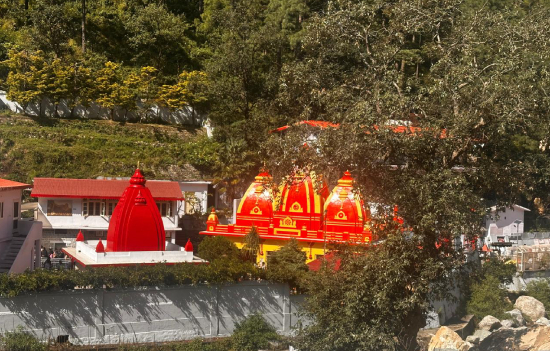 Neem Karoli Ashram.
Steve
Jobs link to Neem Karoli Baba and Paramhansa Yogananda “Walter Isaacson writes in his biography of Jobs: ““The people in the Indian countryside don’t use their intellect like we do, they use their intuition instead, and their intuition is far more developed than in the rest of the world. Intuition is a very powerful thing, more powerful than intellect, in my opinion. That’s had a big impact on my work. Western rational thought is not an innate human characteristic; it is learned and is the great achievement of Western civilization. In the villages of India, they never learned it. They learned something else, which is in some ways just as valuable but in other ways is not. That’s the power of intuition and experiential wisdom. Jobs got in touch with his intuition during his trip to India.”” Economic
Times
7. What is India’s Central Idea?
Every nation has a central idea. India’s is Dharma. Simply put, it means to support, nurture, duty and righteousness in all interactions. It can also mean “good conduct in the service of uncompromising national interest.”
Dharma induces a conviction that man, abiding by its tenets, conforms to
the most efficient ways of right doing and right living. It upholds and
sustains.
It is with reason that motto of the Supreme Court is यतो धर्मस्ततो जयः ‘Yato Dharmah Tato Jayah’, Where there is Righteousness (Dharma), there is Victory (Jaya).
 Dunagiri, Kumaon is where self-realized souls are said to be.
8. India was a state long before the European
Nation State rose after 1648, based on the notion of a defined territory,
single language and shared religion. 3
9. India’s Core Shruti (Vedas) remained whilst Smritis changed with time
V Srinivas wrote, “Shruti (core) represent
Eternal Values of our civilization (to be held on to at all times). Smriti
represent Ideas, rituals and conduct varying spatially and temporally (to be
evolved over time).
This
approach has allowed Indics to retain the core inspite of multiple foreign
invasions whilst changing non-core aspects with time. Because the Vedas are not
authored by any one Rishi, the absence of an individual does not determine the
existence of Sanatana Dharma. To explain simply, can you visualise Christianity
without Jesus Christ!
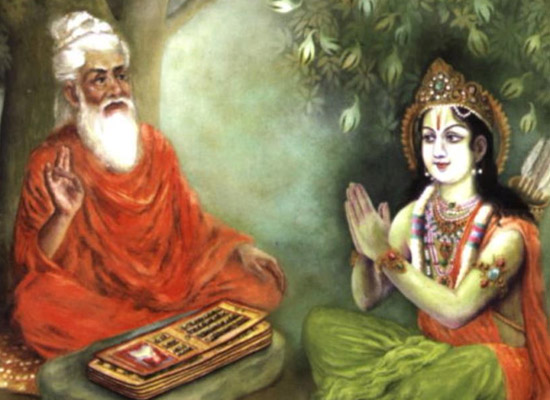
10. India is seen as a land of Rishis, Munis, Yogis, Yoginis, Gurus and divine incarnations who served as centres of
spiritual knowledge and wisdom.
11. India is a country of Pilgrimages and Yatras.
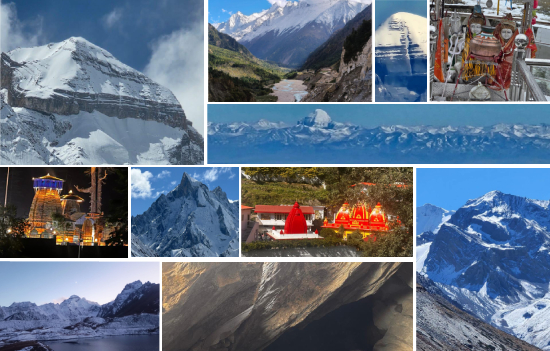 Adi Kailash and Om Parvat Yatra, Kumaon.
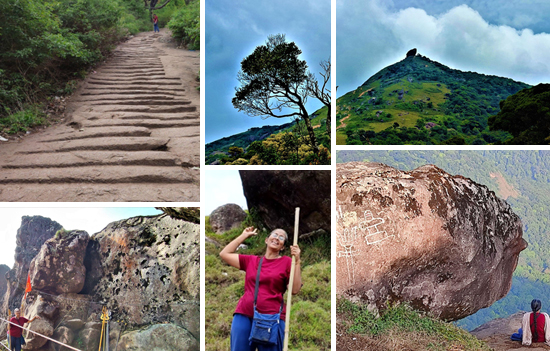 Velliangiri Hills, Coimbatore is the Kailash of South India.
12. India is perhaps the only country in the world where rivers are worshipped for e.g. Ganga,
Yamuna, invisible Saraswati, Narmada, Godavari, Kaveri, Krishna and the Sindhu.
4
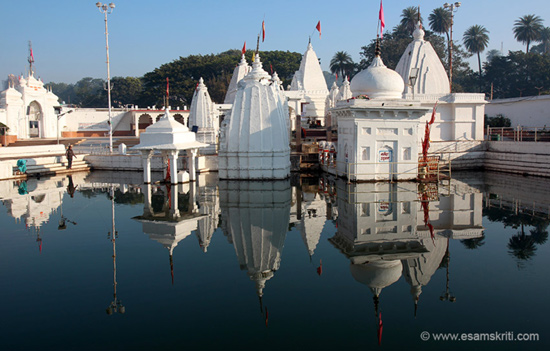 Amarkantak in Madhya Pradesh is the source of Ma Narmada.
13. India gave shelter to the Jews, Parsis and Syrian Christians centuries ago. India has never
persecuted the Jews.
14. India is the LAND
OF KARMA.
The Colonial
Constitution, Politicians and Courts knowing or unknowingly are making every attempt
to ensure India no longer remains Punya Bhumi. What they fail to realize that if
that happens the world will be poorer.
If
I missed out any insights, happy to add. As always, happy to stand corrected.
To
read all articles on India
Yatras
References / Also
read
1.
AWAKENING THE
NATION-Rediscovering the spirit of India with Swami Vivekananda
2. Life is Leela,
enjoy it to the fullest
3. Culture is at the
root of Indian nationhood
4. Seven Sacred
Rivers
5. Punya Bhumi
6. Bharat – The Land of Inspection and Spirituality
7. FAQ Karma and
Reincarnation
8. To read all
articles on the Bhagavad Gita
9. To read all
commentaries on the Upanishads
10. Seven Systems of Indian Philosophy by Pt Rajmani
Tugnait
11. How
Hindu and Buddhist strains are intertwined in Japan, Thailand etc
12. India and Mongolia – Shared Heritage