- Know about the importance of number five in
Ayurveda, Jaina Darsana, Yoga, Vajrayana Buddhism, Vedanta, Sikh Dharma and
Indian Culture.
I read about the Five Elements of Nature or pancha
bhootas in Ayurveda namely Akash (space), Vayu (air),
Prithvi (earth), Agni (fire) and Jal (water). Our body is a mixture of these
five elements.
A K Chungroo wrote a comprehensive piece on
importance of 5 in Daily Excelsior, “We often take the names like Panch-Parmeshwar, Panch-Mahabhoot, Panch-Indriya, Panch-Phoron, Panch-Prayag, Panchkarma, Pancham, Panch-Pran, Panch-Pratigya, Panch-Pandav, Panchang, Panchastavi, Panchsheel etc etc. ‘Panch’ literally means five and is derived from Indian languages. It is often used in terms of a Village-Council (Gram Panchayat) which we have been calling Panch for several centuries.”
He added, “Panch-Indriya refers to five sensory organs namely, sight, sound, smell, taste and touch. Pancha-Prana refers to ‘pancha-vayus’ and means five vital winds or energies of life responsible for various functions of the body and mind. Pancham refers to the fifth note of Hindustani and Carnatic music. Pancham ‘pa’ is the fifth note among the saptaswaras (Sa, Re, Ga, Ma, Pa, Dha, Ni). Panchastavi is a collection of five devotional hymns commonly practiced in Kashmir among the Sanatana believers. Panch refers to five and Stavi refers to hymns. They are in Sanskrit and are in the praise of the Divine supreme Mother called ‘Maha-Tripurasundari’ who represents the active and the creative power of the Absolute.”
Amongst the most important river in India is
the Holy Ganga. Prayag is where two rivers meet. In Garwhal, Uttarakhand there
are five prayags Vishnuprayag, Nandaprayag,
Karnaprayag, Rudraprayag and Devprayag.
Swami Sivananda wrote about the Pancha Koshas in detail. Simply said, “The very essence of all is Atman, but due to illusion and delusion, human beings think themselves as one of the five illusory layers of sheaths. It is customary to depict them as one contained by the other. They are Annamayakosha, Pranamayakosha, Manomayakosha, Vijnanamayakosha and Ananadamayakosha.” 1
Rolk Sovik wrote in Yoga
International that Yoga has five Niyamas. They are Self-purification
(Shaucha), Contentment (Santosha), Self-discipline (Tapas), Self-study
(Svadhyaya) and Self-surrender (Ishvara Pranidhana). Importance
of the 5 Elements of Nature
Yogacharya Nibha Bhandari Vyas says, “The number 5 holds significant importance in Yoga philosophy and practice, representing the five elements (panchamahabhutas), five senses, the five koshas (sheaths of being), and the five niyamas (internal observances). In a yoga class, the number 5 is often used to structure a holistic practice that brings balance of the body, mind, and spirit, frequently appearing as five-point principles in Sivananda yoga, or five-element focus in varied practices.
Significance of Five in a Yoga
Class. Besides what is referred to in preceding
para The Five Points of Yoga (Sivananda tradition) include: 1. Proper Exercise
(Asanas), 2. Proper Breathing (Pranayama), 3. Proper Relaxation (Savasana), 4.
Proper Diet, 5. Positive Thinking and Meditation.
Five Elements and Finger
Association: In mudra practice, five fingers represent
the five elements which can be balanced by connecting them: Thumb: Fire
(Agni), Index Finger: Air (Vayu), Middle Finger: Space (Akash), Ring Finger:
Earth (Prithvi) and Little Finger: Water (Jal).
There is the Panch
Kedar Yatra in Garwhal covering five Shiv ji temples namely Kedarnath,
Tungnath, Rudranath, Madhyamaheshwar and Kalpeshwar. To read

According to Dr Nutan Pakhare, a Mumbai based Ayurvedic doctor the number five has multiple
references for e.g. Panchendriya (Five Sense
Organs), Pancha Tanmatra (Five Subtle
Elements)-Shabda (Sound), Sparsha (Touch), Rupa (Form/vision), Rasa (Taste),
Gandha (Smell) and Panchakarma (Five
Detoxification Therapies)-Vamana, Virechana, Basti, Nasya, and Raktamokshana. Panchavidha Nidana (Five methods of
diagnosis)- Nidana (cause), Purvarupa (premonitory signs), Rupa (symptoms),
Upashaya (relieving/aggravating factors), Samprapti (pathogenesis).
Next are the Panj Pyare and five external forms of Khalsa.
On 30 March 1699, at Anandpur, Guru Govind Singhji gave a
stirring speech to the assembly about the need to protect their spiritual and
temporal rights. He then asked if anyone would offer his head in the services
of God, Truth and Religion. The five who came forward were Dayaram a Khatri from Lahore, Dharamdas a Jat from Hastinapur near Delhi, Sahib Chand a barber from Bidar in Karnataka, Himmat Chand Kahar, a water carrier from Puri in Odisha and Mohkam Chand Chihimba from Dwarka in Gujarat. They were designated the Five “Beloved Ones or Panj Pyare.”
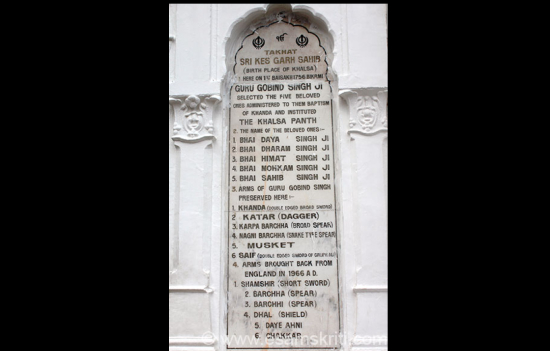 Names of 5 Panj Pyare at Keshgarh Sahib Gurdwara.
According to Khalsa tradition, its followers
had to sport five Ks i.e. Kesh
(long hair), Kangha (comb), Kirpan (sword), Kara (steel bracelet), Kachcha
(knickers).
Dr
Satish Kapoor, formerly British Council Scholar, Principal, Lyallpur Khalsa
College, and Registrar, DAV University, Jalandhar says, “In India 'five' has been a sacred number from time immemorial. Panchon mein Parmeshwar hai is an old saying indicating the presence of Divinity in five, as are as the five elements of nature.” He also spoke about Panchasheel or Pancha Mahavrata in Jainism
and Five Skandhas (Sanskrit word) in Buddhism. A Head of Department of Buddhist Studies of a
Mumbai College said that number 5 is important mainly in Vajrayana Buddhism
(practiced in Tibet and Ladakh).
Pancha
Mahavrata or Five Great Vows in Jaina Darsana are Ahimsa (non-violence), Satya
(truth), Asteya (non-stealing), Brahmacharya (celibacy, self-restraint) and Aparigraha (non-possession/non-attachment). Source/To
read more
Jains offer prayers to five levels of beings known as Panch Parmesthi:
Arihant (liberated souls), Siddha (perfected souls), Acharya (preceptors),
Upadhyaya (teachers), and Sadhu (monks). Source
and to read more
A search says, “The Pancha Buddha (Five Buddhas), or Five Tathagatas, are the five principal "Wisdom Buddhas" in Vajrayana and Mahayana Buddhism.”
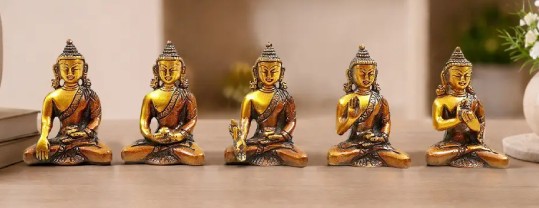 Five Buddhas. Thanks exoticindiaart.com for a lovely picture.
Noted
Art Historian Benoy K Behl shared a picture of the Five Dhyani Buddhas on the rock outside Shey Palace, Ladakh. They are
Vairochana Buddha, Amitabha Buddha, Ratnasambhava Buddha, Amoghasiddhi Buddha
nd Akshobhaya Buddha. Source
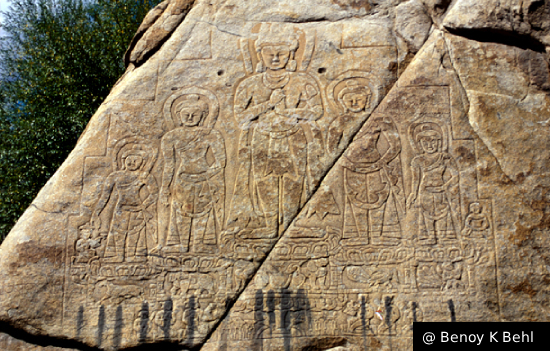 Five Dhyani Buddhas, Ladakh. Pic by Benoy K Behl.
The word Dhyani comes from the Sanskrit root word Dhyana meaning
meditation. They symbolise divine energy in the universe and are supposed to
heal the mind and soul. Source
According to exoticindiaart.com “All the five Dhyani Buddhas are said to have originated from Vajrasattva himself. But it needs to be appreciated here, that though they have all sprung from the same spiritual father, these Buddhas nevertheless have important physical differences. For e.g. each displays a different hand mudra, is associated with a different direction, rides a different animal, denotes a particular moment in the life of the historical Buddha, and has a different color.” See
pics Here
Vajrayana Buddhism divides the negative delusions plaguing the human form into five categories namely ignorance, anger, pride, attachment, and jealousy.” Source
The
five Aggregates (Khandas) are form (rupa),
feeling (vedana), perception (sanna), mental formations (sankhara) and
consciousness (vinnana). Source
The
five Pancha-shila (virtues or code of
ethics) in Buddhist Dharma are abstain from
killing-stealing-sexual misconduct-wrong speech and use of intoxicating
substances that cause inattention. Source and to read
more
A
deeper study might throw up more similarities, how they are interconnected.
Compiling
this was enlightening, never knew number 5 had so much importance. At a deeper level, it indicates what is
common to Indic faiths.
As
always am happy to stand corrected. If I have missed out some points do email
me.
Also read
1.
Importance of
Number 5 in Hindu Dharma
2.
Importance of
Number 5 in Buddhism
3.
Panch Buddhas and
their statues
4.
Five Precepts