- A brief write up on
what is common to Hindu and Jain temple architecture.
Part 1 Why
Temples are Sacred Text in Stone? Part 2 What
is the Symbolism behind Temple Sculptures? Read on for part 3.
One of the most fascinating
aspects of Indian temple architecture is the extent to which Hindu and Jain
traditions share a common visual vocabulary.
At first glance, sectarian
identities appear distinct. Hindu temples centre around deities such as Shiva,
Vishnu, Devi, or Surya, while Jain temples focus upon the Tirthankaras—the
enlightened teachers who attained liberation. Their theological frameworks
differ, as do aspects of ritual and philosophy.
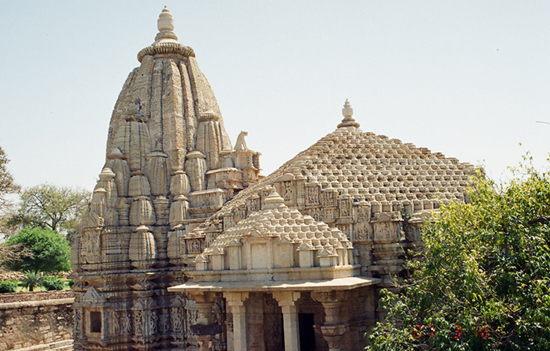 Samadisvara Temple, Chittorgarh Fort, Rajasthan. Made by Raja Bhoj.
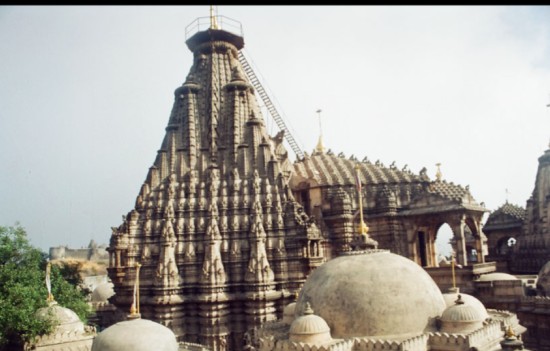 Adinath
Mandir, Palitana, Gujarat.
Adinath
Mandir, Palitana, Gujarat.
Yet when one looks closely at
their architecture and sculpture, striking continuities emerge.
Both traditions employ similar
architectural principles: sanctum, mandapa,
circumambulatory paths, towers, gateways, and sacred orientation. More
importantly, they share an underlying sculptural grammar.
Lotus motifs, celestial beings,
guardian figures, sacred animals, geometric ornamentation, narrative panels,
and auspicious symbols appear across both Hindu and Jain monuments.
This continuity reflects more
than artistic borrowing.
It reveals the existence of a
broader civilisational imagination within which different religious traditions
evolved. Sculptors, patrons, and artisans often worked across sectarian
boundaries, drawing upon shared workshops, techniques, and symbolic
conventions.
A temple in medieval India was, therefore not
created in cultural isolation.
The same artisan guild might
carve both Hindu and Jain shrines, adapting iconographic programmes while
maintaining common aesthetic principles. This explains why temples of differing
affiliations frequently display comparable decorative systems despite
theological distinctions. This is visible in Dilwara
Temple, Mount Abu.
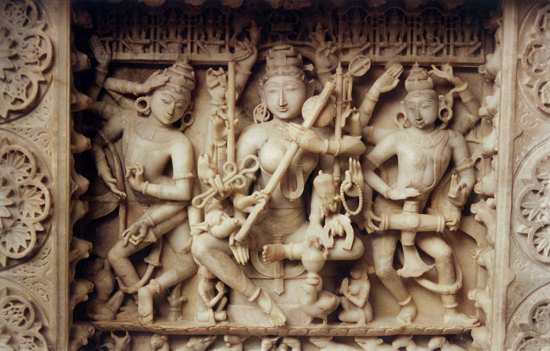 Saraswati in Dilwara Jain Temple, Mount Abu, Rajasthan.
The shared visual language
becomes particularly evident in sculptural treatment.
Graceful female figures, floral
scrolls, mythical creatures, and elaborate ceiling patterns occur across
traditions. The aim was not merely embellishment but the creation of sacred
ambience—a visual environment worthy of divine presence and spiritual
contemplation.
Jain temples provide especially
illuminating examples.
While Jain philosophy emphasizes
renunciation and detachment, Jain temple architecture often displays
extraordinary ornamental richness.
Intricately carved ceilings, decorative pillars, guardian motifs, and symbolic
ornament coexist with the serene simplicity of Tirthankara images.
This coexistence demonstrates that visual abundance
and spiritual restraint were not viewed as contradictory.
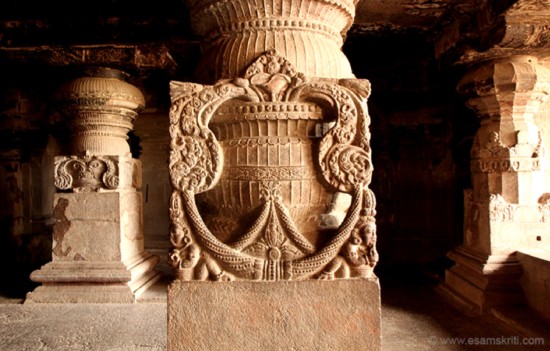 Column design, Jain Caves Ellora.
Similarly, Hindu and Jain
temples alike conceive architecture as a cosmic order made visible. Sacred
geometry, directional orientation, and symbolic placement of imagery reinforce
the understanding of the temple as a microcosm of the universe.
The shared language of temple
iconography therefore transcends narrow religious boundaries.
It points toward deeper cultural
continuities that shaped the Indian sacred landscape. Dynasties changed, sects
flourished, and regional styles evolved, yet the symbolic vocabulary endured.
This continuity is one of the
most remarkable features of Indian temple traditions. It reminds us that sacred
architecture was never merely sectarian expression. It was also the product of
a shared artistic and philosophical heritage that recognised symbolism as a
bridge between the visible and invisible worlds.
In this sense, Hindu and Jain temples do not merely stand beside
one another as separate traditions. They participate in a larger conversation—one conducted not through words, but through
stone, image, and sacred form.
Jain Iconography and Tirthankara Imagery
Although Jain temples share much
of the broader iconographical vocabulary of Indian architecture, they
articulate a distinctive spiritual vision centred upon serenity, renunciation,
and liberation.
At the core of Jain iconography
stand the Tirthankaras—the
enlightened teachers who discovered and transmitted the path to liberation.
Unlike many Hindu deities
represented through dynamic gestures and numerous attributes, Tirthankaras are
characterised by profound restraint.
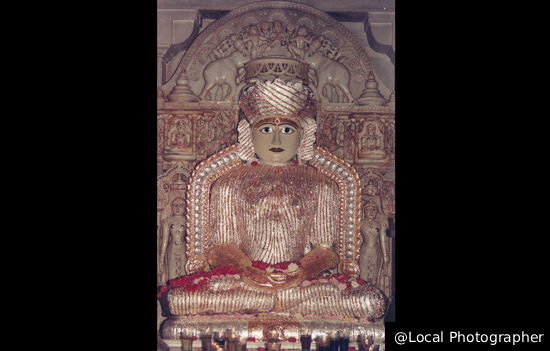 Adhinath Bhagwan, Dilwara Temple Mount Abu, Rajasthan.
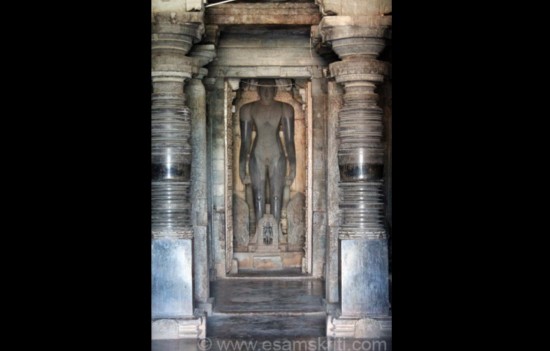 Tirthankara, Halebidu Jain Temple.
They
appear seated in meditation or standing in kayotsarga,
the posture of bodily abandonment and spiritual detachment. Their faces remain
composed and inward-looking, expressing equanimity rather than dramatic
emotion.
This stillness is central to
Jain philosophy.
The Tirthankara image does not
display divine intervention or cosmic power in a theatrical sense. Instead, it
represents spiritual conquest—the triumph over desire, attachment, and
ignorance.
Identification of individual
Tirthankaras often depends upon lāñchanas,
symbolic emblems associated with each figure. A lion identifies Mahavira, a
bull signifies Rishabhanatha, and other emblems assist recognition while
preserving iconographic consistency.
Yet Jain temples simultaneously
participate in the wider artistic culture of Indian sacred architecture.
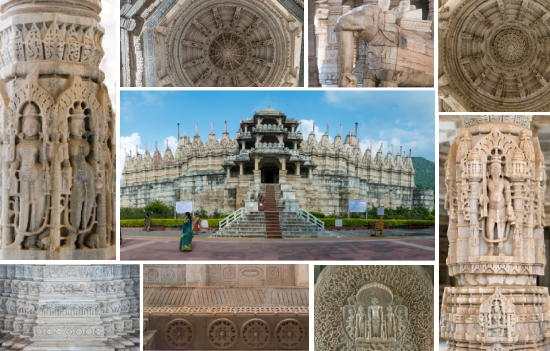 Collage Ranakpur Temple, Rajasthan.
Floral ornament, celestial
imagery, guardian figures, and decorative ceilings frequently appear alongside
meditative icons. This coexistence of visual richness and spiritual restraint
creates a striking aesthetic tension.
Jain iconography therefore
illustrates both continuity and distinction—sharing a broader sacred language
while articulating its own philosophical emphasis on self-realisation and inner
stillness.
To read all articles by author
The author is a Conservationist, Architectural historian, Author, Ph.
D. in Dravidian and Khmer temple Architecture, Cambodia and the Founder of
Samrachanā - Heritage Conservation & Research Initiative, Pune.
Also read
1. Exploring the Architectural Significance of Temples in India
2. Appreciating Indian Temple Architecture - An Indian viewpoint
3. How did Hindu Temples evolve
4. Why do Temples have Tanks and Stepwells
5. What do Ganas, Gandharvas, Mithuna Couples and Dancing girls on Temple
Walls tell us
6. Why Dilwara Temples are a must visit
7. Why
Ranakpur Temples are a wonder of the world