- This piece takes each of the 18 temple rituals,
explains it simply followed by a relevant verse of the Bhagavad Gita and a
simple practical commentary that relates the verse to daily life.
I can bow to
the deity in a moment. The apology I have been avoiding has taken me longer.
I learned to bow before I understood why. As a child,
I followed my grandfather into the Shiva temple where he served as a trustee.
He showed me how to approach the deity, how to bow and walk the parikrama. I
watched him and did the same. At that age, trusting him was enough.
Years later, I find myself returning to those same
gestures, but with different questions. What does it mean to bow if I still
struggle to admit I am wrong? What have I understood about prasad if I forget
to share? The things I learned as a child have begun to ask something of the
man I have become.
1. Ringing the Bell

I still arrive at the temple with my body ahead of my
mind: my feet already inside, my thoughts back at the office or in an
unfinished argument. Then the bell rings, and for a moment I listen. It is a
relief, really, to have an ordinary sound pull me out of whatever has been
holding all of my attention.
यतो यतो निश्चरति मनश्चञ्चलमस्थिरम् ।
ततस्ततो नियम्यैतदात्मन्येव
वशं नयेत् ॥
Bhagavad
Gita 6.26
Whenever the restless, unsteady mind
wanders off, one should bring it back and steady it in the Self.
A wandering mind is expected here. It will stray; we
bring it back. I find that more helpful than the idea that I should leave every
worry at the door. Some worries come in with us, however sincerely we pray. The
bell gives me a place to begin. Outside the temple, I think of the person
speaking while I glance at my phone, or the meal I barely notice eating. Being
present starts with noticing that I have gone elsewhere.
2. Walking the Parikrama
I first walked the parikrama behind my grandfather,
matching his pace without understanding the gesture. The deity stayed at the
centre, and we were the ones who moved. Years later that arrangement makes me
question how often I expect everything to revolve around my needs.
अनन्याश्चिन्तयन्तो मां ये जनाः पर्युपासते ।
तेषां नित्याभियुक्तानां योगक्षेमं वहाम्यहम् ॥
Bhagavad
Gita 9.22
For those who think of Me alone and
worship Me with undivided devotion, ever steadfast, I bring what they lack and
protect what they have.
Undivided devotion is a demanding phrase, and I try
not to use it lightly. Walking around the shrine gives me a way to reflect on
what I keep returning to in my own life. We may say that family matters most,
yet give it only the time left over after everything else. We may value honesty
until it becomes inconvenient. What occupies our thoughts, and what receives
our time, tells us something our stated priorities may leave out. Each round
invites me to ask whether the life I am arranging still has room at its centre
for what I claim to hold sacred.
3. Applying Tilak
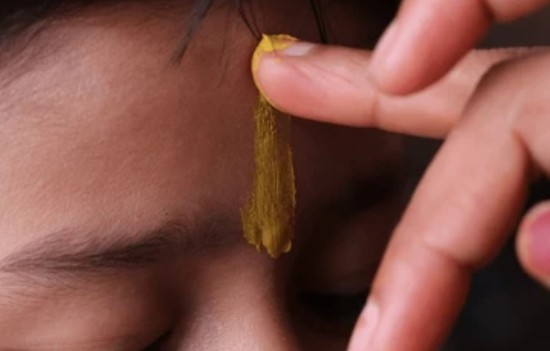
The tilak is one of the most varied practices across
Hindu traditions. Its materials and form carry meanings that differ by
community and family. For me, the mark also raises a personal question: what
will remain of this visit once I am occupied with the rest of the day?
तस्मात्सर्वेषु कालेषु मामनुस्मर युध्य च ।
मय्यर्पितमनोबुद्धिर्मामेवैष्यस्यसंशयम् ॥
Bhagavad
Gita 8.7
Therefore, remember Me at all times
and fight; with mind and intellect offered to Me, you will surely come to Me.
The verse brings remembrance and action together. We
still have work to do, decisions to make, people to deal with. Others see the tilak
at a glance; whether we keep our word or listen fairly becomes apparent over
time. An angry thought can turn into a hurtful sentence before we have asked
whether it is fair. A suspicion can grow because we keep feeding it. The mark
reminds me to notice what I am allowing to take hold in my mind, especially
when nobody else can see it yet.
4. Folding Our Hands in Namaste
Joining our palms is a familiar gesture of greeting, prayer and respect. Before the deity, it becomes a wordless “I bow to the divinity within you.” The invitation to bow in this verse belongs beside that gesture. What interests me is how long the respect lasts after our hands come apart.
मन्मना भव मद्भक्तो मद्याजी मां नमस्कुरु ।
मामेवैष्यसि सत्यं ते प्रतिजाने प्रियोऽसि मे ॥
Bhagavad
Gita 18.65
Fix your mind on Me, be devoted to Me, worship Me, bow to Me. You will come to Me — this I promise, for you are dear to Me.
There is one person I have found hard to speak to
kindly, and I notice my voice changing before I have decided anything. That
troubles me more than whether I have performed the gesture correctly. Respect
becomes difficult during a disagreement, or when we need to correct someone who
has less power than us. A waiter who gets an order wrong still deserves a
considerate reply. We can be firm without making someone feel small. I want the
respect in my folded hands to remain in my voice once I have lowered them.
5. Leaving Our Footwear Outside
Removing our shoes keeps the temple clean and marks
the moment we enter a place we treat with care. We leave them outside easily
enough. An argument or an old resentment is less willing to stay behind. There
is nothing wrong with arriving at prayer with something troubling us.
रागद्वेषवियुक्तैस्तु विषयानिन्द्रियैश्चरन् ।
आत्मवश्यैर्विधेयात्मा प्रसादमधिगच्छति ॥
Bhagavad
Gita 2.64
One who moves among the objects of
the senses with the senses under control, free from attraction and aversion,
attains inner calm.
Composure amid attraction and aversion is easy to admire and hard to practise. It makes me think about how readily a passing frustration can govern what I do next. A difficult day at work enters the living room as impatience with someone who had nothing to do with it. Yesterday’s argument finds its way into today’s conversation. Leaving our footwear outside gives me a simple image for a discipline I still need at my own front door. Before stepping in, it helps to remember that whoever is waiting inside did not cause what went wrong outside.
6. Taking Part in Aarti
For many, aarti is the most stirring part of a temple
visit: a flame moving before the deity while voices rise around it. People
carrying different griefs and hopes stand together for those few minutes. We
need not know what has brought the person beside us there to share in the prayer.
तेषामेवानुकम्पार्थमहमज्ञानजं तमः ।
नाशयाम्यात्मभावस्थो ज्ञानदीपेन भास्वता ॥
Bhagavad
Gita 10.11
Out of compassion for them, dwelling
within their hearts, I destroy the darkness born of ignorance with the shining
lamp of knowledge.
Knowledge as a lamp dispelling ignorance is a familiar image. Watching the flame, I find myself thinking about the difference between wanting a difficulty to disappear and trying to understand it. Have I mistaken someone’s silence for indifference? Am I waiting for an apology while refusing to consider my own part? Sometimes a little clarity changes how we meet a situation even when the situation itself remains. Aarti gives me a moment to ask for that clarity, among others who may be asking for something equally difficult.
7. Receiving and Sharing Prasad
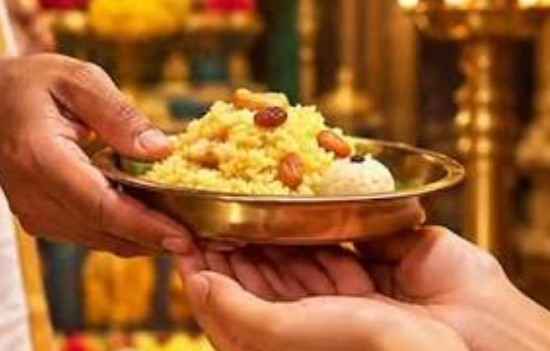
Food is offered to the deity and shared as Prasad thereafter.
In receiving it, something we might otherwise take for granted becomes a gift.
Even a small portion asks us to receive it with care.
यज्ञशिष्टाशिनः सन्तो मुच्यन्ते सर्वकिल्बिषैः ।
भुञ्जते ते त्वघं पापा ये पचन्त्यात्मकारणात्
॥
Bhagavad
Gita 3.13
The good, who eat what remains after
the offering, are freed from all wrongs; but those who cook only for themselves
eat sin.
The verse’s language about those who cook only for themselves is blunt, and it makes me ask whether I notice anyone’s needs beyond my own. Before taking a second portion, has everyone had their share, including whoever served it? The person doing the serving can be the easiest to overlook. Prasad brings gratitude and sharing into the same act. The thought reaches beyond food: someone once took time to explain what we did not understand, and we can offer that patience to another person. What we have received can become useful to someone else, if we remember to make room for them.
8. Bowing Our Head
Bowing before the deity acknowledges something greater
than ourselves. Its form changes with tradition and physical ability; someone
who cannot kneel can still approach with devotion. In this verse, Arjuna bows
and asks forgiveness. The gesture and the admission belong together.
तस्मात्प्रणम्य प्रणिधाय कायं प्रसादये त्वामहमीशमीड्यम् ।
पितेव पुत्रस्य सखेव सख्युः प्रियः प्रियायार्हसि देव सोढुम् ॥
Bhagavad
Gita 11.44
So I bow low, prostrating my body, and ask for your grace, adorable Lord. As a father forgives a son, a friend a friend, a lover a beloved — please forgive me.
I can bow to the deity in a moment; the apology I have been avoiding has taken me far longer. It is difficult to admit that our judgement was unfair, especially when we have defended it in front of other people. We begin explaining our intention when what the other person needs is an acknowledgement of the hurt. Bowing makes me think about the limits of my own certainty. Saying “I was wrong” need not cost us our self-respect. It may allow a conversation to begin again, with enough room for the other person to be heard.
9. Offering Flowers
A flower is a small offering, and it wilts within a
day, so it cannot be offered for show. The verse places it beside a leaf, fruit
and water, making devotion more important than expense. There is comfort in
knowing that what we can afford to offer need not be inadequate.
पत्रं पुष्पं फलं तोयं यो मे भक्त्या प्रयच्छति ।
तदहं भक्त्युपहृतमश्नामि प्रयतात्मनः ॥
Bhagavad
Gita 9.26
Whoever offers Me with devotion a
leaf, a flower, a fruit or water, I accept that offering of the loving,
pure-hearted devotee.
The care behind a gift matters in our relationships
too. We can become so concerned with making it impressive that we forget to ask
what would actually please the person receiving it. Sometimes a little of our
time would mean more.
Then comes the harder part: allowing the gift to
remain a gift. If we keep an account of every thank-you and returned favour, it
has already become a debt. Offering flowers makes me examine that expectation
in myself. Can I give something thoughtfully and let the other person receive
it without feeling that they now owe me?
10. Breaking the Coconut
The coconut’s hard shell gives way to the water and kernel within. Read as an image of ego, it makes me think of the defences we build around our importance. We insist on our version of events, protect our standing, or take credit for work that many people helped us do.
प्रकृतेः क्रियमाणानि गुणैः कर्माणि सर्वशः ।
अहङ्कारविमूढात्मा कर्ताहमिति मन्यते ॥
Bhagavad
Gita 3.27
All actions are performed by the qualities of nature. One whose mind is deluded by ego thinks, “I am the doer.”
The verse questions the claim “I am the doer.” That thought is especially useful when something has gone well. It is easy to remember the work we put in and forget the help that made it possible. The same defensiveness appears when someone corrects us: we are so busy protecting our account of ourselves that we cannot hear what they are saying. Breaking the coconut gives me a picture of what it might look like to loosen that grip. Perhaps I can acknowledge another person’s contribution, or accept a correction without treating it as an attack.
11. Sitting Quietly Before Leaving
Many families end a temple visit with a few minutes of
sitting quietly. There may be nothing left to say or do. We stay anyway,
allowing the visit a little time before we return to everything waiting
outside.
यथा दीपो निवातस्थो नेङ्गते सोपमा स्मृता ।
योगिनो यतचित्तस्य युञ्जतो योगमात्मनः ॥
Bhagavad
Gita 6.19
As a lamp in a windless place does
not flicker, so is the disciplined mind of one who practises meditation on the
Self.
The verse’s lamp in a windless place gives me an image for that stillness. Most days, one experience follows another with scarcely a pause between them. A conversation ends and we reach for the phone. Something moves us, but we hurry on before understanding why. Sitting need not mean forcing the mind to be empty. Perhaps there is a worry we can finally name, or something we feel thankful for. We might simply notice how tired we are. Those few minutes allow us to hear a little of what we have been too occupied to acknowledge.
12. Receiving Charanamrit or Tirtham
We receive the sacred offering with reverence, even
when it is only a small amount. Its preparation and the way it is received vary
with tradition. For me, it invites a thought about the care we bring to what we
take into ourselves.
न हि ज्ञानेन सदृशं पवित्रमिह विद्यते ।
तत्स्वयं योगसंसिद्धः कालेनात्मनि विन्दति ॥
Bhagavad
Gita 4.38
In this world nothing purifies like
knowledge. One who has become perfected in yoga finds it within, in due time.
Nothing purifies like knowledge, the verse says, and I think of the relief of discovering that an unkind impression of someone was mistaken. A rumour can settle in the mind before we have asked whether it is true. Once accepted, it colours everything the person says or does. We may even pass it on, giving it the authority of our own voice. Being more careful need not mean refusing every uncomfortable truth. It means allowing understanding to catch up with judgement. Sometimes the most useful restraint is simply saying, “I don’t know enough to judge.”
13. Giving Through the Hundi
A coin or a note drops into the temple’s donation box. The act can pass without anyone noticing. The verse asks us to consider the time, place and recipient of a gift, as well as whether we expect something in return. Generosity involves attention to where our help goes.
दातव्यमिति यद्दानं दीयतेऽनुपकारिणे ।
देशे काले च पात्रे च तद्दानं सात्त्विकं स्मृतम् ॥
Bhagavad
Gita 17.20
A gift given because it is right to
give, at the proper place and time, to a worthy person, and without expecting
anything in return, is considered a gift in the mode of goodness.
Giving through the hundi makes me think about
recognition. It is natural to appreciate a thank-you, but the desire for one
can begin to govern whom we help and how. Would we make the same contribution
if our name were never mentioned? Quiet giving offers a chance to notice that
expectation without indulging it. Outside the temple, the thought extends to
the dignity of the person receiving help. Their difficulty is already enough
for them to bear. They should not also have to become part of a story we tell
to make ourselves look generous.
14. Repeating a Mantra
In mantra japa, we return to a sacred word or name
again and again. The verse gives the practice a place of honour. To someone
watching, very little may seem to be happening; for the devotee, there is a
familiar place to bring the attention back.
महर्षीणां भृगुरहं गिरामस्म्येकमक्षरम् ।
यज्ञानां जपयज्ञोऽस्मि स्थावराणां हिमालयः ॥
Bhagavad
Gita 10.25
Among great sages I am Bhrigu; among
utterances, the one syllable Om; among sacrifices, the sacrifice of silent
repetition (japa); among immovable things, the Himalayas.
We know how persistent repetition can be. A careless
remark may replay in our minds for days. We rehearse an argument long after the
other person has stopped thinking about it. Japa offers something deliberately
chosen to return to. What moves me is the patience of the practice. Attention
wanders, and the next repetition is still there. We need not turn distraction
into another failure to dwell on. That patience has a place in ordinary work
too. After losing focus, we can return to the task without spending the next
hour reproaching ourselves for having left it.
15. Touching the Temple Threshold
Before entering, some devotees touch the temple step
or threshold and bring their hand to their forehead. It is a brief gesture,
easy to miss. I see in it an acknowledgement of the place beneath our feet,
which we might otherwise cross without a thought.
देवान्भावयतानेन ते देवा भावयन्तु वः ।
परस्परं भावयन्तः श्रेयः परमवाप्स्यथ ॥
Bhagavad
Gita 3.11
Nourish the devas with this offering,
and may the devas nourish you; nourishing one another, you will attain the
highest good.
Mutual nourishment, the verse suggests, runs between people and the devas through offering. Beside this gesture, it leads me to reflect on the support I receive and what I give in return. We admire a visible achievement and forget the years of help beneath it: a parent’s sacrifices, an early teacher’s patience. Remembering that support takes nothing away from our own effort. It gives us a more honest account of how we arrived here. Gratitude may begin with a name, but it can continue in a phone call or time made for someone whose help we once depended on.
16. Lighting a Diya
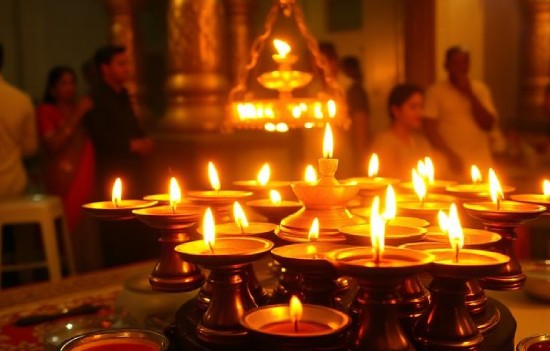
Preparing the wick, adding oil and lighting a diya is a small act of care. Compared with the shared voices of aarti, it offers a more private moment in which to consider an intention. The verse’s call to lift ourselves makes me think about how we support, or neglect, our own efforts to live well.
उद्धरेदात्मनात्मानं नात्मानमवसादयेत्
।
आत्मैव ह्यात्मनो बन्धुरात्मैव रिपुरात्मनः ॥
Bhagavad
Gita 6.5
Lift yourself by your own mind; do not let yourself sink. The mind alone can be one’s friend, and the mind alone can be one’s enemy.
A lamp needs tending. So do the qualities we hope to
keep when life becomes difficult. Tilt a lit lamp a little in any direction and
the flame still points up; I would like my character to do the same when life
tilts me. Patience comes more easily when we are rested; fairness is harder
when we feel unfairly treated. We will not always manage either as well as we
wish. Still, an unkind word can be acknowledged, and careless work can be put
right. The diya brings me back to that possibility. I want to give my
intentions enough attention to sustain them after the moment in which I felt
certain of them has passed.
17. Tying the Kalava
The sacred thread around the wrist carries religious
meanings that vary by tradition. I also see it as a reminder of an intention
made during prayer. The verse speaks of firm resolve, and noticing the thread
can bring me back to what I meant when I made a promise.
सततं कीर्तयन्तो मां यतन्तश्च दृढव्रताः ।
नमस्यन्तश्च मां भक्त्या नित्ययुक्ता उपासते ॥
Bhagavad
Gita 9.14
Always praising Me, striving with
firm resolve, bowing to Me in devotion, ever steadfast, they worship Me.
Promises come easily in a moment of clarity. Then life
becomes busy, and the call we said we would make is postponed again. A
responsibility we accepted slips behind something more immediately appealing.
It is uncomfortable to see how easily an earnest intention gives way.
Remembering it gives us a chance to act before another day goes by. A
commitment becomes trustworthy through follow-through: making the call, showing
up, admitting when we have let someone down. The reminder on our wrist can
prompt us, but the next step is ours to take.
18. Offering Water in Jal Abhishek
Pouring water over the deity in a slow stream invites care. The vessel must be held steadily and the pour attended to. Beside the verse’s description of steadfast devotion, the gesture makes me think about the effort of continuing after our first enthusiasm has passed.
मय्यावेश्य मनो ये मां नित्ययुक्ता उपासते ।
श्रद्धया परयोपेतास्ते मे युक्ततमा मताः ॥
Bhagavad
Gita 12.2
Those who fix their minds on Me and worship Me, ever steadfast and with deep faith, I consider the most perfect in yoga.
A relationship needs attention on ordinary days, once
the special occasion is over. Learning asks us to practise while progress is
still too small to see. We may be willing to make a grand gesture and less
willing to give ten unhurried minutes each day. Abhishek gives me an image for
the kind of care I would like to sustain.
There will be interruptions, and days when I fall
short. I can return without waiting for the feeling that made beginning so
easy. The next small effort still matters.
What
We Carry Home
Perhaps that’s the real purpose of a temple — not only a place to ask for our circumstances to change, but a place to practise, again and again, becoming someone who can meet those circumstances differently. The ritual happens inside the temple. What it’s for happens outside it.
I don’t leave every temple visit feeling at peace. Sometimes the worry I brought in is still there when I collect my shoes. I have started to ask for something more modest than an immediate change of heart: enough patience to listen when I get home, or enough honesty to make the apology I have been avoiding.
My grandfather showed me how to approach the deity,
bow and walk the parikrama. I understood very little then, but I kept the
gestures. Years later, I am beginning to see how much they ask of me. The next
time I fold my hands, I hope to remember the person I found difficult to speak
to kindly.
These are personal reflections, offered with respect
for the different ways families and temples practise these rituals. The
Bhagavad Gita verses accompany the reflections as related teachings, rather
than explanations of ritual origins; their English renderings are intended for
a general reader.
Author Saurabh is an Author, Writer and Social Commentator. To read more visit his blog https://saurabhthakore.blogspot.com/p/home.html