- The author tells how Ramayana is to be
lived and is more than just a movie. Look at the learnings more than judging
for acting and dialogues.
I did not go to judge Ramayana as a film
or look for faults in acting, direction or dialogue. I went with an open mind
and an open heart, to experience Ram.
Truly, the movie touched me. It was
darshan, not just cinema.
The dignity of Ram, the pain of exile, the
silence of Sita and the devotion of Jatayu felt incredibly real. I felt that
Rishi Valmiki was whispering the story into my ears, and I was sitting in the
forests of Chitrakoot, witnessing it unfold.
The 3D was not merely an effect; it was an
experience. I felt immersed in the world of Ramayana. The trees, rivers, birds
and even the dust in the air seemed alive.
The cinematography was extraordinary. Every frame looked like a painting from our ancient manuscripts brought to life. The light in the forest, the compassion in Ram's eyes and Jatayu's flight with broken wings but unbroken devotion were breathtaking. There was beauty, grace and reverence.
It is natural that every individual will
appreciate or criticize a film according to their own perspective, experiences
and inner disposition. Devotion is voluntary and appreciation cannot be
demanded.
Yet, even those who come only to enjoy the
cinema and its visual effects may carry something precious home. The name of
Ram may enter their ears, His form their eyes and perhaps His values their
hearts. Even an incidental remembrance of Bhagavan is considered spiritually
meaningful in our traditions.
Visually, the CGI was world class. The
climax depicting Jatayu fighting Ravana was, among the finest visual effects
sequences I have experienced in cinema.
It was actually much more than a
spectacular fight. It was Dharma standing against Adharma. An ageing bird
fought for Sita Maa, knowing that death was almost certain, yet refusing to
surrender. That is courage. That is devotion. That is sacrifice.
Jatayu teaches us something
profound:
we do not need to be powerful to stand for Dharma. We only need the courage to
do what is right. Sometimes victory may be impossible, but surrendering our
values must never be an option.
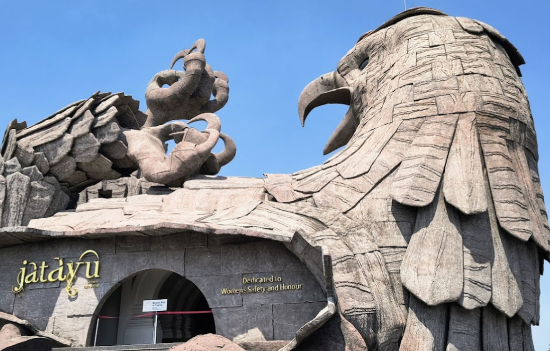 Jatayu Earth Centre i.e. close to Trivandrum, Kerala. Pic by Ankur Gupta.
For me, Ramayana is not a story to be
debated. It is a truth to be experienced. It is not just Itihasa; it is also an
inner journey, unfolding within us every day.
Ram and
Ravana are not merely outside us; they represent forces within us.
Ram represents purity, compassion,
patience, maryada and unwavering commitment to Dharma. He relinquished His
kingdom and accepted fourteen years of exile without allowing bitterness to
enter His heart. His inner strength remained untouched despite every external
hardship.
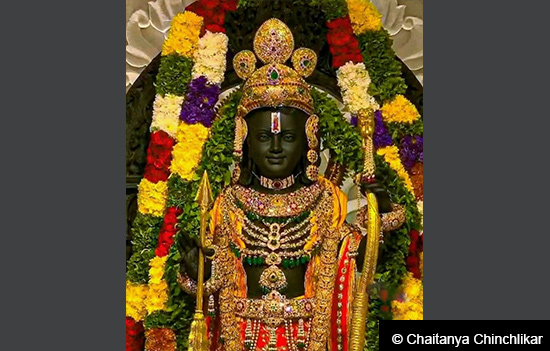 Ram Lalla, Ayodhya.
Ravana, on the other hand, was no ordinary
king. Born to the sage Vishrava, he possessed extraordinary strength, ambition,
knowledge and powers acquired through intense tapasya. In our later Puranic and
devotional traditions, he is also remembered as a great devotee of Lord Shiva,
particularly through the celebrated story of his encounter with Shiva at Mount
Kailasa.
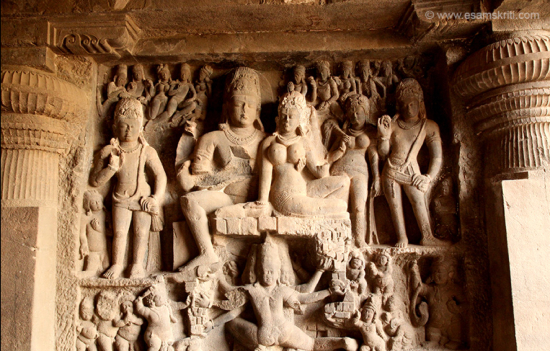 Cave 29 Ellora. Siva and Parvati sitting on Mount Kailash with Ravana trying to shake the holy mountain.
According to the Uttara Kanda of the
Valmiki Ramayana, Ravana performed severe austerities to please Brahma, who
granted him a boon protecting him from various powerful celestial and
supernatural beings. Ravana considered human beings insignificant and did not
seek protection against them. That very arrogance became the opening through
which his downfall came.
Bhagavan did not violate the boon. He
manifested as a human being, as Ram, to fulfil the divine purpose of restoring
Dharma.
But perhaps Ravana's greatest tragedy was not that he lacked knowledge or power. It was that his extraordinary abilities did not lead him to conquer his own ego. He possessed immense strength, ambition and learning, yet could not control his desires. He refused to listen to wise counsel and allowed his pride to overpower his discrimination.
This is one of the greatest lessons of the
Ramayana: knowledge without humility can become
another form of ego. Tapasya without self-mastery can become another
form of pride. Even devotion and extraordinary powers cannot justify Adharma.
Ravana mastered many things, but failed to
master himself. Ram, on the other hand, demonstrated that true greatness lies
in self-control, humility, compassion and unwavering
commitment to Dharma.
At an inner, symbolic level, the ten heads of Ravana can be understood as the many desires and negative tendencies that pull us away from our higher nature — Kama, Krodha, Lobha, Moha, Mada and Matsarya. Whenever ego, anger, greed and attachment dominate us, Ravana rises within. Whenever patience, truth, compassion and Dharma guide our actions, Ram shines within us.
The real Ramayana, therefore, is not
merely a war in Lanka. It is the struggle within our own minds.
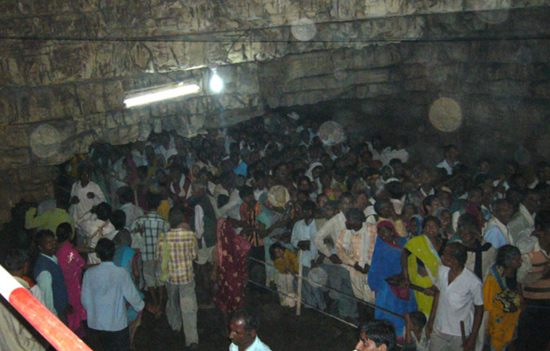 Inside Gupt Godavari Cave, Chitrakoot i.e. associated with Ramayana.
Let us go deeper now.
At the deepest level of Advaita Vedanta, beyond Nama and Rupa (name and form), the ultimate Reality is Brahman — Sat-Chit-Ananda,
pure Existence, pure Consciousness and pure Bliss.
In this contemplation, Ram becomes a
doorway to that eternal Truth. The journey begins with loving Ram as Bhagavan,
deepens through understanding His Dharma and leads to the realization of the
One Reality.
Ravana represents the ego and the
personality traits that bind us. Ram represents the light of Truth that shines
when these limitations dissolve.
When we watch with ego, we find faults.
When we watch with Bhakti, we find Ram. When we contemplate with Jnana, we begin
to recognise that our true nature is not the limited ego or personality, but
the eternal Atman, which, according to Advaita, is none other than Brahman.
Aham
Brahmasmi — I am Brahman.
This does not mean that our ego is God. It means that when ignorance and identification with the
limited self-dissolve the eternal Truth is realised.
That is the real Vijayadashami. That is
the real Diwali. That is the real Ramayana.
This film is a mirror. It gives us an
opportunity to look within.
Beyond discussing the VFX, acting or
direction, let us take something deeper home. Sit in silence for five minutes
and ask one honest question:
Today, who is winning inside me — Ram or Ravana?
When we forgive someone who has hurt us,
Ram wins. When we control our anger, Ram wins. When we choose Dharma over
convenience, Ram wins.
We begin the journey by seeking Ram. We
continue by living like Ram. And through Jnana, we discover the eternal Truth
that was never separate from us.
Ramayana is meant to be lived every day
and is more than just a film.
When the ego dissolves, the Ram within is
revealed.
Jai Shri Ram!
To read all
articles by author
To read all articles on Bollywood
Also
read
1. The
Second Ascent of JATAYU is where Tradition meets a Modern Marvel
2. Album
Chitrakoot
3. Adhyatma
Ramayana, The Spiritual Version of the Story of Sri Rama
4. Khajurao,
Chitrakoot and Prayagraj Tour
5. Ramayana
at PRAMBANAN Temple, Indonesia
6. Experience
of Ayodhya Ram Mandir Pran Pratishtha held on January 22 2024
7. RAMAYANA
in Southeast Asia - An Indo-ASEAN Cultural Bridge
8. Ravana,
Atma-Linga and Murdeshwara