- A
complete guide to visiting Ranthambore National Park along with nice tiger
pictures.
Images by author,
Kapil Sharma and Rajeev Dass.
This
was my fourth trip to Ranthambore - first time in the month of March. I decided
to do ten safaris in various gates, so it was a five night stay at the
excellent Ranthambore Regency. Its employees are very good brand ambassadora
for the hotel. How they manage is something all would be keen to know.
Ranthambore
is a very beautiful forest and history. Ranthambore
Fort is now a part of the Tiger Reserve and many photos of Ranthambore
carry portions of the palace. It was built by the Chauhan
rulers in 944 A.D. Invader A Khilji laid siege on the fort in 1303. “An architectural marvel, the fort includes attractions e.g. Toran Dwar, Mahadeo Chhatri and Sametonki Haveli.” 1
Photographers
will give an arm and a leg for getting a photo of a tiger sitting in the
windows of the Fort!
There
is a Ganesha Temple, now accessible only by
using a vehicle. During my previous visit it was open pilgrims could walk to
the temple but a couple of human-tiger conflict incidents has put an end to
that.
You
can also see four hundred species of birds, mammals - herbivores and carnivores
like leopard, jungle cat, bears, etc.
What is available and what to expect in Ranthambore
1.
Jeep safaris where six people go in one jeep
- though I would suggest that four people in one jeep is more comfortable for
you to keep your camera, etc.
2.
Canter has capacity of 20. Sighting happens immaterial of how you travel, but photographers should go by jeep which allows them more flexibility than a Canter. Canter is cheaper and those who are going just to 'see' a tiger can choose that.
I
use the same jeeps, drivers, guides in my trips and my safaris. Their
experience helps in good sighting and angles in which he parks the jeep helps
in shooting good frames. I got some amazing photos at Ranthambore even on this
trip.
3.
Ten Gates at Ranthambore – Most of the action happens at gates 2, 3, 4 and 5. Not too many people choose gates 6 to 10.
4.
Weather in beginning of March was fine – needed a light sweater till about 8.30am and after that it was the harsh Rajasthani summer.
About Ranthambore National Park
It is one of India's iconic tiger reserves and national parks, located in the Sawai Madhopur district of south eastern Rajasthan. It spans a vast area of about 1,334 km at the junction of the Aravalli and Vindhya hill ranges. Bounded by the Banas River to the north and the Chambal River to the south, t
The
park was established as the Sawai Madhopur Game Sanctuary in 1955, became a
Project Tiger reserve in 1973, and was declared a national park in 1980.
The park is named after the magnificent Ranthambore Fort, a 10th-century hill fort perched dramatically atop a 210-meter-high plateau within the park boundaries. The fort includes palaces, gates, water tanks, ruins, and battlements—now largely abandoned but still alive with langurs scampering across the walls.
Inside
the fort lies the revered Trinetra Ganesha Temple,
one of the oldest and most famous Ganesha temples in Rajasthan.
The
park features a stunning mix of dry deciduous forests, open grassy meadows,
rocky terrain, ravines, and several picturesque lakes (such as Padam Talao -
with its iconic Jogi Mahal on the shore—Rajbagh Talao, and Malik Talao). These water bodies are lifelines for wildlife, especially during the dry season. We saw tigers swimming and many crocodiles too! It was nice to see how tigers preyed on the crocodiles.
Ranthambore
is a beautiful forest. It is must see for forest lovers and a super must see
for tiger lovers. Along with Corbett and Tadoba, Ranthambore also has given me
tiger sighting every time I visited.
Ranthambore
is world-renowned for its Royal Bengal Tigers. Tigers here are famously brave and often seen during safaris, lounging near lakes or hunting in the open. The park's relatively open terrain and abundant prey make tiger sightings more reliable than in many other reserves.
Other mammals (over 50 species total) include:
Leopards,
Caracal, Jungle Cat, Fishing Cat, Rusty-spotted Cat, and Desert Cat.
Large
carnivores: Sloth Bear, Striped Hyena, Golden Jackal, Indian Wolf (occasional),
Indian Wild Dog.
Herbivores
and ungulates: Sambar Deer, Chital (Spotted Deer), Nilgai (Blue Bull), Chinkara
(Indian Gazelle), Blackbuck, Wild Boar.
Primates
and others: Hanuman Langur, Rhesus Macaque, Indian Fox, Desert Fox, Palm Civet,
Mongoose species, Porcupine, Indian Hare.
Reptiles include Marsh Crocodiles basking in the lakes, Indian Rock Python, Bengal Monitor Lizard, Russell's Viper. Saw-scaled Viper, and various turtles and snakes.
Birds are a major highlight, with over 300
species thriving due to the diverse habitats and water bodies.
Which are the birds
that I have seen there? Indian Peafowl,
Crested Serpent Eagle, Painted Francolin (and Grey Francolin), Indian Grey
Hornbill, Kingfisher. Falcons, Owls (including Brown Fish Owl), Nightjars,
Indian Paradise Flycatcher, Woodpeckers, Painted Stork, Flamingos, Pelicans,
Storks, Herons, Cormorants, Sandpipers, Crakes, Jacanas, Greylag Goose, Asian
Palm Swift, Sandgrouse, and various ducks and waterfowl! Unless your guide is good
spotting these birds is very difficult.
The park's dry deciduous flora—dominated by Dhok trees, along with Banyan, Peepal, Neem, Jamun, and over 500 other plant species—supports this incredible biodiversity.
Ranthambore offers a magical blend of thrilling wildlife encounters, ancient history, and spiritual heritage—all in one breathtaking landscape.
Whether you are chasing tigers at dawn, admiring the fort's ruins at sunset, or spotting a flash of blue from a kingfisher by the lake, it's an unforgettable experience.
Tips
I
carry sun cream and wear UV rays resistant clothing. Carrying glares and buffs
(to cover your neck) helps. Hat is a must.
If you are going by jeep your ID is checked for every safari. I carry my AADHAR – in physical form and in my Digi Locker. Always better to have back up.
Safaris
(jeep or canter) are the best way to explore, running from October to June.
Park
is open from 6.30 to 10 am and 2.30 to 6.30 pm. Better check timings first.
How to reach
I
flew to Jaipur and took a taxi (180 kms) to Sawai Madhopur. Or take a train to
Sawai Madhopur station
To see pictures
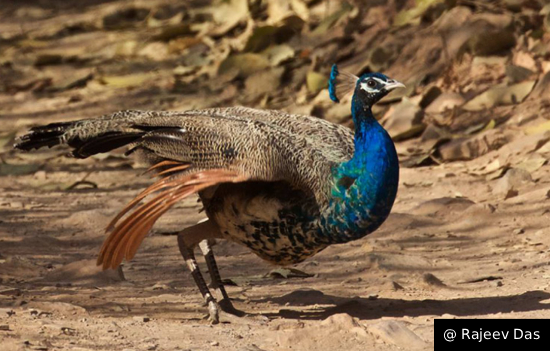 Peacock by Rajeev Dass.
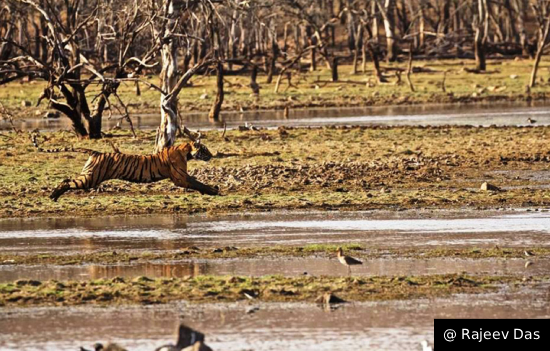 Sprinting Tiger by Rajeev Dass.
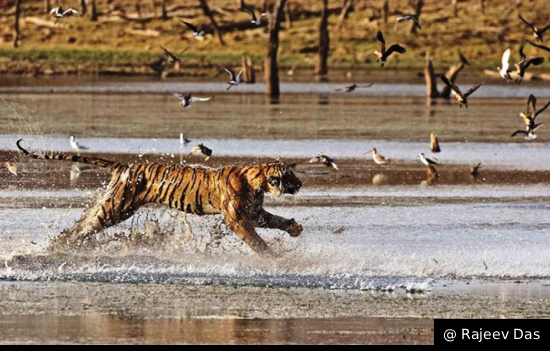 In water by Rajeev Dass.
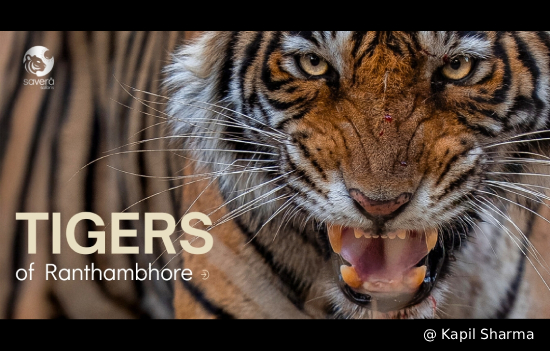 By Kapil Sharma.
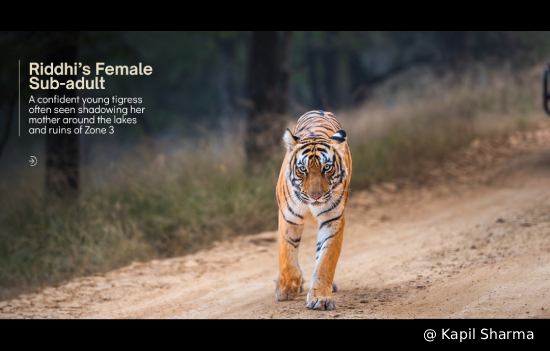 By Kapil Sharma. Riddhi, a confident tigress usually seen around ruins of zone
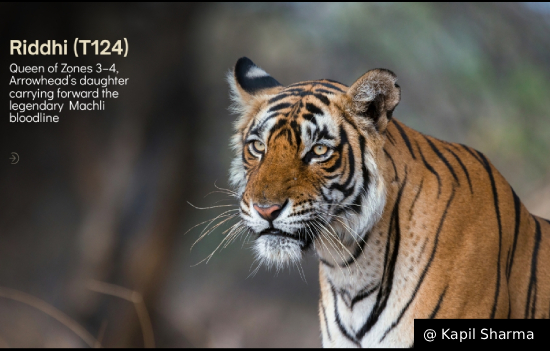 By Kapil Sharma. Riddhi, Queen of Zone 3 and 4 carrying forward the legendary Machi bloodline.
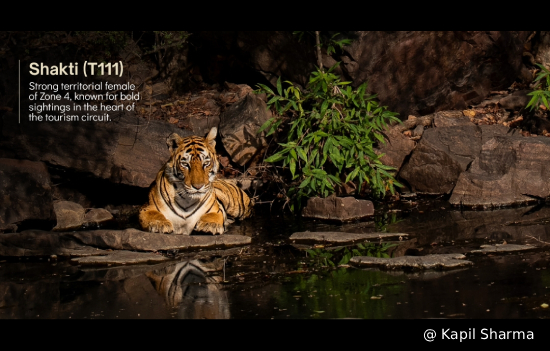 By Kapil Sharma. Shakti. Strong territorial female of zone 4.
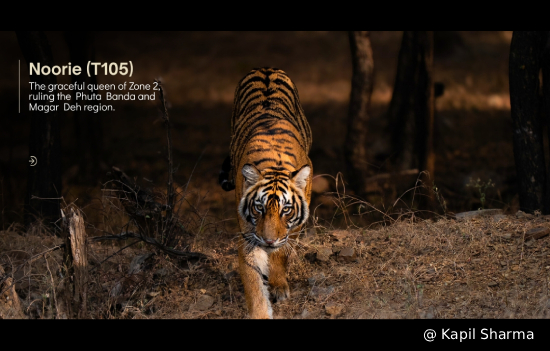 Noorie. The graceful Queen of zone 2. By Kapil Sharma.
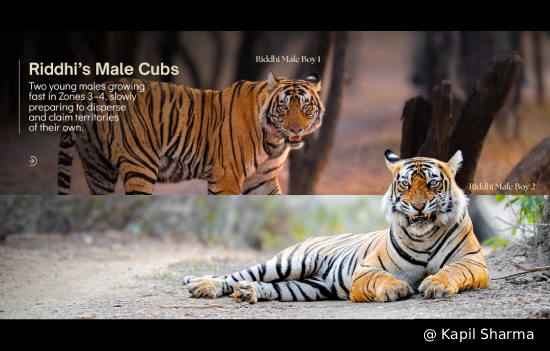 By Kapil Sharma. Riddhi’s male cubs.
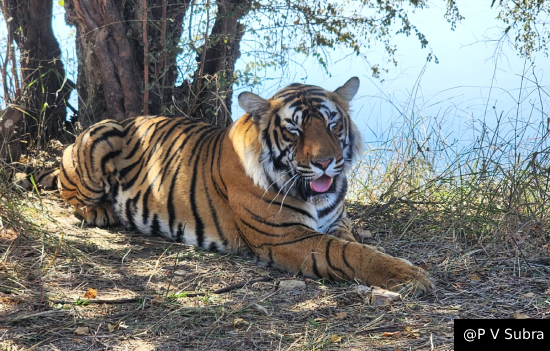 By Author.
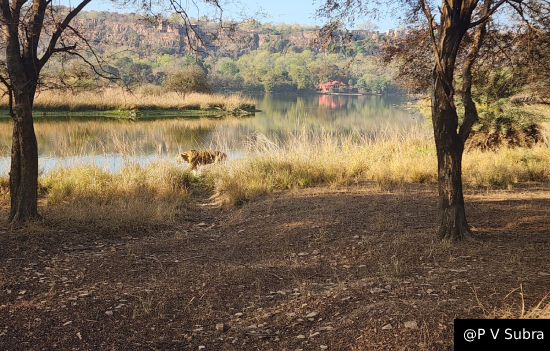 By Author.
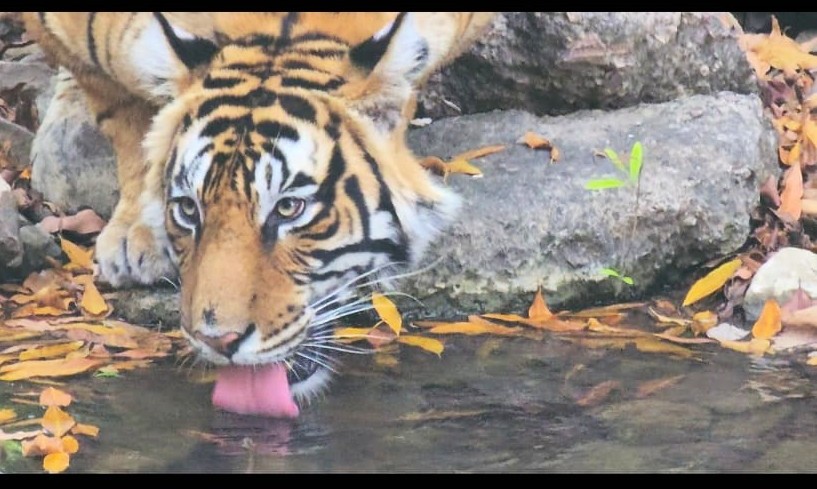 By Author
To read all
travelogues by author
Also see/read
1.
Rajasthan
Tourism site on Ranthambore
2.
Booking of Safaris
3.
Earlier
album Ranthambore – Tigers only.
4.
Sundeep
K experience at Ranthambore
5.
A
complete guide to Ranthambore by E Rose
6.
Ranthambore Residency Hotel where I
stayed
7.
2004
album on Ranthambore has Bird Pics too
Other Tiger Parks
in India
8.
Tigers
of Bandhvagarh
9.
Tigers
of Kanha
10.
Tigers
of Corbett
11.
Tigers
of Tadoba