- A useful guide to
those who wish to do the Panch Kedar Yatra including what is Panch Kedar. It
provides significance about each temple and a crisp FAQ for devotees.
Hidden deep in the
lap of the Garhwal Himalayas lies Panch Kedar, often regarded as the ultimate
Shaivite pilgrimage. These five temples dedicated to Lord Shiva are more than
temples; they tell a tale of devotion, endurance, and spirituality. Every year,
tons of pilgrims take on these treks in search of Moksha from worldly
attachments.
The trail to the Panch
Kedar is steep and uncertain with changing weather conditions and unforeseen
situations, but if you have a trusted travel advisor like BizareXpedition by
your side, even the difficult routes can lead us to the most beautiful
destinations.
What
is the Panch Kedar?
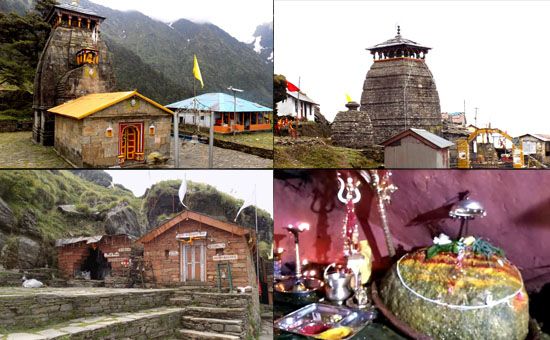 L to R is Madhmaheswar, Tungnath,
Rudranath, Kalpeshwar.
L to R is Madhmaheswar, Tungnath,
Rudranath, Kalpeshwar.
Panch Kedar are
five ancient temples of Lord Shiva located in the Garhwal Himalayas of
Uttarakhand, namely Kedarnath, Tungnath, Rudranath, Madhyamaheshwar, and
Kalpeshwar.
Beginners usually
start with easy to moderate to great difficulty treks. The best choice for
someone new to hiking is the Kalpeshwar temple (1 km). And the Rudranath trek
(20 km) is the most difficult among the Panch Kedar circuit.
These temples have
a folklore of the Pandavas. It is believed they sought these temples for
forgiveness from Lord Shiva. To avoid them, Shiva took the form of a bull and
later reappeared in five different places, each becoming a sacred shrine of the
Panch Kedar.
Lord Shiva’s bull form is worshipped in these shrines. According to tradition Kedarnath is revered for the hump (Kibardha), while Tungnath is where his arms (Bahu) appeared. The face (Mukh) of the deity is worshipped at Rudranath, his navel (Nabhi) at Madhyamaheshwar, and his matted hair (Jata) at Kalpeshwar.
Kedarnath-the
first Kedar
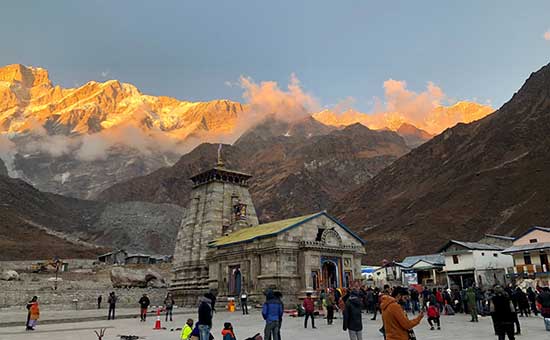 Kedarnath. Pic by Namrata Wakhloo.
Among the five Kedar shrines, Kedarnath holds the highest significance. As per the Pandavas story, this is where the hump of Lord Shiva’s bull form appeared after Shiva disappeared into the ground to evade the Pandavas. It is the first and most visited temple in the entire Panch Kedar circuit.
The best time to
visit Kedarnath is in May, after the temple reopens, or during September, when
the paths are cleared, and beautiful nature surrounds it from all sides. Make
sure to avoid rainy seasons and cold weather, as the temple closes in November.
The
New Kedarnath Trek Route 2026
The trek to the
main temple is a 16 to 18 km stretch, starting from Gaurikund (base camp). It
takes 6 to 10 hours to complete.
In 2026, the trail
infrastructure is improved. The Gaurikund Rambara Garud Chatti route is restored
with better broad roads. A ropeway from Sonprayag to Kedarnath; it is yet under
construction.
Kedarnath
transportation services mainly include pony, palki, Kedarnath helicopter
services, and shared taxis. You can easily get buses from Rishikesh to
Kedarnath. Shuttle services are also available till Gaurikund, the starting
point of the trek. Kedarnath helicopter Services are the fastest way to reach
the temple, in just 5-10 minutes. Flights run from helipads at Sersi,
Guptakashi, Sitapur, and Phata. A valid registration is needed to book the
helicopter services.
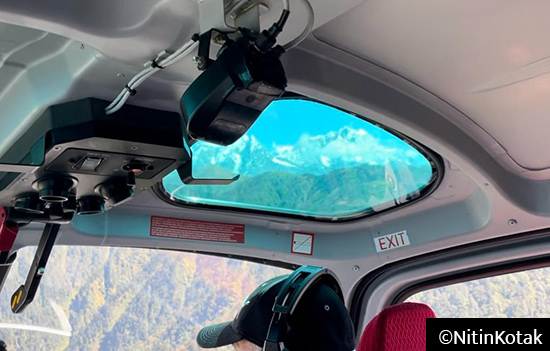 Helicopter to Kedarnath.
The
Remaining Kedars of the Panch Kedar Circuit
After Kedarnath,
it is time for the remaining four shrines. It generally starts with Tungnath, the highest Shiva abode and most
accessible of all the shrines. The trek begins at Chopta, and the trail to the
temple is 4 km. Pilgrims also go further to Chandrashila to get panoramic views
of Nanda Devi from the peak.
Next comes Rudranath, the most difficult of all five. It is a common saying that “Rudranath ki Chadai,
German ki Ladai" (The climb to Rudranath is as tough as a war with Germans). This strenuous 20 km hike goes through rugged terrain and dense forests.
Madhyamaheshwar is associated with Lord Shiva’s navel. The shrine sits surrounded by lush greenery, valleys, and Himalayan villages. Near this is the Budha
Madhyamaheshwar, a high meadow offering scenic views of the Chaukhamba
peaks.
The last one is
the Kalpeshwar shrine; here, the jata or
hair of Lord Shiva is worshipped. The temple is open year-round. It is located
in the Urgam Valley and is only a 1 km walk from the base to the temple.
Kalpeshwar provides a much-needed scenic ending to the Panch Kedar circuit.
Why
Choose BizareXpedition?
The roads that
lead to the most spiritual shrines are full of uneven terrain and unpredictable
situations. While the destination is beautiful, the journey to it can be quite
challenging. BizareXpedition combines local expertise, reliable logistics, and customized itineraries to make the BizareXpedition Panch Kedar tour smooth and memorable. Right from Kedarnath registrations to finding comfortable accommodation to pacing the travel itinerary as per your comfort, this trusted travel advisor aims to provide a once-in-a-lifetime experience to pilgrims without any fuss.
FAQ Panchkedar Yatra
1. Can I Visit All Five Kedar in One Trip?
Yes. It is
possible to complete the Panch Kedar Yatra in a single trip. On average,
pilgrims take 10-14 days for that. It depends on your physical strength,
weather, and logistics.
2. Is the Kedarnath temple open in winter?
No, the Kedarnath
temple closes in November due to heavy snowfall. The deity is shifted to
Omkareshwar Temple in Ukimath, and later it reopens in the month of May.
3. Do I need a permit for the Panch Kedar trek in 2026?
You need a prior
permit for the Panch Kedar trek in 2026. Registration can be done online or at
official counters in Haridwar, Rishikesh, or Sonprayag.
This is a sponsored feature. Cover picture provided by
sponsorer.
Also read
1. A
call to Kedarnath
2. In
Hindi Kedarnath Yatra
3. In
Hindi Devbhoomi ke Panchkedar
4. About
Tungnath Mandir