- To know a city experience its local food. Author and food critic Anil suggests what you should eat and see during a food cum heritage walk in the walled city of Ahmedabad. This piece has many pictures too.
Text by
Anil M and Photos by Dinesh Shukla
The walled city of Ahmedabad, founded in 1411 AD by
Sultan Ahmed Shah on the Sabarmati River's eastern bank, is the first UNESCO-listed World Heritage City from India. Though the fortified walls were mostly demolished, the city has about a dozen medieval gates intact showing the limits of the walled city. Within the old walled city are majestic medieval mosques and mausoleums, Hindu temples, attractive Jain derasars, colonial-period public buildings, wholesale markets, densely packed neighbourhoods called `pols’, and some fine havelis featuring exquisite wood carvings.
This walled city has some of the most
successful heritage walks in India, including Mandir-se-Masjid-Tak which is
perhaps the first guided walking tour of India that has a daily guaranteed
departure.
The walled city hides a rich culinary heritage with several food enterprises that are more than fifty years old and continue to be popular. A walk in the royal enclave that includes the Bhadra Fort that marked the foundation of Ahmedabad’s walled city in 1411 and the Jama Masjid where the Sultans came for their Friday prayers in the 15th and 16th centuries offers a taste of Ahmedabad’s culinary diversity.
1. CHANDRAVILAS
Start your morning at Chandravilas on Gandhi
Road, widely considered the birthplace
of the Gujarati Thali. Chandravilas opens by 7.30 am for tea and
breakfast. The owner Malay Joshi tells us that it was launched in
1900 by Chimanlal Hemraj Joshi. From a small tea and snack stall, Chandravilas
developed into a dining hall and this is where the concept of the Gujarati
thali with snacks, three vegetables, pulses, roti, dal, kadhi, rice, and sweets
started. This has become the template for all Gujarati restaurants.
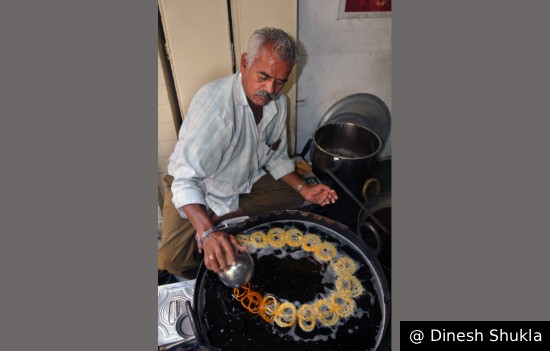
Another contribution of Chandravilas to the city’s culinary tradition is their Dusshera special festive offer for fafda-jalebi. Even today, it is a ritual for
families in Ahmedabad to have fafda-jalebi for breakfast on Dussehra.
Unfortunately, during a communal riot in
Ahmedabad, a fire spread through the area and destroyed Chandravilas, including
its British fans, old oak furniture and
heirlooms. The owners re-started it as a modest place to eat but Chandravillas
still draws the crowds. The memorabilia here includes an insurance policy worth Rs 200 that covered the late
Chimanlal Hemraj Joshi, taken from a Lahore firm in pre-partition India. The
owner has created a collage of black-and-white photographs of eminent
personalities who have dined at Chandravilas, including Mahatma Gandhi, Sardar
Vallabhbhai Patel, Raj Kapoor, Narendra Modi, among others.
Don’t miss the fafda-jalebi here – the salty fritters, the sweet jalebi, fried chillies, chutney and papaya relish called cheen comprise one of the most
popular breakfasts for Gujaratis.
2. MANEK CHOWK and RATANPOL
After your snacking, you can explore some of the narrow alleys called `pols’ where you can see the havelis with elaborate woodcarvings and stonework, and markets called ols – each of the market alleys are thriving with each lane specializing in different commodities - the bullion market and jewellery bazaars at Manek Chowk open early.
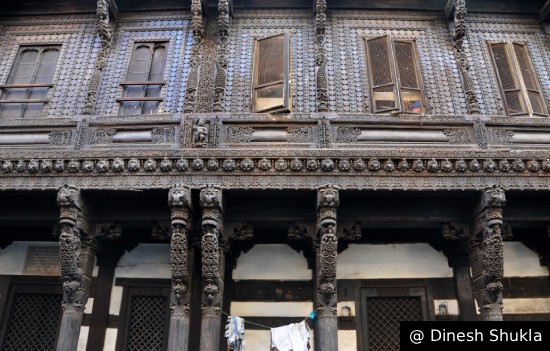 Superbly carved wooden facades of Ahmedabad haveli.
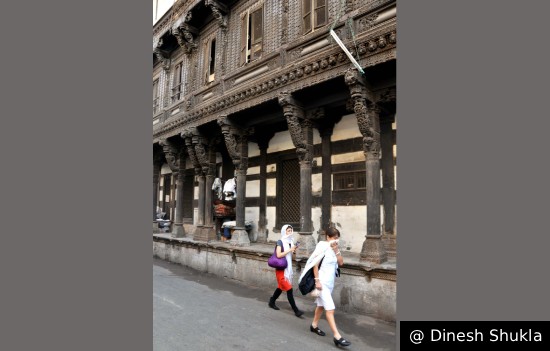 Ahmedabad Heritage Walk.
Ratanpol has a hive of bustling cloth and
jewellery markets where you will also find a strong Jain presence in old
derasars (Jain Temples), attractive old houses and places selling
onion-and-garlic free snacks like kela wada made using bananas instead of
potatoes.
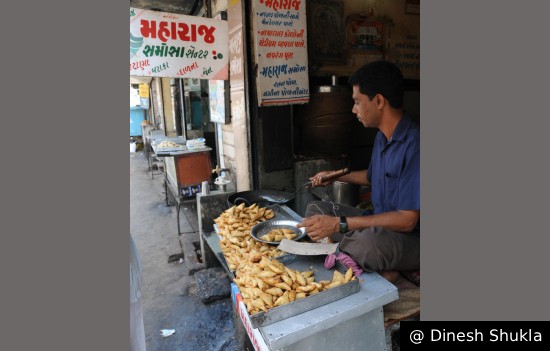 Have samosa enroute.
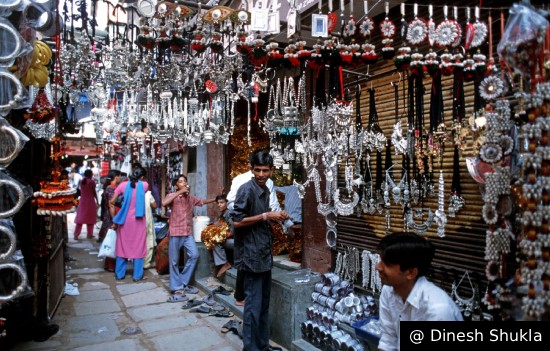 Market of the walled city.
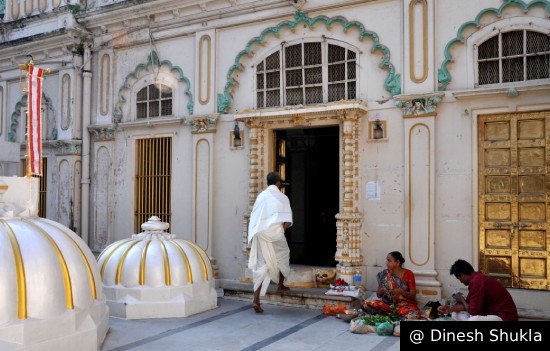 Jain Temple abound in the walled city.
3. JAMA Masjid
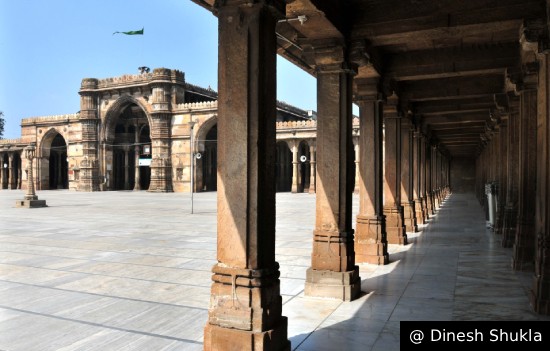
About 15 minute walk from Chandravilas, Jama Masjid is one of the finest examples of Indo-Islamic architecture that thrived in Gujarat during the reign of the Sultans. This is one of the largest mosques in Gujarat. When built in 1424 it was the largest in India. It is easy to miss the entrance to this Indo-Islamic complex because of the shops and hawkers around it. Once inside, you can get a feel of spaciousness with the large courtyard, the ablution tank at the centre of the courtyard, the galleries around the courtyard and the façade of the main sanctuary with three main arches.
The minarets collapsed in the 1819
Earthquake but the domes can be seen. The interior has 260 pillars placed to
create grids. The zanana reserved for women has stone screens that enable them
to hear the prayers but be separated visually from the men.
4. BISCUIT Galli
Walk for about 8 minutes from Jama Masjid,
and you will find the entrance to Biscuit Galli across the road. This lane, as
the name suggests is known for its bakery shops, and it leads to other markets
like those for bamboo products. The most
iconic shop here is Hussaini Bakery, said to have opened 125 years ago. The British posted in Ahmedabad patronized
this place for rogani biscuits. Today, they are known for a variety of bakery
items including their buttery khari biscuits.
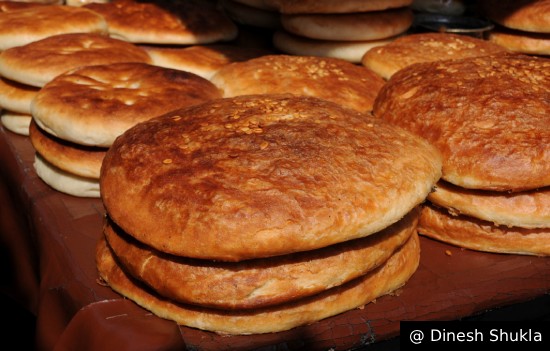
You can get freshly baked naan breads at the
bakeries, including khumas i.e. a rich bread made on traditional ovens.
5. TEEN Darwaja
A few minutes from the galli, Teen Darwaja is one of the most famous of the 12 gates that once provided the entry to the walled city of Ahmedabad. Teen Darwaja literally means Three Gates, and gets its name from its three arches with the central one being the largest. Don’t miss the highly decorated
buttresses on the faces of piers between the arches that are about 25 feet
high. Built by Sultan Ahmed Shah in 1415, this gateway has jarokhas
protruding at the top from where Mughal princes could watch processions in the
16th century.
Maratha
governor Chimnaji Raghunath inscribed a plaque on Teen Darwaza in 1812
declaring equal right to women in inheritance of ancestral
property.
The bazaar
is surrounded by markets selling utensils and other goods today.
6. BHATIYAR
Galli
About 500
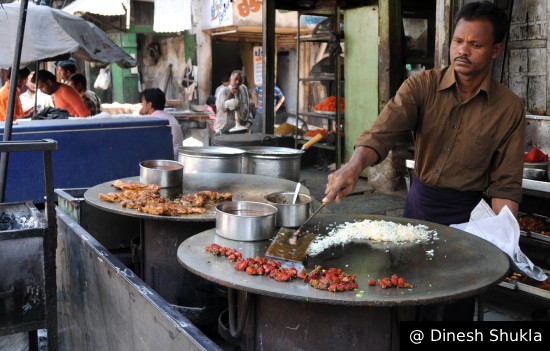
metres from Teen Darwaja, you can see kebabs being made on the street side.
This is the entrance to Bhatiyar Galli, a lane in Khas Bazaar i.e. known for its food. Bhatiyaras are `bhatti-operators’ and they cook using large tawas and handis. People flock to this market to have tawa-fried brain, kidneys, liver, mutton pieces, fish
and chicken cooked in bold spices. The smoky charcoal-grilled chicken called Murg Aangar is one of the specialties here, but
you can also look for other items like haleem, biryani and curries. Some of the
establishments have old ownership documents, even those dating to the British
times. Bera has been making samosas and
kebabs here from 1928.
Near Bhatiyar Galli, you can visit the
iconic New Irani Café that is more than 50
years old. This is a good place to sit for a mid-morning tea, maska bun and
even meat dishes.
7. BHADHRA Fort
The
Bhadra Plaza is frequented by
visitors to Bhadhra Kali Temple – though Bhadra Kali was the patron Goddess of the Solanki Rajputs who ruled the villages of Ashawal and Karnavati before the Sultans built the walled city of Ahmedabad, this temple dates from Maratha times. The present day Bhadra Fort is a remnant of what was once the royal plaza of the Sultans.
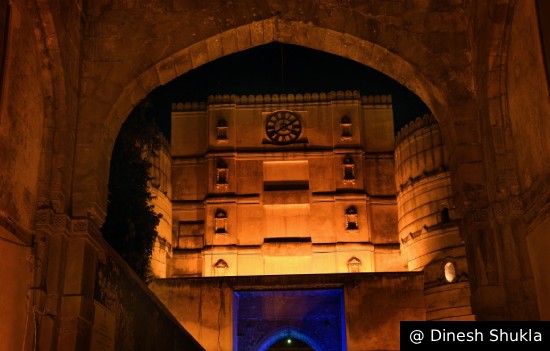
The Azam Khan Serai, to the left of the
entrance, was built by Azam Khan in 1637 when he was appointed by the Mughal
Emperors as their governor in Gujarat. The main gate holds a British clock.
Colourful stalls of hawkers and small shops can be seen around the fort. You
can find old book-shops and old institution buildings if you explore the area.
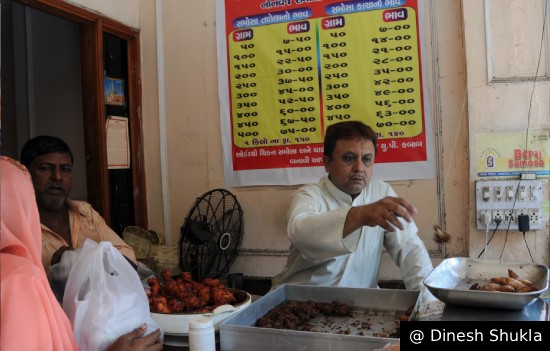 Samosas shop enroute.
Near the fort, a
little park has the statue of Chinubhai, a pioneer of Ahmedabad’s textile industry. He was titled the baronet by the British and even respected by Mahatma Gandhi who came to unveil the statue though he left Ahmedabad in 1930. The art deco Ahmedabad Electricity Company building is seen at the intersection near the fort.
8. SIDI
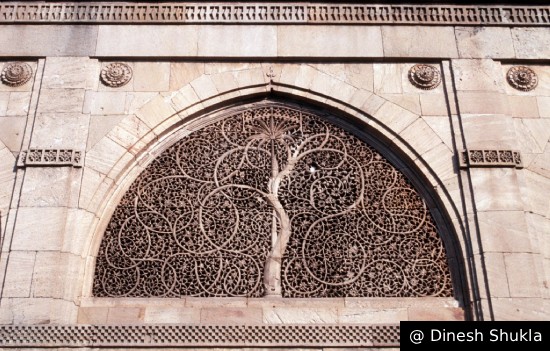
SAIYED MOSQUE
A Siddi administrator built the mosque in the 1570s. It at the end of the Sultanate period and the beginning of the Mughal reign over Gujarat. The highlight of this mosque is a series of stunning jalis (intricate stone screens) that comprise much of the eastern façade, the best being the finely carved vine-and-palm tree of life that has become an enduring symbol of Ahmedabad.
9. LUCKY
Restaurant
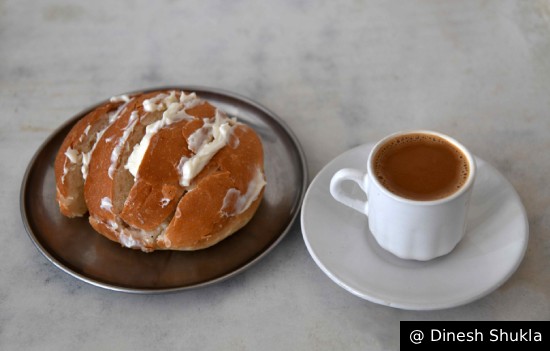
Started in the 1950s as a tea place, Lucky expanded to become an eatery with sitting arrangements around old graveyards. It has for long been known for it’s tea and maska bun with fresh white
butter, and has also added popular items like South Indian snacks to its
menu. Its famous patron, the late M F
Hussain who came here for tea during his visits to Ahmedabad gifted them his
painting that hangs near the cash counter.
Though many
patrons feel the standards of the food have slipped recently, Lucky is an icon
because of its Hussain painting and the unusual seating among graves.
Lucky gets much
patronage from the banks set around this area.
Those interested in modernist architecture, can look at the Central Bank
of India building designed by Balkrishna Doshi near the restaurant.
10. HOUSE
OF MG
Across the road,
House of MG is an early-20th century mansion complex of textile
tycoons, Mangaldas Girdhardas and Chimanlal Girdhardas. The mansions were
renovated and converted into a boutique luxury hotel reflecting the heritage of
the buildings.
If you are looking for lunch, they have two iconic restaurants – The Green House in the
courtyard with an eclectic menu comprising Gujarati, North Indian, South Indian
and some western dishes, and Agashiye
upstairs for an elaborate Gujarati thali.
The Indo-European
style building also has museum collections of textiles, jewellery and
heirlooms.
Author
Anil Mulchandani is an author, internationally published freelance writer and
food critic. He was awarded Best Travel Writer by MP government, Culinary Trail
Blazer by International Hospitality Council, Heritage Preservation Award
by Atulya Varso, and Vocational Service Award by Rotary. He publishes Culinary
Entrepreneurs magazine and www.feamag.com website that offer free information about
best practices for food entrepreneurs.
To read all
articles on India Travel and Yatras
Food is an important part of Indian
Culture. eSamskriti had earlier shared What to Eat during
a Heritage Walk in Jodhpur, Places to eat in
Jaipur, Best Places to eat
in Amritsar, Best Places to eat
in Kolkata, Best things to eat
in Lucknow during winter , Indore is a great
place for Street food , Places to eat in
Guwahati , There is more to
Bihari food than LITTI CHOKHA and What to eat at
Sarafa, Indore – Editor.
Also
read
1. For Food Walks across
India
2. Old Walled Food Tour Video – 18 minutes
3. Must try
Street Foods in City